Best Cities to Visit in Spain: 32 Top Picks & Trip Plans
- Home
- Travel Tips
- Best Cities to Visit in Spain: 32 Top Picks & Trip Plans
Best Cities to Visit in Spain: 32 Top Picks & Trip Plans

Easy & Secure Booking with Boletoxpress
When looking at iconic European capitals ranked cheapest to most expensive for travelers, Spain remains a top favorite with 17 autonomous communities and a long list of UNESCO World Heritage sites. They range from Moorish palaces in Andalusia to Roman ruins in Extremadura and Gaudí’s buildings in Catalonia. Each region has its own food, language, and pace, which is why the best cities to visit in Spain change so much from trip to trip. The places to visit in Spain below are grouped by region so that you can compare nearby cities.

Which City in Spain Should You Visit First?
Start with the city that corresponds to your primary purpose of travel. Choose Madrid for its art and ease of day trips. Choose Barcelona for its architectural wonders and beaches. Choose Seville for its palaces and evenings. And choose Granada if you want just one impressive site, the Alhambra.
This comprehensive guide puts the main city choices, rail times, and trip plans in one place, helping you explore top global spots without needing extra tabs open. It also covers lesser-known cities that many travelers skip. Start with the tables, then move on to the sections for the cities that interest you.
Best Places to Visit in Spain by Trip Style
If you are still deciding where to go in Spain, this table matches each trip style to the cities that fit it best.
Your trip style | Our pick | Why |
First visit to Spain | Madrid, Barcelona, Seville | Big sights, easy trains |
Food first | San Sebastián, Bilbao, León | Pintxos, free tapas, top restaurants |
History first | Toledo, Segovia, Córdoba, Ávila | Walls, Roman ruins, UNESCO sites |
Beach and city together | Valencia, Barcelona, Málaga, Alicante | City beaches you can reach on foot or by tram |
Fewer crowds | Burgos, Salamanca, Cuenca, Zaragoza | Great sights, quieter streets |
Winter sun | Las Palmas, Málaga, Cádiz | Mild weather in the cold months |
The Best Big Cities in Spain
The four biggest cities in Spain are Madrid, Barcelona, Valencia, and Zaragoza, according to the national statistics agency, with Madrid at approximately 3.48 million people and Barcelona at approximately 1.71 million people as of January 1, 2025 (INE Annual Census). Valencia is ranked third with around 841,000 people, followed by Zaragoza with around 699,000 and Seville with around 689,000. The table below pairs Spain’s biggest cities with their signature sight, rail link, and suggested time. Seville, the fifth largest, appears in the Andalusia section.

City | Population (2025) | Signature sight | Rail link | Suggested time |
Madrid | 3,477,497 | Prado Museum | Fast trains to Barcelona and Seville in 2 hours 30 minutes | 2 to 3 days |
Barcelona | 1,713,247 | Sagrada Família | Fast train to Madrid in 2 hours 30 minutes | 3 days |
Valencia | 841,558 | City of Arts and Sciences | One or two direct trains a day to Seville in about 4 hours 20 minutes; others need a change | 2 days |
Zaragoza | 699,007 | Basilica of Our Lady of the Pillar | Stop on the Madrid to Barcelona line | 1 day |
Madrid
Madrid is the capital and the ideal starting point for your first visit. The Prado Museum houses important paintings by Spanish artists such as Goya and El Greco. The Reina Sofía houses Picasso’s Guernica, and together with the Thyssen-Bornemisza Museum it completes Madrid’s Golden Triangle of Art. Spend a long day walking around Retiro Park, the Royal Palace, Plaza Mayor, Puerta del Sol, and Gran Vía. Visit the Templo de Debod, an Egyptian temple in central Madrid, which is free to enter.
Madrid is also known for its high-speed rail network. The Spanish Tourist Board says AVE trains from Madrid to Barcelona take about 2 hours 30 minutes, and to Granada about 3 hours 30 minutes.
Plan: Begin your day at the Prado in the morning, have lunch at Plaza Mayor, and end the day at Retiro Park. Take the Royal Palace and the Reina Sofía for another day. You can take trains to Barcelona, Seville, and Málaga from Atocha. Check the departure station for Valencia on Renfe before you book, since it can vary by operator. Choose Madrid if you prefer art, day trips, and late-night dinners.
Barcelona
Barcelona is the city of Gaudí. See the Sagrada Familia, Park Güell, Casa Batlló, Palau de la Música Catalana, and Hospital de Sant Pau, all inscribed as UNESCO World Heritage sites. Visit the Gothic Quarter, the Museu Picasso, and enjoy an evening by the sea. Football fans can also catch a game with FC Barcelona.
Tickets matter here. Book Sagrada Família tickets in advance and only on the Sagrada Família website.
Plan: Day One: Go to the Gothic Quarter and Museu Picasso. Visit the Sagrada Família in the morning and Casa Batlló in the afternoon on day two. On day three, visit Park Güell and the beach. Schedule your visits to the Gaudí sites at fixed times. Choose Barcelona if you want both buildings and beaches in one city, but be aware of the crowds in July and August.
Valencia
Spain’s third-most populous city, Valencia still feels simple and open. Turia Park, a long garden built on a dry riverbed, stretches through the city’s heart. At the other end stands the City of Arts and Sciences, designed by architect Santiago Calatrava. UNESCO inscribed La Lonja de la Seda on its list in 1996.
If you enjoy festivals, plan for March. UNESCO inscribed Las Fallas, the Festival of Flames, on its intangible heritage list in 2016. It runs from March 1 to 19, with the biggest days from March 15 to 19. Book your hotel in advance, as it gets quite crowded.
Plan: On the first day, visit the old part of the city, the Silk Market, and the Cathedral Square. On the second day, walk through Turia Park to the City of Arts and Sciences, then end the trip with lunch on the beach.
Zaragoza
Zaragoza is Spain’s fourth-largest city and receives far fewer visitors than nearby cities. Zaragoza sits on the Ebro River between Madrid and Barcelona, and the high-speed train between the two major cities stops here. The Basilica of Our Lady of the Pillar, with its tiled domes, is the city’s landmark on the riverbank. Enjoy the tapas bars in the narrow El Tubo neighborhood.
It works well as a half-day stop on the Madrid-to-Barcelona line, or for an overnight if you like tapas. If you have 5 days to travel, spend your time elsewhere.
The Best Cities in Southern Spain (Andalusia)
This is the Spain that most tourists dream about. Moorish palaces, whitewashed villages, and long evenings outside all exist here. Seville, Granada, and Córdoba are all within easy reach and can easily fit into a multi-city European bucket list adventure.
City | UNESCO link | Signature sight | Summer heat | Free tapas | Suggested time |
Seville | Real Alcázar | Very hot | Not a known habit | 2 days | |
Granada | Alhambra and Generalife (1984), Albayzín (1994) | Alhambra | Hot days | Yes, with many drinks | 2 days |
Córdoba | Mezquita (1984), old city (1994) | Mezquita | Very hot | Not a known habit | Half day to 1 day |
Málaga | None | Alcazaba | Hot, sea breeze | Not a known habit | 1 to 2 days |
Cádiz | None | Tavira Tower | Milder, Atlantic air | Not a known habit | 1 to 2 days |
Ronda | None | Puente Nuevo | Warm | Not a known habit | Day trip |
Antequera | Dolmen site (2016) | Dolmens | Hot inland | Not a known habit | Half day |
Seville
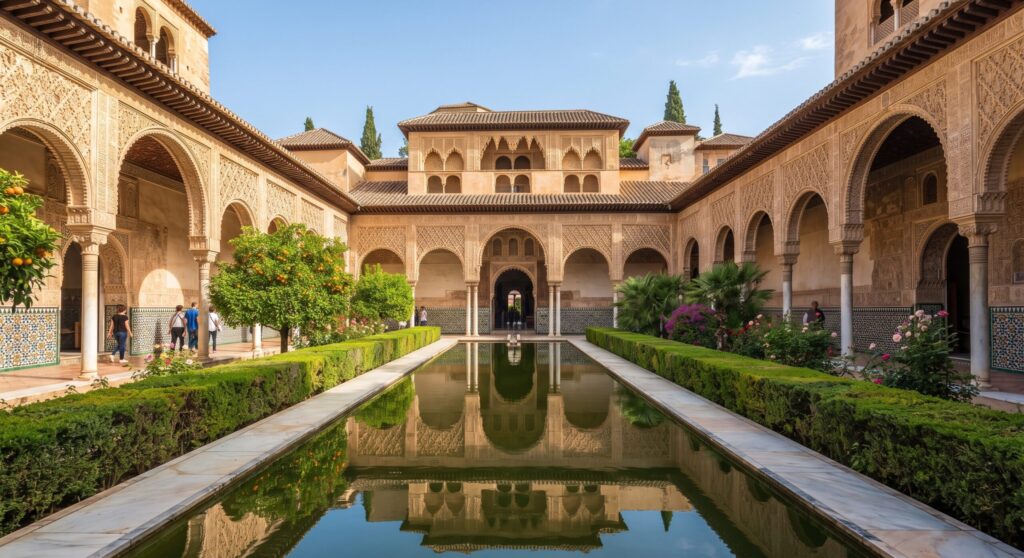
Seville is the capital city of Andalusia. UNESCO inscribed the Cathedral, the Real Alcázar, and the Archivo de Indias in 1987 as a single entry on its World Heritage List. The Cathedral contains Columbus’s tomb. Visit the Santa Cruz district, a network of streets that was once home to the Jewish neighborhood. See Plaza de España in the evening. See Las Setas, a mushroom-shaped wooden building.
If possible, visit in April, when the city is filled with flamenco dresses during the Feria. Summer months are extremely hot, so plan breaks from noon to 5 p.m.
Plan: You can start by visiting the Real Alcázar and the Cathedral. An afternoon walk can take you through Santa Cruz and Las Setas; then visit Plaza de España and enjoy tapas in the evening. Seville is worth it for its palaces and nightlife, but it’s not worth it in July and August.
Granada
Granada is home to the Alhambra, a palace-fortress built on a hill and listed by UNESCO. The Nasrid Palaces are included in the general ticket, but you must enter during your assigned time slot. Prices and Nasrid Palace times vary, so check the latest prices and times at tickets.alhambra-patronato.es.
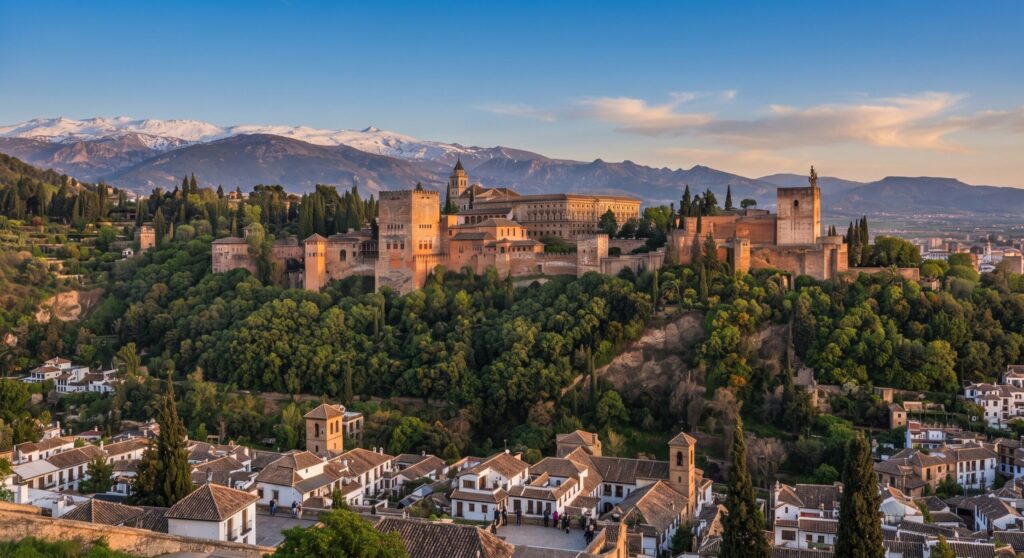
Beyond the palace, explore the Albaicín, an intricate labyrinth of white streets, and enjoy sunset at the Mirador de San Nicolás, with the Sierra Nevada in the background. Isabella I’s tomb lies in the Royal Chapel. Granada is also known for free tapas with drinks so you can spend an entire night for almost nothing.
Plan: First, book the Alhambra and plan the rest of your day around it. In the morning, visit the palace, have lunch in town, and walk around Albaicín to catch the sunset at the Mirador de San Nicolás. On the second day, visit the Royal Chapel and go tapas-hopping. Come to Granada for Moorish arts and cheap nights.
Córdoba
Córdoba is small so you can see its most memorable places quickly. The Mezquita is an imposing mosque with a cathedral inside. UNESCO designated it a World Heritage site in 1984, then extended it to cover the whole ancient city in 1994. Stroll along the Roman Bridge at sunset and admire the Alcázar de los Reyes Cristianos. Flower-lined patios like Patios de San Basilio remain the best-kept secret.
Many trains run from Madrid to Seville and stop in Córdoba. Córdoba is the perfect place for a half-day stopover: visit the Mezquita first, then the Roman Bridge and the patios. Stay the night only if you want to experience slow, serene evenings.
Málaga
Málaga is a seaside city located on the Costa del Sol where Picasso was born. Visit the Picasso Museum, Alcazaba, and Gibralfaro Castle for stunning city views. Dine in the Atarazanas Central Market. La Malagueta is Málaga’s beach town, and you can walk there from the center.
Málaga is also a good base for Ronda and white towns inland. It is a good destination for one museum, one castle, and one day on the beach. However, if you are looking for historic streets, Córdoba and Toledo are the places to be.
Cádiz
Cádiz sits on a narrow strip of land bordering the Atlantic Ocean. According to the Spanish tourism website, the Phoenicians founded the city roughly 3,000 years ago, making it the oldest city in Western Europe. Some historians, however, argue that the claim depends on how you define “city,” so it is more a title than a fact.
Visit the Tavira Tower to enjoy the camera obscura from above, explore the Roman theater, and take in the beautiful sunset at La Caleta Beach. The city’s carnival is among Spain’s most famous. Cádiz offers plenty for those who prefer a slow pace: Tavira Tower in the afternoon and La Caleta at sunset. Don’t forget to check train schedules, as standard Alvia trains serve this city rather than the high-speed lines featured in this guide.
Ronda
Ronda is a small city divided by a canyon. The Puente Nuevo, meaning the New Bridge, is Ronda’s postcard image. Close to Málaga, it’s perfect for a day trip. Ernest Hemingway adored the city; a street is named after him.
Ronda will mainly be a gorge, a bridge, and an extended lunch break. Allocate a day for Málaga, and wear good-grip shoes because the roads are steep.
Antequera
Antequera is a small city in inland Andalusia. UNESCO added Antequera’s megalithic sites to the World Heritage list in 2016. The high-speed train between Madrid and Málaga passes through Antequera Santa Ana station, about 17 kilometers from the city center. Another station, Antequera Ciudad, opened in 2023 and is closer to the city center.
Few travelers get off, so you can have the streets to yourself. Antequera fits a half day, mainly for the dolmens. With under 8 days, spend that half day in a bigger city.
The Best Cities in Northern Spain
The north is greener and cooler. It is also known for food. Plan more time here than you think, since distances feel longer on hills and slower trains.
City | Food style | Pilgrim link | Rain risk | Signature sight | Suggested time |
Bilbao | Pintxos at La Ribera Market | Northern routes | Showers any month | Guggenheim Museum | 1 to 2 days |
San Sebastián | Pintxos and Michelin dining | Stop on the Camino del Norte | Showers any month | La Concha Bay | 2 days |
Pamplona | Pintxos and café culture | Camino Francés | Mixed | Walls and Citadel | 1 day |
Logroño | Pintxos and Rioja wine | Camino Francés | Drier, inland | Calle Laurel | 1 day |
Santiago de Compostela | Pulpo, Galician octopus | End point of the Camino | Often rainy | Cathedral | 1 to 2 days |
Oviedo | Cider | Northern routes | Often rainy | Early medieval monuments | 1 day |

Bilbao
Bilbao was once an industrial port. Today, it is known for the Guggenheim Museum, designed by Frank Gehry and opened in 1997 (Guggenheim Bilbao). Outside, see Jeff Koons’s flower-covered “Puppy” sculpture. Explore the Casco Viejo, the old town, and enjoy pintxos at La Ribera Market. Santiago Calatrava designed the Zubizuri bridge.
Basque is spoken alongside Spanish, and locals take great pride in it. San Juan de Gaztelugatxe, a small island hermitage reached on foot by a stone bridge and a long stairway, makes a good day trip from Bilbao. Check current access rules before you go. You could spend a whole day in Bilbao at the Guggenheim Museum, Casco Viejo, and La Ribera Market. If you had to choose one Basque city, San Sebastián is the better choice.
San Sebastián
San Sebastián is our food city. According to the city’s official tourism website, 19 Michelin stars are distributed across restaurants just a short drive away, with three restaurants holding three stars each: Akelarre, Arzak, and Martín Berasategui. You don’t need a lot of money. The Parte Vieja (old town) is packed with bars serving pintxos.
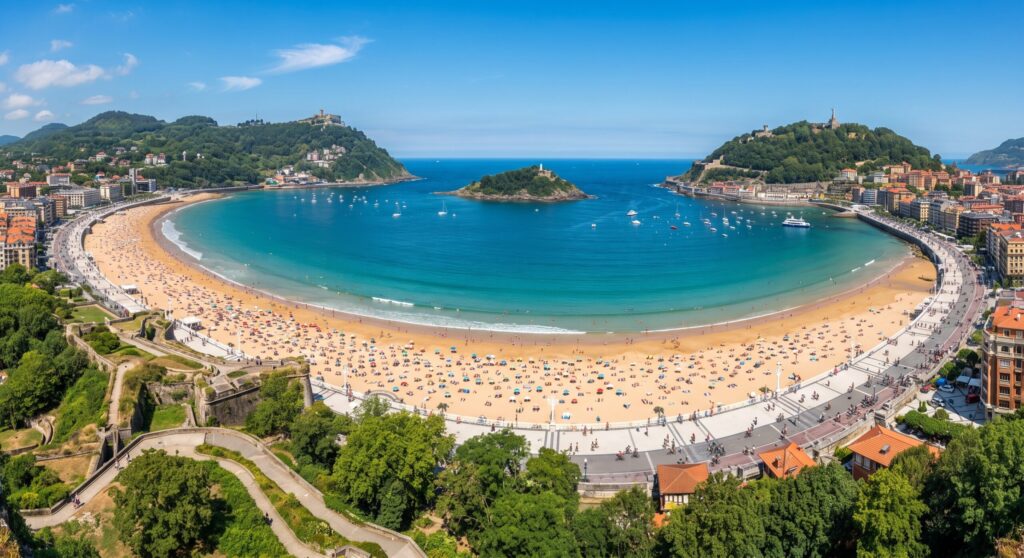
Start by walking around La Concha Bay, then end your day at Monte Igueldo for great views. Prices are higher in the Basque region than in the south, so keep that in mind when spending money on food. Plan: Walk around La Concha Bay in the morning and head up Monte Igueldo in the afternoon to get the view. Spend your evening in the Parte Vieja on a pintxos crawl.
Pamplona
Pamplona is famous for the San Fermín festival, which runs from July 6 to 14 and includes the Running of the Bulls. Otherwise, come any other time, when the streets are peaceful. Explore the city’s ancient walls, enjoy the greenery in Citadel Park, and drink coffee at Café Iruña in Plaza del Castillo, favored by Hemingway.
Logroño
Logroño is the capital of La Rioja, known as Spain’s wine region. Numerous small bars on Calle Laurel serve pintxos to pilgrims walking the Camino. Make arrangements for a winery tour near Logroño. Logroño is a one-day city, with nightlife centered on Calle Laurel and nearby winery tours.
Santiago de Compostela
The Camino de Santiago ends in Santiago de Compostela. The historic city center has been a UNESCO World Heritage Site since 1985, and the Camino paths were inscribed as a World Heritage Site in 1993. The cathedral stands in Plaza del Obradoiro, where tired pilgrims arrive. You may see the huge incense burner, the Botafumeiro, swaying in the church. You should try the pulpo (Galician octopus). It rains a lot here, so bring a coat. You can see the main sights in one day, and two days feel more relaxed.
Oviedo
Oviedo is Asturias’s capital city. UNESCO included its early medieval monuments in 1985 and later expanded the site in 1998. Asturias is known for its cider, served from height. There aren’t many tourists here, and everything feels very local. Oviedo is ideal for tourists who have already seen all the major cities and want something else: cider and early medieval monuments. On a short visit, this is the first thing to cut.
The Best Historic Cities in Castile and Extremadura
Castile is Spain’s historic heart. It has walls, Roman ruins, and huge cathedrals. Most of these cities are easy day trips from Madrid, and Mérida adds Roman ruins in Extremadura.
City | UNESCO listing | Signature sight | Day trip from Madrid? | Local treat | Suggested time |
Toledo | Cathedral and Sinagoga del Tránsito | Yes | Marzipan | Day trip or overnight | |
Cuenca | Casas Colgadas | Yes, on the fast line | Mountain dishes | Half day to 1 day | |
Segovia | Roman aqueduct | Yes | Cochinillo | Day trip | |
Ávila | Medieval walls | Yes | Yemas de Santa Teresa | Half day to 1 day | |
Salamanca | Plaza Mayor | Possible, better overnight | Tapas with students | 1 day | |
Burgos | Burgos Cathedral | Better overnight | Morcilla de Burgos | 1 day | |
León | None for the city itself | Cathedral glass | Better overnight | Free tapa with a drink | 1 day |
Mérida | Archaeological Ensemble (1993) | Roman theater and amphitheater | Not an easy day trip | Extremadura dishes | 1 day |
Toledo
Toledo sits on a hill above a bend in the Tagus River. UNESCO listed the historic city in 1986. It is called the city of three cultures because Christians, Muslims, and Jews once lived here. See the Cathedral, the Synagogue of El Tránsito, and the Alcázar. El Greco lived here, and a museum covers his work. Taste marzipan, a local sweet.
It is a short, fast train ride from Madrid, and Toledo was Spain’s capital before the court moved. Toledo is a full day trip from Madrid. Leave early, walk the old town before the tour groups arrive, and wear flat, grippy shoes for the steep lanes.
Cuenca
Cuenca is famous for its Casas Colgadas, houses that hang over a gorge. UNESCO listed the walled town in 1996. It sits on the fast line between Madrid and Valencia. Walk across the San Pablo bridge for the best view. Cuenca suits a half day for the hanging houses and the gorge views. Check the train station location before you book, since it may not be in the old town.
Segovia
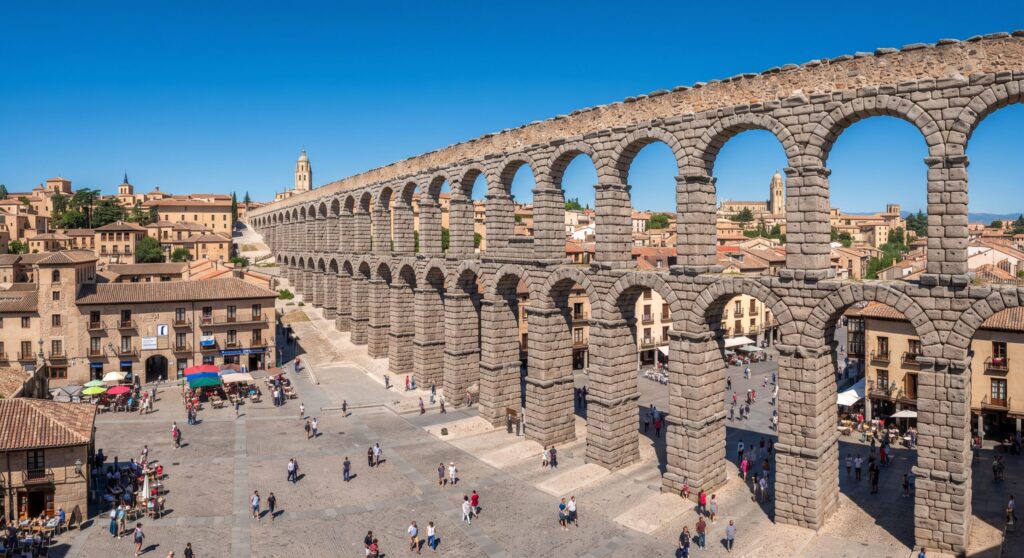
Segovia has a Roman aqueduct that still stands in the center of town. UNESCO listed the old town and aqueduct in 1985. Visit the Alcázar, a hilltop castle that looks like a storybook palace, and the cathedral, known for its late Gothic architecture. Try cochinillo, the local dish: roast suckling pig. Go early to beat tour buses. Segovia is a full day from Madrid. See the aqueduct first, then the Alcázar and the cathedral, and keep lunch for cochinillo.
Ávila
Ávila is a walled medieval city. Its walls are among the best-preserved in Spain, and UNESCO listed the old town, with its churches outside the walls, in 1985. Saint Teresa was born here. It sits high, so summers are milder than in Madrid. Ávila works as a half-day or a quiet overnight. Walk part of the wall, then visit the churches near the old gates.
Salamanca
Salamanca is called the Golden City because its sandstone glows in the evening. UNESCO listed the old city in 1988. It has two cathedrals, Plaza Mayor, Casa de las Conchas, and Convento de San Esteban. It also has Spain’s oldest university, still in operation. Look for the small stone frog on the university facade, which is said to bring luck. Salamanca is best at night, when the stone glows, and Plaza Mayor fills up. Stay overnight if you can.
Burgos
Burgos Cathedral was listed in 1984 as a site in its own right. It stands on the Camino Francés route. Burgos is also the city of the hero El Cid. Few tourists come. Burgos is built around its cathedral, so take it slow with quiet mornings and evenings. It suits travelers who prefer calm to nightlife.
León
León has a cathedral with some of Spain’s most beautiful stained glass. It also has Casa Botines, a building by Antoni Gaudí. In the Barrio Húmedo district, many bars give a free tapa with each drink. The San Marcos convent is now a Parador hotel. León pairs a cathedral visit in daylight with a tapas evening in Barrio Húmedo. Visit in the afternoon, when light comes through the glass.
Mérida
Mérida was a major Roman city, and UNESCO listed its archaeological ensemble in 1993. See the Roman theater and the amphitheater, plus the other ruins around town. It is not on the fast train lines used in this guide, so check bus and train times before you plan it. Mérida suits travelers who like Roman history and want to see it without big crowds.
The Best Cities in Catalonia and the East Coast
These five cities sit close to the sea or a river. Some work as day trips; others need more time.
City | Setting | Signature sight | Best reached from | Car needed? | Suggested time |
Girona | River town | Colorful Onyar houses | Barcelona, by fast train | No | Day trip |
Tarragona | Coastal Roman city | Roman amphitheater | Barcelona (by regional train) or Madrid (by fast train to Camp de Tarragona) | No | Half day to 1 day |
Tossa de Mar | Costa Brava cove | Vila Vella walls | Barcelona, by road | Yes, helps a lot | Day trip |
Alicante | City beach | Santa Bárbara Castle | Madrid or Valencia, by fast train | No | 1 to 2 days |
Cartagena | Port city | Roman theater | Murcia region, check rail or flights | Helpful | 1 to 2 days |

Girona
Girona is a short train ride from Barcelona, and Spain’s tourism board notes the fast train connects the two. The Onyar River runs through town, lined with colorful houses. Walk the old walls and the Jewish quarter, called El Call. The cathedral and old lanes appeared in Game of Thrones. From Girona, many travelers continue to Figueres, home of the Dalí Theatre Museum. Girona is an easy day trip from Barcelona. Walk the river houses and the old walls, and add Figueres only if you have a very early start.
Tarragona
Tarragona was the Roman city of Tarraco, and UNESCO listed its archaeological ensemble in 2000. The Roman amphitheater stands by the sea. The Madrid-to-Barcelona high-speed train stops at Camp de Tarragona, so check how far that station is from the old town before you plan your day. Tarragona suits history fans who also want a sea view.
Tossa de Mar
Tossa de Mar sits on the Costa Brava, a rocky stretch of Catalan coast. Its old walled town, the Vila Vella, has towers over the sea. Beaches and small coves make it good for swimming and snorkeling. A car helps, since it is about an hour and a half north of Barcelona. Tossa de Mar suits a day by the sea with a walk through the old walled town. A car makes it much easier than public transport.
Alicante
Alicante is a bright beach city. The Santa Bárbara Castle sits high on a rock, and the Explanada de España is a tiled seaside walk. The old Santa Cruz quarter has white houses and flowers. Alicante is a good beach stop with a castle view at the end of the day. Spend your history days in Toledo or Córdoba instead.
Cartagena
Cartagena is a port city in Murcia with strong Roman roots. Its Roman theater was buried under the city for centuries and rediscovered in recent decades; it is the main sight. Forts and quiet beaches sit close by. Few foreign visitors come. Cartagena rewards travelers who like Roman ruins without crowds. On a short trip under 10 days, you can skip it.
The Best Island Cities
Islands need a flight or a ferry, so plan these as the start or end of a trip.
City | Island | How you arrive | Best season | City beach | Suggested time |
Palma de Mallorca | Mallorca | Flight or ferry | Late spring to early fall | Nearby | 2 to 3 days |
Las Palmas | Gran Canaria | Flight | Winter | Las Canteras | 2 days |
Palma de Mallorca
Palma is the capital of Mallorca. La Seu, a Gothic cathedral, dominates the harbor. The old town has small squares and good food. The Serra de Tramuntana mountains were listed in 2011, and a historic train runs to Sóller. Palma works as a long weekend with the cathedral and old town on day one and the Sóller train on day two. It feels more island than classic Spain.
Las Palmas de Gran Canaria
Las Palmas is the most populous city in the Canary Islands. It is a good winter pick, since the weather stays mild. Visit the Vegueta old quarter, Casa de Colón, and the long city beach, Las Canteras. Las Palmas suits a winter trip with Vegueta in the morning and Las Canteras in the afternoon. It doesn’t fit a rail itinerary, since the islands aren’t linked by train.
How to Choose Between Similar Cities
Many travelers struggle to pick between two cities that look alike on a map. These quick comparisons give you a clear pick.
Madrid or Barcelona
Choose Madrid if you want art, royal sights, late dinners, and easy day trips to Toledo and Segovia. Pick Barcelona if you want Gaudí’s buildings and a beach in one city. If you can fit both, the fast train takes 2 hours 30 minutes. If you have time for only one, choose by the type of trip, not by fame.
Seville or Granada
Seville is bigger, with palaces, a cathedral, and busy evenings. Granada is smaller and built around one major monument, the Alhambra, which needs advance tickets. From Madrid, the fast train to Seville takes about 2 hours 30 minutes, and to Granada about 3 hours 30 minutes. Pick Seville if you want a city with many things to do. Pick Granada if you booked the Alhambra and want a quieter, cheaper stay.
Bilbao or San Sebastián
Bilbao is the better pick for modern art, with the Guggenheim. San Sebastián is the better pick for food and beach time, with 19 Michelin stars within a short drive, according to the city’s official tourism site. If you have time for only one, choose San Sebastián for food and Bilbao for art. If you have 4 days, visit both.
Why Fewer Cities Make a Better Trip
Each move between cities costs about half a day. Three or four cities with two nights each usually feels better than six cities in one week.
Free Tapas, Pintxos, and Where Each Works

Many travelers mix these up, and it can cost you. A tapa is a small plate. In some cities, you get one free with a drink. A pintxo is a small bite on bread, common in the Basque Country, and you usually pay for each one.
Where Tapas Are Free
Granada and León are the best-known cities where many bars give a free tapa with a drink. You pay for the drink, and the food arrives without you ordering it. Your bill stays low, and you move bar to bar.
Where You Pay Per Pintxo
San Sebastián, Bilbao, and Logroño work the other way. You pick pintxos from the counter or order them, and you pay for each. Set a budget before you start. Ask for a small glass, since you will visit several bars.
How to Plan a Food Crawl
Eat late. Many Spanish kitchens do not open for dinner until around 8:30 p.m. Start with a light lunch, then walk bar to bar in the evening. Stand at the counter, since tables often cost more.
Best Time to Visit Spain’s Cities by Region
Spain’s weather varies widely by region, much like when planning seasonal getaways or checking the best time to visit Switzerland weather conditions before booking mountain trips. Use the table to match your dates to the right region.
Region | Best months | Why | Watch out for |
Andalusia | March to May, October | Warm, not scorching | Heat in July and August |
Madrid and Castile | April to June, September | Mild days | Hot summers, cold winters |
Barcelona and Catalonia | May, June, September | Beach weather, fewer crowds | Peak crowds in August |
Basque Country and Galicia | June to September | Drier and warmer | Rain any month |
Valencia and the east | March to June, October | Sunny and calm | Busy hotels during Fallas |
Canary Islands | October to April | Mild winter | Higher prices at New Year |
These are our general picks, and weather changes from year to year.
Festivals That Change Your Plans
Las Fallas in Valencia runs from March 1 to 19, with the biggest days from March 15 to 19 (Comunitat Valenciana tourism). San Fermín in Pamplona runs from July 6 to 14 (Pamplona City Hall). Seville’s Feria comes in April. Book early for all three, or plan to visit that city at another time.
How Many Days Do You Need?
You need 5 days for one rail line and 10 days for a relaxed first trip, which you can easily organize using a structured travel itinerary template.
Trip length | Our route | Why it works |
5 days | Madrid 2, Córdoba stop, Seville 2 | One rail line, no backtracking |
7 days | Barcelona 3, Madrid 2, Seville 2 | Three very different cities |
10 days | Barcelona 3, Madrid 3 with Toledo, Seville 2, Granada 2 | The classic first trip |
14 days | Add Valencia, Bilbao, San Sebastián | Beach and food in the north |
10 days, north | Bilbao 2, San Sebastián 2, Pamplona 1, Logroño 1, Burgos 1, León 1, Santiago 2 | A food and Camino route |
10 days, south | Málaga 2, Ronda 1, Seville 3, Cádiz 1, Granada 3 | White towns and palaces |
Best Order to Visit
Fly into one city and out of another. This is called an open-jaw ticket. For example, fly into Barcelona and out of Málaga, and you never walk the same route twice.
Two Nights Beats One
Sleep two nights in each main city. One night means you spend your day in train stations; for small cities like Córdoba, Toledo, and Segovia, a day trip is enough. If you have to choose, cut a stop rather than rush, because a slower trip usually feels better.
How to Get Between Spanish Cities
Rail is the best choice on long routes. Renfe runs the AVE and the lower-cost AVLO, and private rival Iryo also runs fast trains on some lines.
Route | Fastest train time | Direct or change | Station note |
Madrid to Barcelona | From 2 hours 30 minutes | Direct | Leaves from Madrid Atocha |
Madrid to Seville | From 2 hours 30 minutes | Direct | Leaves from Madrid Atocha |
Madrid to Granada | From 3 hours 30 minutes | Direct on some trains | Leaves from Madrid Atocha |
Valencia to Seville | From about 4 hours 20 minutes | One or two direct trains a day; others need a change | Leaves from Valencia Joaquín Sorolla and arrives at Sevilla Santa Justa |
Barcelona to Seville | From about 5 hours 30 minutes | Direct with stops, limited departures | Check the days it runs |
Barcelona to Málaga | About 6 hours | Direct with several stops on some trains | Check the date |
Times and fares change by train and date, which is why checking online bus ticket booking platforms can sometimes offer great alternative price comparisons.
Rail, Bus, Car, or Plane
Rail is easiest in the big cities. Buses fill gaps to smaller towns such as Ronda or inland villages. A rental car helps for Ronda, Antequera, Tossa de Mar, and Basque coast stops, but parking in old centers is hard. Flights help for the islands and for the long run between Barcelona and Seville.
Buses in Spain
Spain has its own intercity bus companies operating similarly to standard intercity bus travel networks that connect smaller towns efficiently. Bus stations can be far from train stations, so check the address before planning a day trip. For rail, buy directly from Renfe, Iryo, or Ouigo.
What US Travelers Need Before They Go
Americans can enter Spain without a visa for short stays of up to 90 days in any 180 days. Check the US State Department Schengen page before you fly, since rules change.
EES: Border Registration Is Now Digital
Europe’s Entry and Exit System has been fully operational since April 10, 2026. It replaces passport stamps with a digital record of your entry and exit. On your first entry, border officers record your personal data, which includes a facial image and fingerprints. You do not need to do anything before you fly. Border lines can vary by airport and season, so leave extra time at passport control.
ETIAS: The Next Step
ETIAS is a travel authorization for visa-free visitors, not a visa. It is not in operation yet, and no start date is confirmed. The EU says it will announce the date several months before launch, and you do not need to apply for anything now. As of October 19, 2026, check the official ETIAS website before you book.
Getting to Your Flight From the US
Many US travelers fly out of a city different from where they live. Plan the trip to your departure airport first, following smart taking bus to airport tips to avoid last-minute transit stress before an international flight. If a bus is the easiest way to reach your airport city, major intercity providers like BoletoXpress sell tickets on domestic US routes.
How to Avoid Crowds in Spain's Famous Cities
Crowds are the biggest complaint from first-time visitors. A few habits fix most of it.
Time Your Day
Visit major sights at opening time or after 4 p.m. Save midday for lunch, a nap, or indoor museums. In hot cities, this also saves your energy.
Choose Lesser-Known Neighbors
If Barcelona feels too busy, add Girona. If Seville is full, try Córdoba or Cádiz. If Madrid is packed, Salamanca and Burgos give the same history with quieter streets. These pairings are our own picks.
Book Major Sights Early
Book the Alhambra, the Sagrada Família, and Park Güell as soon as you pick your dates, and use the official sites only.
Which Cities in Spain Fit Which Traveler?
Use this table to match your travel style to the best cities to visit in Spain, whether you have a long weekend or two weeks.
Traveler | Our pick | Why |
First visit, 7 days | Barcelona, Madrid, Seville | Famous sights, easy trains |
Couple, romantic trip | Granada, Seville, San Sebastián | Views, sunsets, great dinners |
Family with kids | Valencia, Barcelona | Parks, beaches, big open spaces |
Solo traveler | Madrid, Granada, Salamanca | Social bars, safe walkable centers |
Budget traveler | Granada, León, Salamanca | Free tapas, lower costs |
Slow traveler, 14 days | Andalusia plus Madrid | Fewer moves, deeper time |
Traveler with a long weekend | Madrid, Toledo | One base and an easy day trip |
History lover | Toledo, Segovia, Ávila, Córdoba | UNESCO sites close together |
Photographer | Cuenca, Ronda, Granada | Gorges, bridges, hill views |
Common Mistakes to Avoid
- Do not try to see six cities in five days.
- Do not visit Seville in August without a plan for the heat.
- Do not eat dinner at 6 p.m. and wonder why the street is empty.
Practical Details for Planning Your Spain City Trip
Once you have picked your cities, packing the right gear from a dependable travel backpack guide ensures your daily city walks feel effortless. These cover where to stay and which themed routes link the best places in Spain.
Where to Stay
Pick a base that you can walk to. In Seville, Santa Cruz keeps you near the palace. In Granada, stay near Plaza Nueva or the foot of the Albaicín. In Barcelona, the Gothic Quarter is central but loud at night. In San Sebastián, the old town puts the bars at your door. These are our picks, and prices vary by season.
Themed Routes: Views, Cathedrals, and Walls
For sunset views, try the Mirador de San Nicolás in Granada, Gibralfaro Castle in Málaga, Monte Igueldo in San Sebastián, and the Roman Bridge in Córdoba. For cathedrals, plan a route through Burgos, León, Toledo, Seville, Salamanca, and Segovia. For walls and towers, go to Ávila, Pamplona, Girona, Tossa de Mar, and Toledo.
Conclusion
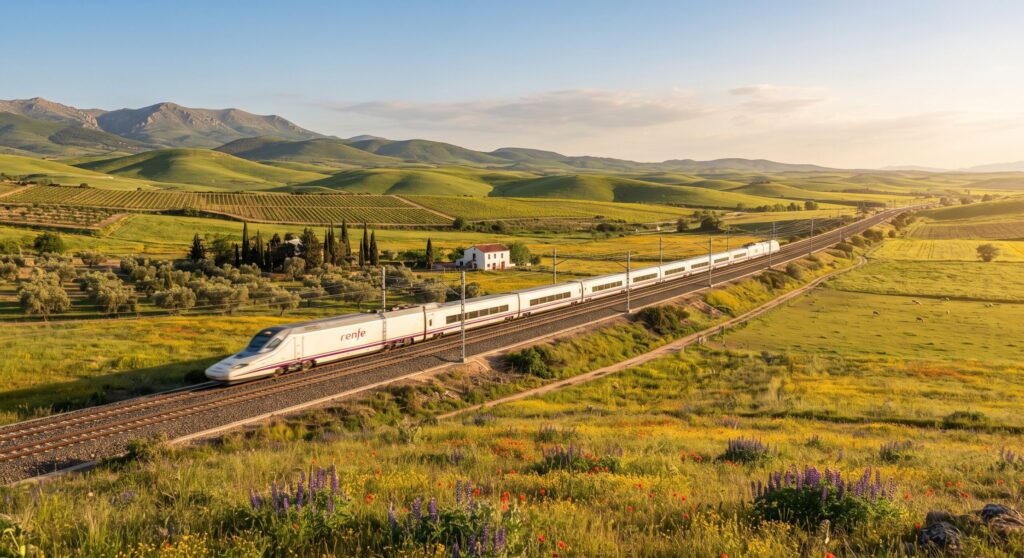
For most people, the best cities to visit in Spain are Madrid, Barcelona, Seville, and Granada, with Córdoba, Toledo, San Sebastián, and Valencia as strong add-ons. Move in a straight line, sleep two nights in each main city, and embrace eco-friendly travel tips for beginners while taking trains between destinations. Pick your dates first, then book the Alhambra and the Sagrada Família on their official sites. Finally, plan how you’ll get to your US departure airport so your trip starts stress-free.
FAQ
What is the best city to visit in Spain for a first trip?
Barcelona or Madrid are the easiest starts. Both have big sights, strong airports, and fast trains to other cities.
How many days do you need in Spain?
Plan 7 to 10 days for three or four cities. Five days works if you stay on one rail line.
What is the most beautiful city in Spain?
Many travelers choose Seville or Granada for palaces and old streets. Beauty is a matter of taste, so pick what you enjoy.
Which cities in Spain are good for day trips from Madrid?
Toledo, Segovia, Ávila, Salamanca, and Cuenca all work. Toledo and Segovia are the most popular and easiest to reach.
What are the best places to visit in Spain besides Barcelona and Madrid?
Seville, Granada, Valencia, San Sebastián, Córdoba, and Salamanca are strong picks. Each has a different style and fewer crowds.
What is the best time to visit Spain's cities?
Spring and fall are best. Summer is very hot in the south, and winter is quieter and cheaper.
Which Spanish city has free tapas?
Granada and León are best known for it. Many bars give a free small plate with each drink.
Do Americans need a visa for Spain?
No visa is needed for stays of up to 90 days in any 180 days. ETIAS is not in operation yet and has no confirmed start date, so check the official EU site before booking.
Should I take the train or the bus between Spanish cities?
Take the train between big cities because it is fast and direct. Use buses for small towns without a train station, such as Ronda.
How do I book Alhambra tickets?
Use the official ticket site, tickets.alhambra-patronato.es. Choose your date early and enter names exactly as on passports.
-
 Author: Roberto GarciaView all posts
I am a Digital Transformation Leader and travel technology professional based in San Antonio, Texas. With over 20 years of experience in transportation systems, digital platforms, and customer-focused technology solutions, I help travelers discover secure, affordable, and efficient bus routes across the USA and Mexico. At BoletoXpress, I write and review travel guides covering cross-border bus travel, FIFA World Cup 2026 transportation, route planning, and affordable travel options for diaspora and international passengers. My expertise spans travel operations, mobility technology, digital booking systems, and modern transportation solutions designed to improve the passenger experience.
Follow on - LinkedIn