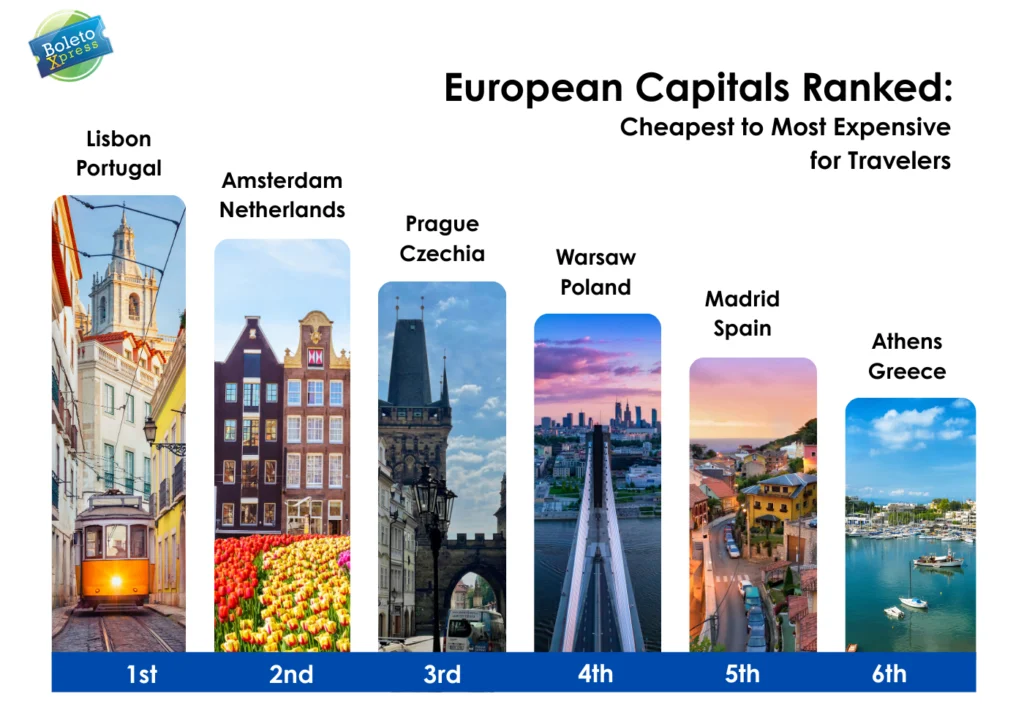
Traveling across Europe is a dream for many people, but the cost of visiting different cities can change a trip from simple to stressful. Every capital has its own style, and each one comes with a different price tag. Some places are friendly for tight budgets, while others are known for higher daily expenses. This guide helps you understand how European capitals compare, from the Cheapest to Most Expensive Capital, so you can plan with confidence.
Many travelers today want clear information before choosing where to go. They want to know the cheapest places to travel in US, often utilizing budget-friendly overland corridors like San Francisco to Los Angeles, the cheapest capital cities in Europe, and the smart options for building the most affordable trip to Europe. This blog brings all of that together in one simple, easy-to-read ranking.
Whether you want a relaxing break, a cultural city walk, or a long backpacking trip, this guide gives you a clear view of what to expect. By the end, you’ll have a strong idea of which capitals offer great value and which ones may require a bigger budget.
The cost of visiting each European capital can be very different, and there are a few simple reasons behind this. Some countries have a lower cost of living, which means food, hotels, and transport are naturally cheaper. Others have stronger economies, which often leads to higher prices for everyday things like coffee, bus tickets, or museum passes.
Tourism demand also plays a big role. Popular cities that attract millions of visitors each year tend to raise their prices during busy seasons. In quieter capitals, travelers often enjoy lower rates because the demand is not as high. Exchange rates can also make a noticeable difference, especially for visitors coming from outside Europe.
All these factors shape the list of the cheapest places to travel in Europe and the cheapest capital cities in Europe and they explain why some cities are easy on the wallet while others feel more expensive.
To create a fair and clear comparison, each capital was ranked using simple and practical factors that matter to most travelers. The main points we looked at include the average daily cost for food, hotel stays, local transportation, and popular attractions. These are the expenses that usually shape a traveler’s budget and make a big difference in choosing where to go.
We also reviewed typical price patterns, such as how much it costs to eat at a local restaurant, the average price of a standard room, and the fees for well-known sites. While exact prices can shift from season to season, these averages offer a reliable view of what travelers can expect.
The goal is to help you plan the most affordable trip to Europe with clear and updated information. With these criteria, the ranking gives a simple guide to compare each city without confusion.
Some European capitals offer great value without cutting down on experiences. These cities give you culture, food, and history at prices that fit almost any budget. They are often listed among the cheapest places to travel in Europe and are perfect for travelers who want quality without overspending. Below are the top budget-friendly capitals to consider.
Sofia is often named one of the cheapest capital cities in Europe. The cost of food, public transport, and local attractions is low, which makes it easy to explore without worry. You can enjoy historical buildings, free walking tours, and affordable cafés. Sofia is a great choice for culture lovers who want a relaxed but rich travel experience.
Bucharest offers a mix of old charm and modern life at prices that are very friendly for visitors. Hotels are reasonably priced, and local restaurants serve generous meals without costing much. Many museums and parks are either free or very cheap, making Bucharest ideal for travelers looking to stretch their budget while still enjoying a full itinerary.
Budapest stands out as one of the highlights among the top cheapest countries in Europe. The city is known for its thermal baths, scenic river views, and low-cost transportation. Street food, local bakeries, and markets make eating out both delicious and affordable. With its beautiful architecture and wallet-friendly attractions, Budapest is perfect for budget-conscious travelers.
Warsaw is modern, clean, and surprisingly affordable. Public transport is reliable and low-cost, and many historical sites offer inexpensive entry. The food scene is full of hearty dishes that won’t break your budget. Warsaw provides strong value, especially for travelers who enjoy museums, parks, and lively city streets.
Belgrade is one of the most affordable capitals in Europe, especially when it comes to nightlife and dining. Cafés, bakeries, and restaurants offer generous portions at very low prices. Public transport is simple and cheap, and many of the city’s best attractions are either free or cost only a few dollars. Belgrade is a top pick for travelers who want an energetic, budget-friendly trip.
These cities show that you don’t need a large budget to enjoy Europe. They are excellent starting points for people planning the most affordable trip to Europe, offering the right balance of culture, comfort, and low daily costs.
Some capitals in Europe are not the cheapest, but they still offer good value for what they provide. These cities have a balanced mix of fair prices, strong attractions, and comfortable transport options. They are ideal for travelers who want quality without entering the high-cost category. Below are the mid-range capitals worth considering.
Lisbon offers warm weather, ocean views, and colorful streets at a reasonable cost. Food and public transport remain affordable, and many viewpoints across the city are free. It’s popular among digital nomads and travelers who want a lively but budget-friendly city experience.
Prague gives travelers great value for their money. While it gets busy during peak seasons, the cost of food, hotels, and local attractions stays moderate. The city’s historic bridges, castles, and scenic streets make it an excellent pick for value-focused travelers who enjoy culture and architecture.
Athens can be affordable depending on the season. Hotels and flights are cheaper outside the busy summer months, making spring and fall ideal times to visit. The food scene is budget-friendly, and many ancient sites offer fair entry prices. Athens works well for travelers who want a blend of history and good weather without high costs.
Madrid offers a big-city experience with a balanced price range. Local food markets, cafés, and public transportation remain reasonably priced. Museums often have discount days, and open parks make it easy to enjoy the city for free. Madrid is great for travelers who want lively culture at comfortable costs.
Berlin is slightly more expensive than Eastern Europe, but still manageable. Museum passes, bike rentals, and day travel cards can help keep expenses low. The city is known for its free outdoor spaces, diverse food options, and rich history. Berlin is ideal for travelers who want a modern, creative city without a premium price tag.
These mid-range capitals offer strong experiences and fair pricing, giving travelers a balanced option when planning the most affordable trip to Europe while still enjoying well-known destinations.
Some European capitals are known for their higher travel costs. These cities offer world-class experiences, but visitors should expect to spend more on food, hotels, and transportation. While they may not fit into the list of the top cheapest countries in Europe, they remain popular because of their culture, beauty, and unforgettable attractions. Here are the capitals that usually sit at the top of the price scale.
Reykjavik is one of the priciest capitals due to the high cost of food and accommodation. Many daily items are imported, which raises prices. Still, it offers incredible natural wonders close to the city, such as waterfalls, lava fields, and hot springs. Travelers visit for the unique landscapes, even if it means a larger budget.
Oslo is known for its strong economy and high wages, which also means higher prices for everyday travel needs. Meals, transport, and hotels cost more than in most European capitals. However, the city is clean, safe, and full of modern attractions. Smart planning like using city passes can help travelers save money.
Copenhagen offers beautiful design, bikes everywhere, and friendly neighborhoods, but it comes at a cost. Dining out and hotels can be expensive, especially in popular districts. The good thing is that the city is walkable, and many outdoor attractions are free. It’s a great destination for those who value comfort and style.
London has something for everyone, but it is well known for its high accommodation prices. Transport and food can also add up quickly. On the bright side, many of the best museums are free, and the city has endless public parks and activities. With careful planning, London can still be enjoyed without overspending.
Paris is one of the world’s most visited capitals, and the high demand often increases travel costs. Hotels, cafés, and attractions can be pricey, especially near the center. Even so, the city’s art, fashion, and historic sites make it worth the expense. Free river walks, street cafés, and scenic viewpoints help balance the budget.
These cities usually fall on the higher end when comparing the Cheapest to Most Expensive Capital rankings. Still, each one delivers experiences that many travelers feel are worth the extra cost.
Here is a simple and clear comparison to help you see how each capital fits on the list of Cheapest to Most Expensive Capital destinations. The table gives a basic idea of average daily costs and what usually influences the price level. These estimates can change with the season, but they provide a helpful starting point for planning your trip.
| Capital City | Estimated Daily Budget (USD) | Why It’s Cheap or Expensive |
|---|---|---|
| Sofia | $35–$55 | Low food prices, cheap transport, budget stays |
| Bucharest | $40–$60 | Affordable hotels, free attractions |
| Budapest | $45–$65 | Cheap public transport, low-cost food |
| Warsaw | $50–$70 | Modern but affordable city services |
| Belgrade | $35–$55 | Very cheap dining and nightlife |
| Lisbon | $60–$90 | Fair hotel prices, affordable local food |
| Prague | $60–$100 | Moderate entry fees and food costs |
| Athens | $65–$110 | Seasonal price shifts, cheap meals |
| Madrid | $80–$120 | Balanced costs, lively food scene |
| Berlin | $85–$130 | Higher lodging but free outdoor spaces |
| Reykjavik | $160–$220 | High import costs and limited budget stays |
| Oslo | $170–$230 | High wages, expensive essentials |
| Copenhagen | $150–$200 | Costly hols and restaurants |
| London | $120–$200+ | Expensive lodging, busy city demand |
| Paris | $130–$220+ | High tourist demand and premium locations |
This table makes it easy to compare cities at a glance and helps you decide which destinations match your budget and travel plans.
Traveling through Europe doesn’t have to be expensive if you plan carefully. Choosing the right cities from the Cheapest to Most Expensive Capital list is the first step toward a budget-friendly adventure. Focusing on the cheapest capital cities in Europe allows you to stretch your budget while still enjoying rich experiences.
Here are some practical tips to make your trip more affordable:
Using these strategies, you can plan a most affordable trip to Europe without missing out on culture, food, or sightseeing. Tools like Boletoxpress can also help travelers compare and book transport options quickly, making travel planning smooth and cost-effective.
Even when visiting mid-range or expensive European capitals, there are ways to keep costs under control. Smart planning can make a big difference, allowing you to enjoy more experiences without overspending.
Here are some helpful tips:
By following these tips and choosing cities wisely from the top cheapest countries in Europe, travelers can enjoy Europe fully while keeping their budget in check. Even expensive capitals can be experienced affordably with smart choices.
Europe offers a wide range of experiences for travelers, but costs can vary greatly from city to city. Understanding the Cheapest to Most Expensive Capital ranking helps you plan smarter, choose destinations that fit your budget, and enjoy your trip without unnecessary stress.
For those seeking the cheapest places to travel in Europe or planning the most affordable trip to Europe, starting with budget-friendly capitals like Sofia, Budapest, or Belgrade is a great idea. Mid-range cities such as Lisbon, Prague, and Berlin offer balanced costs with rich experiences, while capitals like Paris, London, and Oslo provide premium experiences for those ready to spend more.
By planning carefully, using local tips, and comparing travel options, you can make every euro or dollar count. Boletoxpress makes it easier to compare transport and booking options, whether you are booking a quick Dallas to Houston transit ticket or planning a vast European itinerary, helping travelers save both time and money.
I am a Digital Transformation Leader and travel technology professional based in San Antonio, Texas. With over 20 years of experience in transportation systems, digital platforms, and customer-focused technology solutions, I help travelers discover secure, affordable, and efficient bus routes across the USA and Mexico. At BoletoXpress, I write and review travel guides covering cross-border bus travel, FIFA World Cup 2026 transportation, route planning, and affordable travel options for diaspora and international passengers. My expertise spans travel operations, mobility technology, digital booking systems, and modern transportation solutions designed to improve the passenger experience.
Follow on - LinkedIn