21 Best Things to Do in Santa Cruz
- Home
- Travel Tips
- 21 Best Things to Do in Santa Cruz
21 Best Things to Do in Santa Cruz

Easy & Secure Booking with Boletoxpress
Santa Cruz is a beachside city at the northern end of Monterey Bay in California, famous for surfing, redwoods, and an old beach amusement park over 100 years old. Once you have spent enough weekends in Santa Cruz to figure out where the parking spots run dry by 9 a.m., this guide will take you through 21 places to visit.
Top activities and attractions to experience on a first visit to Santa Cruz include the Beach Boardwalk, Municipal Wharf, West Cliff Drive, and Natural Bridges State Beach. You can also add the Redwood Train ride at Roaring Camp, a visit to the Mystery Spot, and a day out in Capitola Village for a full weekend. Most of these are within a 15-minute drive of downtown, so a car is optional.
If you’re mapping out what to do in Santa Cruz, California, the city sits 75 miles south of San Francisco and 45 miles west of San Jose, at the gateway to Silicon Valley, where Highway 17 connects the valley to the coast. If you don’t want to drive Highway 17 but still want to take the bus to Santa Cruz, you can book tickets through BoletoXpress for routes connecting Santa Cruz to various Northern and Central California towns.
At a Glance: All 21 Places to Visit in Santa Cruz
# | Place | Best For | Entry Fee | Time Needed |
1 | Santa Cruz Beach Boardwalk | Families, thrill rides | Free entry, rides $5 to $10 each | 3 to 5 hours |
2 | Santa Cruz Wharf | Sea lions, seafood | Free (parking $1 to $2/hr) | 1 to 2 hours |
3 | West Cliff Drive & Lighthouse Point | Surf watching, sunsets | Free | 1 to 3 hours |
4 | Natural Bridges State Beach | Monarch butterflies, tide pools | $10 parking | 1 to 2 hours |
5 | The Mystery Spot | Quirky roadside fun | $12 per tour | 45 minutes |
6 | Seymour Marine Discovery Center | Marine science, kids | Around $8 to $11 | 1 to 2 hours |
7 | Roaring Camp Railroads | Steam trains, redwoods | $29+ per ticket | 1.5 to 4 hours |
8 | Henry Cowell Redwoods State Park | Old growth trees, hiking | $10 parking | 1 to 3 hours |
9 | Wilder Ranch State Park | Coastal hiking, biking | $10 parking | 2 to 4 hours |
10 | Capitola Village | Beach town charm, food | Free (metered parking) | 2 to 4 hours |
11 | Santa Cruz Museum of Natural History | Tide pool touch tank | Free, donations welcome | 1 hour |
12 | UC Santa Cruz Campus & Arboretum | Redwood forest, gardens | Free | 2 to 3 hours |
13 | Downtown Santa Cruz (Pacific Avenue) | Shopping, dining | Free | 2 to 3 hours |
14 | Pleasure Point | Surf culture, coastal walk | Free | 1 to 2 hours |
15 | Davenport & Shark Fin Cove | Day trip, photos | Free | Half day |
16 | DeLaveaga Park | Disc golf, hiking | Free | 2 to 4 hours |
17 | Antonelli’s Pond & Neary Lagoon | Bird watching, quiet walk | Free | 30 to 60 minutes |
18 | Santa Cruz Mountains Wineries | Wine tasting, views | Tasting fees vary | 2 to 4 hours |
19 | Felton Covered Bridge & Fall Creek | History, easy hike | Free | 1 to 2 hours |
20 | Twin Lakes State Beach & Santa Cruz Harbor | Boats, calm beach | Free | 1 to 3 hours |
21 | Seacliff State Beach (SS Palo Alto) | Cement ship, fishing | $10 parking | 1 to 2 hours |
Once you know the full lineup, here’s how to match it to your trip.
Quick Picks by Situation
- Best Free Attractions: West Cliff Drive, Surfing Museum, Museum of Natural History, Pacific Avenue in Downtown Santa Cruz, Antonelli’s Pond, and Neary Lagoon
- Best for Children: Boardwalk, Seymour Marine Discovery Center, Mystery Spot, Tide Pools at Natural Bridges
- Best for Couples: Capitola Village during Sunset, West Cliff Drive during Sunrise, Santa Cruz Mountains Winery Tours
- Best on a Rainy Day: Santa Cruz Museum of Natural History, Seymour Marine Discovery Center, Pacific Avenue Shopping
- What to do in Santa Cruz at night: go to the West Cliff Drive or Municipal Wharf to enjoy the sunset (look westward) and then eat dinner either in Capitola Village or on Pacific Avenue (since all beaches are closed during the nighttime)
- Good surfing places: Steamer Lane on West Cliff Drive to observe, Pleasure Point to hang out like a local, and Cowell Beach for beginners
- Worth Paying for: Boardwalk Ride wristband, Mystery Spot tour, Roaring Camp steam train ride
- Avoid when you don’t have much time: Santa Cruz Mountain winery tasting and Big Basin day trip (they both require at least a half day or even a whole day by themselves)
Best Time to Visit Santa Cruz
Season | Weather | Crowds | Honest Verdict |
Summer (Jun to Aug) | Warm, foggy mornings that burn off by noon | Heaviest of the year | Best for beach days, but book everything in advance |
Fall (Sep to Nov) | Warmest, clearest weather of the year | Noticeably lighter than summer | The best overall season for most visitors |
Winter (Dec to Feb) | Cool, rainy at times, whale migration begins | Lightest crowds | Great for redwoods and the monarch butterflies at Natural Bridges |
Spring (Mar to May) | Mild and often windy | Moderate | Wildflowers and clearer mountain drives, still cool ocean water |
1. Santa Cruz Beach Boardwalk: California's Last Great Seaside Park

The moment you step onto the Boardwalk around 6 p.m. during a summer day, the first thing that assaults your nose will be the odor of baked dough and salt air, long before you see the Giant Dipper looming between Main Beach and Cowell Beach below. The wooden roller coaster has been running on the same track for more than 100 years now, and you could hear its creaking sound from two blocks away. It’s not some state-of-the-art theme park owned by some company. It’s a genuine seaside amusement park.
Quick Info
Detail | Info |
Location | 400 Beach St, Santa Cruz, CA |
Entry Fee | Free admission, rides $5 to $10 each |
Best Time | Weekday evenings, or before 1 pm on weekends |
Time Needed | 3 to 5 hours |
Best For | Families, couples, thrill seekers |
Why You Should Visit
The Boardwalk has two landmarks within its own premises: the 1924 Giant Dipper and the 1911 Looff Carousel. Visitors are more aware of the roller coaster than the fact that they can take a free hand-cranked ring dispenser at the carousel and win a free ride by taking the brass ring. This alone shows that this park has perfected little joys for over 100 years, according to Santa Cruz Beach Boardwalk.
What to Expect
You can hear the screams of the Giant Dipper riders before seeing it, as the ride’s initial drop is facing the entrance of the boardwalk. The further you go in, the more the arcade lights mix with the sounds of bells ringing at skee-ball, as well as the seagulls screeching over churros that people have dropped. The most surprising thing for most visitors is the gulls’ noise when they fight for dropped churros at the food stands. They snatch them right off your hand, so make sure to face away from any railing when you eat. By the afternoon, the fog comes in as the rides light up against the gray skies.
Pro Tips
- Buy the online day pass before midnight the night before your visit. It saves up to 20 percent compared to buying at the gate, according to Santa Cruz Beach Boardwalk.
- Look for Summer Discount Nights on weekdays after 5 pm, when unlimited ride wristbands drop to a lower flat rate.
- Mini golf costs roughly $6 per round, while bowling is $5 each, both found in the Boardwalk Bowl building that first-time visitors tend to walk right by.
- Parking costs $20 on weekdays and $30 on weekends in front of the park, so parking a bit farther up the street will be more affordable.
- Ride the Giant Dipper first thing in the morning because the line will multiply by midday.
How to Get There
The Boardwalk sits at the bottom of Beach Street, a five-minute walk from the Santa Cruz Metro Center downtown. If you’re taking the bus, either Santa Cruz Metro Route 3 or Route 4 will get you two blocks from the entrance. Those arriving by BoletoXpress at the Santa Cruz Metro Center and walking to the Boardwalk will get there faster than most drivers can pull their car out of the parking garage.
Best Photo Spots
- The base of the Giant Dipper looking up, right as a train crests the first hill.
- The entrance to the Looff Carousel building where the dusk beautifully highlights the classic signs and lights.
- The ocean side of the boardwalk rail with the amusement rides lit behind you and the water in front.
2. Santa Cruz Wharf: Sea Lions, Seafood, and the Longest Pier on the West Coast

Just walk down to the end of the pier and take a look below at the spots between the wood boards. Down there, somewhere, a pack of barking sea lions is usually basking in the sun on the beams of the pier, noisy enough that you can hear them even before seeing them.
Quick Info
Detail | Info |
Location | 21 Municipal Wharf, Santa Cruz, CA |
Entry Fee | Free to walk, parking $1 to $2 per hour |
Best Time | Late morning for sea lions, sunset for views |
Time Needed | 1 to 2 hours |
Best For | Seafood lovers, wildlife watchers |
Why You Should Visit
The wharf was constructed in 1914 and was constructed using over 4,400 wooden piles of Douglas Fir, stretching to a 2,745-foot-long wharf on Monterey Bay, which is the largest wooden pier on the West Coast. The wharf experienced destruction following a storm that led to the collapse of a 150-feet section of the south end of the wharf in December 2024. However, the city reopened the reconstructed wharf at an event in April 2026, but it is 150 feet short of its 1914 length.
What to Expect
The floorboards make a squeaking sound beneath your feet when delivery trucks pass by you on the way to the restaurants. Salt spray blows up from between the floorboards on days with strong winds. Some pelicans dive into the water on either side of the pier, and there are also sea otters lying on their backs in the seaweed. When you reach the other side of the pier, you get a mixed scent of the restaurants and the haulout area.
Pro Tips
- Parking runs $1 for every 20 minutes, with a $24 daily maximum in summer and a $12 daily maximum from September through March, according to U.S. News Travel.
- Bring quarters or a card for the pay stations. Cash-only machines are being phased out.
- Wharf fishing doesn’t require a license because it is considered a public wharf, while fishing on the beach and in boats does.
- Have your clam chowder served in bread bowls from one of the restaurants at the end of the wharf. This is an activity on the wharf, and not just a scam for tourists.
- Visit during a weekday morning when you wish to capture pictures of the sea lions without a large crowd obstructing your view through the railings. The one thing that most people do not know about the wharf is that midway down the wharf, the smell of the fried foods turns into the salty sea lion smell.
- You can get coffee from the stand near the wharf entrance instead of going all the way to the other side, where the sit-down restaurants don’t open until later.
How to Get There
The wharf is located right south of the Boardwalk on Beach Street. It takes a seven-minute stroll from the Boardwalk entry, or a ride on Santa Cruz Metro Route 3.
Best Photo Spots
- Facing back toward shore from the wharf’s far end, with the Boardwalk’s rides visible in the background.
- Straight down through the plank gaps at the sea lion haul out zone.
- West toward Steamer Lane at sunset, where the surfers silhouette against the orange sky.
3. West Cliff Drive and Lighthouse Point: The Best Free Walk in Santa Cruz

The bench that is closest to Steamer Lane is always quickly filled in the mornings, and there’s a good reason for it. While surfers are paddling out into the sea right next to the rocks, retired locals sit there and comment on each wave as if it were a sports competition. Nobody is in a rush here.
Quick Info
Detail | Info |
Location | West Cliff Dr, Santa Cruz, CA |
Entry Fee | Free |
Best Time | Sunrise for whales, late afternoon for surfing |
Time Needed | 1 to 3 hours |
Best For | Walkers, surf watchers, photographers |
Why You Should Visit
The paved pathway stretches for 3 miles one way up on the bluffs, offering ocean views for the majority of the way, according to U.S. News Travel. The Mark Abbott Memorial Lighthouse sits at one end and houses the Santa Cruz Surfing Museum, opened in June 1986 as the world’s first surfing museum, according to Local Santa Cruz.
What to Expect
The track is just on the brink of the cliffs, so you hear the sound of the waves crashing into each other even before you get to see the sea above you. The surfers make full use of Steamer Lane, which is just off the point, where you can clearly watch them surfing and carving without any binoculars. Later on, the track will take you past benches commemorating locals who were fond of this part of the coastline.
Pro Tips
- The Surfing Museum is free and open every day from 10 am until 5 pm during the summer months. During winter, the museum operates from noon until 4 pm and is closed on Tuesdays and Wednesdays, so check the schedule in advance.
- Bring a coat even in summer because the bluffs attract winds that other parts of the city don’t experience.
- Ride a beach cruiser to make the ride under an hour, as this route is also a favorite among cyclists.
- Look out for gray whales migrating along the coast between December and April – you can see them even with the naked eye from the benches.
How to Get There
West Cliff Drive can be found on the coastline west of Municipal Wharf. Street parking can be found on the street itself, although parking spots around the lighthouse are quickly filled up during weekends.
4. Natural Bridges State Beach: Monarch Butterflies and Tide Pools

Standing under the eucalyptus tree in late November, you think that it is covered with dead leaves. However, on moving, you realize that the whole tree is covered by monarch butterflies with wings touching each other.
Quick Info
Detail | Info |
Location | 2531 W Cliff Dr, Santa Cruz, CA |
Entry Fee | $10 vehicle parking, free to walk in |
Best Time | Late November for butterflies, low tide for pools |
Time Needed | 1 to 2 hours |
Best For | Families, nature lovers |
Why You Should Visit
Monarchs can be seen around mid-October, peak in late November and early December, and migrate out by mid to late January, according to a Docent Naturalist cited by Visit Santa Cruz County. For the year 2024, approximately 10,000 monarchs were overwintering in the area, based on data by California State Parks. Few beach parks in the US have all these attributes within 65 acres.
What to Expect
Monarch Grove Trail is flat and shaded, with access to a serene canopy where the docents stand still pointing upwards. You can see sea stars and anemones in the tide pools at low tide at the beach. The rock arch, named after the area, completes the horizon line.
Pro Tips
- Guided tours for monarchs run at 11 am and 2 pm on weekends in autumn and winter.
- The docents conduct tide pool walks at low tides, which occur all year round; hence, you should have a look at the tide chart first.
- Parking is $10, although there is a small area of 20-minute free street parking near the entrance.
- Contact your local library to see whether it lends a California State Parks Pass for free access.
- Get there precisely at 8 am, when the park opens, in order not to miss the quiet morning on the beach and grove.
How to Get There
Drive on Swift Street to the west off Highway 1, or travel north on West Cliff Drive up the bluffs until you reach the end of the road.
5. The Mystery Spot: Santa Cruz's Strangest 45 Minutes
Just step into the cabin, put yourself on the inclined floor, and watch a ball roll upwards. It’s the feeling of confusion before you can figure out anything about it – that’s the whole idea behind this place.
Quick Info
Detail | Info |
Location | 465 Mystery Spot Rd, Santa Cruz, CA |
Entry Fee | $12 per person, ages 3 and under free |
Best Time | Weekday mornings |
Time Needed | 45 minutes to 1 hour |
Best For | Families, road trip stops |
Why You Should Visit
Mystery Spot has hosted guided tours inside this tilted cabin amid the redwood forests since the ’40s, and it’s always heavily booked, especially on weekends and holidays. The tilt creates optical illusions that skew your perception of depth, altitude, and direction, but it’s hard to tell whether knowing the trick helps you get past it. Our opinion: it’s a gimmick, and a genuinely fun one, worth the detour even if you spend the whole drive up rolling your eyes.
What to Expect
The tour guide leads the small group around the house on a highly choreographed tour. This includes pointing out places where individuals look taller or shorter than they really are, and areas where balls defy gravity on the slope boards. The way up to the area itself is quite steep. A grove of redwoods surrounds it, with an overwhelming smell of bark and wet dirt. Eventually, everyone in the group laughs.
Pro Tips
- Book online in advance. Advance tickets run $12 with no extra fees, and the site frequently sells out.
- Arrive 30 minutes before your scheduled tour time, or you risk losing your spot.
- Parking costs $5 per vehicle, payable by cash, check, or card at the gate.
- On busy weekends, the road into the Mystery Spot sometimes closes around noon, so early tours are safer bets.
- Selfie sticks are allowed in the parking lot but not inside the gates, so snap your group photos before you walk in.
How to Get There
Mystery Spot lies among the redwoods just a few minutes’ drive northeast of downtown Santa Cruz, on Branciforte Drive. Large vehicles, such as RVs, must contact them ahead of time due to limited parking space.
6. Seymour Marine Discovery Center: Touch a Shark, See an 87 Foot Whale Skeleton

Reach into the touch tank and feel a swell shark swim around your fingertips, completely unbothered, as part of the real skeleton of an 87-foot blue whale named Ms. Blue rests just outside, once having swum in those same waters viewable from the center’s windows. Since 2023, roughly half the skeleton has been lowered to the ground for safety reasons, with an augmented reality app filling in the rest of her shape.
Quick Info
Detail | Info |
Location | 100 McAllister Way, Santa Cruz, CA |
Entry Fee | Around $8 to $11 |
Best Time | Weekday mid-mornings |
Time Needed | 1 to 2 hours |
Best For | Kids, marine science fans |
Why You Should Visit
This facility is part of the Long Marine Laboratory at UC Santa Cruz. It’s home to Ms. Blue, an 87-foot blue whale skeleton that washed ashore at Pescadero State Beach in 1979 and is one of the largest blue whale skeletons on display anywhere in the world. Free tours take place daily and are led by staff and volunteers rather than scripted tour guides.
What to Expect
Indoors, tanks containing rockfish, jellyfish, and eels sit near the hands-on touch pool, where docents guide children and even adults to hold the sea star and feel a shark’s skin. Outside, the remaining bones of Ms. Blue rest on the ground facing the ocean, complete with informative signs about how scientists retrieved her and an augmented reality marker you can scan to see her full skeleton as it once stood. Tours run for 45 minutes at 1 pm, 2 pm, and 3 pm, while a shorter 30-minute family tour runs at 11 am, according to Lonely Planet.
Pro Tips
- Children under 3, UC Santa Cruz students, and members all get in free.
- The daily tours are included in admission and run on a first-come, first-served basis, so arrive a few minutes early to claim a spot.
- Parking is complimentary for the first three hours with a paid admission ticket.
- Visit on a weekday to avoid the busier weekend crowds noted by recent visitors.
- Pair this stop with Natural Bridges State Beach, since the two sit about a mile apart along the coast.
How to Get There
The facility is located on the far west end of Santa Cruz, beyond Natural Bridges State Beach on Delaware Avenue.
7. Roaring Camp Railroads: Ride a 1890s Steam Train Through Old Growth Redwoods
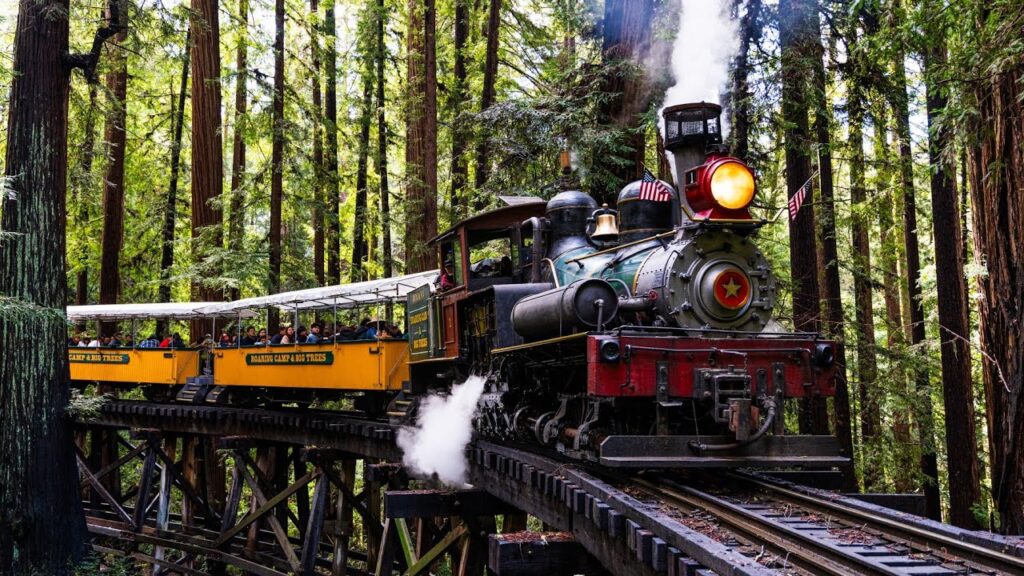
With a puff of the whistle, the steam hissing from the engine and the train jolting forward into a stand of ancient redwood trees, some even older than the railroad itself, which began service in 1875.
Quick Info
Detail | Info |
Location | 5401 Graham Hill Rd, Felton, CA |
Entry Fee | Redwood Forest Steam Train: around $29 to $44 for adults |
Best Time | Weekday mornings |
Time Needed | 1.5 hours for the train, longer with grounds exploring |
Best For | Families, train and history fans |
Why You Should Visit
Roaring Camp’s steam engines date back to 1890 and are among the oldest and best-preserved narrow-gauge steam engines running regularly, transporting passengers across America, according to Roaring Camp Railroads. The Redwood Forest Steam Train winds its way to the top of Bear Mountain via trestles and forests that loggers cleared using these very railways in 1880.
What to Expect
The conductors narrate the rail journey and the woods the train travels through as it climbs the mountainside, and the scent of smoke from burning coal wafts back into the open-air cars. The redwoods around you tower so tall that passengers frequently strain their necks attempting to look up at their tops.
Pro Tips
- The Redwood Forest Steam Train ride runs about 75 minutes round trip, according to U.S. News Travel.
- A separate Santa Cruz Beach Train connects Roaring Camp to the Boardwalk area, a three-hour round trip that pairs two attractions in one ticket.
- Parking runs about $10 at the Felton depot.
- Dogs are allowed onboard as long as they stay seated on the car floor.
- Public transit riders can reach the depot on Santa Cruz Metro Route 35, which stops within a short walk of the entrance.
How to Get There
Felton is located around 7 miles northwest of downtown Santa Cruz. Take Highway 17 to the Mount Hermon Road exit and continue on Graham Hill Road to the depot.
8. Henry Cowell Redwoods State Park: Walk Among 1,800 Year-Old Trees
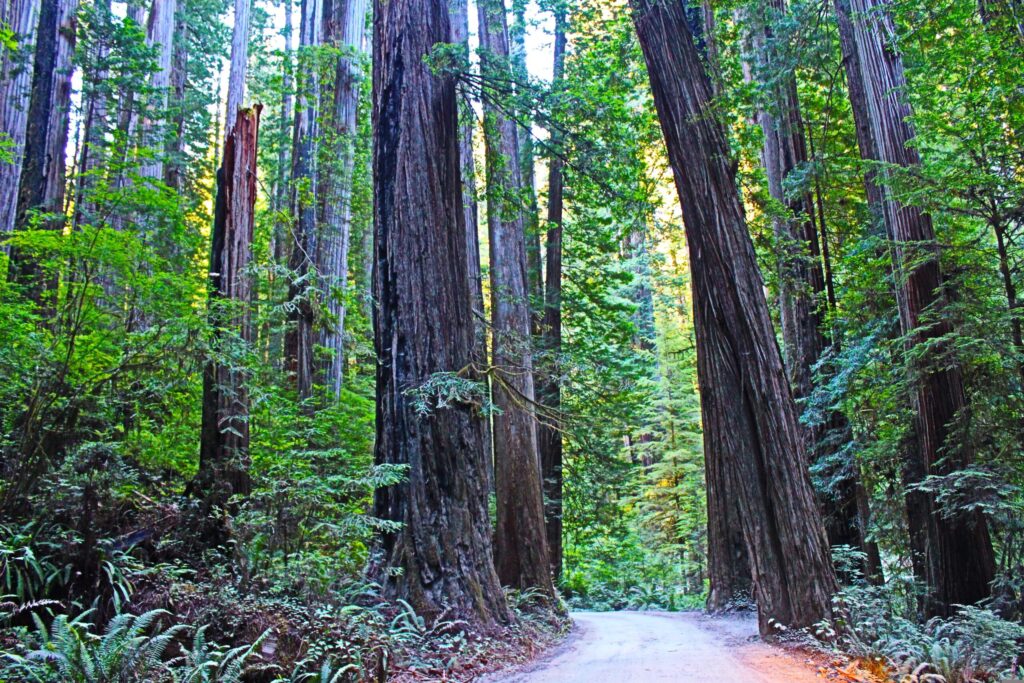
Stand next to the largest tree on the old growth trail and look up as high as you can. Even though it is 281 feet high and 17 feet wide, it still won’t fit within one picture frame.
Quick Info
Detail | Info |
Location | 101 N Big Trees Park Rd, Felton, CA |
Entry Fee | $10 vehicle day use |
Best Time | Weekday mornings |
Time Needed | 1 to 3 hours |
Best For | Hikers, families, redwood fans |
Why You Should Visit
The park’s oldest redwoods are up to 1,800 years old, according to California State Parks. The 0.8-mile Redwood Grove Loop Trail is an easy path for baby strollers and requires little physical effort to enjoy the ancient giants.
What to Expect
The ground of the forest path is soft from the fallen bark, and light comes through gaps between the tree trunks, which are wider than most cars. The undergrowth is full of ferns, and informational markers on the loop describe the growth rings and burn marks seen on some of the cut or fallen logs. Farther out, the River Trail and Observation Deck Trail lead to a vista of the Santa Cruz Mountains.
Pro Tips
- Free parking exists at two pullouts along Highway 9 and one along Graham Hill Road for visitors willing to walk in.
- The visitor center is open Friday through Sunday from 10 am to 3 pm.
- Only four trails in the park allow bikes and only three allow dogs, so check trail signage before setting out with either.
- Combine this stop with Roaring Camp Railroads next door for a full redwoods day.
- Bring water. The nearest facilities sit only at the main lot and campground area.
How to Get There
The primary entry is on Highway 9 in Felton near the Roaring Camp Railroads.
9. Wilder Ranch State Park: Coastal Bluffs Meet 1800s Ranch History

Duck under the tunnel from the dairy farms into the highway, and suddenly your surroundings change completely from old-fashioned farmhouses to the coastal cliffs that stretch on as far as the eye can see.
Quick Info
Detail | Info |
Location | 1401 Coast Rd, Santa Cruz, CA |
Entry Fee | $10 vehicle day use, $9 for seniors |
Best Time | Morning, before afternoon wind picks up |
Time Needed | 2 to 4 hours |
Best For | Hikers, bikers, history fans |
Why You Should Visit
Wilder Ranch covers about 7,000 acres and has over 34 miles of cycling, walking, and equestrian trails, making it one of the largest outdoor recreational areas along this stretch of coastline, according to California State Parks. This Cultural Preserve offers tours of a fully restored Victorian house built in 1897 and an 1896 water-powered machine shop, giving you a full flavor of ranching in 1800s California before you even set foot on the trails.
What to Expect
The Cultural Preserve smells of hay and old wood, with chickens and goats roaming near the barns. Going beyond the tunnel that leads under Highway 1, there are wave-cut terraces where the wind is never-ending. Further along the trail, you will come across the Old Cove Landing Trail, which leads to Fern Grotto Beach.
Pro Tips
- Bicycles are allowed on all trails and roads in the park, with a posted 15 mph speed limit.
- Do the inland hiking loop first, then save the coastal bluff walk for last, since many visitors say the ocean views make for a better finishing note.
- Redwoods also hide inside the park, along the Old Cabin, Enchanted Loop, and Twin Oaks trails.
- The cultural preserve and Old Cove Landing Trail are ADA accessible.
- No camping exists here except for six first-come, first-served horse campsites, so plan this as a day trip.
How to Get There
The park entrance is just off Highway 1, a few miles west of downtown Santa Cruz.
10. Capitola Village: The Prettiest Beach Town Near Santa Cruz

Order a slice of pizza at the walk-up window near the Esplanade and take it down to the bench at Capitola Beach. Imagine a pastel-colored Venetian-style cottage behind you, a lit-up wharf in front of you, and no place to be for the next hour. The five-minute stroll from the pizza stand to the beach feels like entering an entirely new city.
Quick Info
Detail | Info |
Location | Capitola, CA, about 6 miles from Santa Cruz |
Entry Fee | Free, metered parking $0.50 to $2 per hour |
Best Time | Sunset for dinner, morning for the beach |
Time Needed | 2 to 4 hours |
Best For | Couples, foodies, photographers |
Why You Should Visit
The colorful Venetian Court cottages, along with the Capitola Wharf, make this tiny community stand out with a unique Mediterranean flavor not found in any other town in Santa Cruz County. Storm conditions damaged this 855-foot wharf in January 2023, but it reopened in September 2024 after $7.9 million in reconstruction, KRON4 reports.
What to Expect
The Esplanade is alive with the sound of restaurant patio seating along the waterside, music spilling out from a concert on Wednesdays during the summer months, and families navigating their way through stores and to the beach. Soquel Creek divides the beach area in two, creating a more peaceful place for children to swim than the oceanside beach. Just one block inland from the beachfront and you’re away from the crowds amidst quiet residential streets.
Pro Tips
- The Beach and Village parking lots behind City Hall charge just $0.50 an hour with a 12-hour maximum, a much better deal than the metered Village spots, according to the City of Capitola.
- A free summer shuttle runs from the lower parking lot to the Village on weekends and holidays from Memorial Day through mid-September.
- Village street parking limits you to a 2- to 3-hour stay, so use the lots for a full-day visit.
- Dogs are not allowed on Capitola Beach itself, though they can hang out on the sea wall next to it.
- Book dinner reservations early if you want a wharf-view table on a summer weekend.
How to Get There
Capitola is just a short drive from Santa Cruz on Route 2.
11. Santa Cruz Museum of Natural History: The Whale Museum

The gray whale life-size sculpture sits right at the front entrance, and in some areas it is worn from years of children playing on it. It says a lot about how people feel about this little museum that’s located over Seabright Beach.
Quick Info
Detail | Info |
Location | 1305 E Cliff Dr, Santa Cruz, CA |
Entry Fee | Free, donations welcome |
Best Time | Weekday afternoons |
Time Needed | About 1 hour |
Best For | Families, quick indoor stop |
Why You Should Visit
Established in 1905 from the personal collection of a young naturalist named Laura Hecox, the museum is located in the Carnegie Library building, built in 1915, and covers everything from Monterey Bay Tide Pools to the tops of the Santa Cruz Mountains, according to Roadside Secrets. The entrance is free every day for everyone.
What to Expect
Inside, a touch pool lets visitors interact with living intertidal animals under a docent’s guidance, along with a large mural depicting life in an Ohlone village. The museum also has fossils, taxidermy exhibits, and a bee observation hive, and it is clearly accessible.
Pro Tips
- The museum is free the first Friday of every month with extended evening hours, according to Yelp.
- Hours run Tuesday through Friday, 11 am to 4 pm; weekends, 10 am to 5 pm; closed Mondays.
- Parking permits are required on the museum side of Pilkington Avenue and can be picked up for free at the info booth inside.
- Pair this stop with a walk down to Seabright Beach right below the museum.
- The museum’s satellite location, the Santa Cruz Surfing Museum, is a short drive away on West Cliff Drive if you want to combine both in one day.
How to Get There
The museum is on East Cliff Drive at Seabright Beach, just a few minutes from Santa Cruz.
12. UC Santa Cruz Campus and Arboretum: Redwood Forest Meets College Town
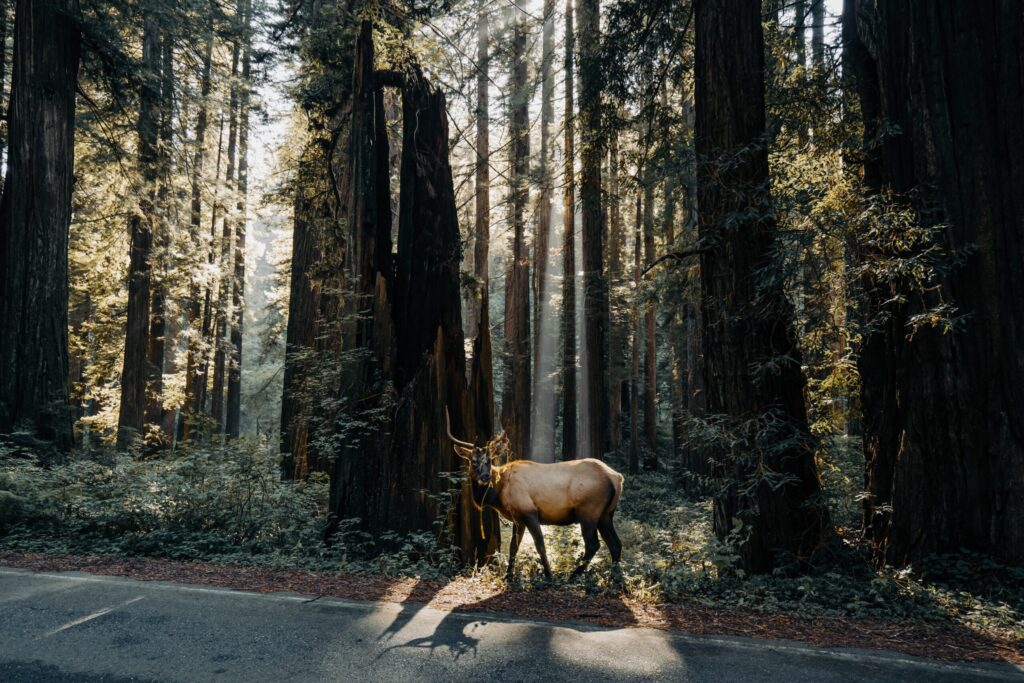
Take a walk on UC Santa Cruz, and technically, you will find yourself in a working redwood forest. The lecture theaters sit amid trees so tall they block out the sky.
Quick Info
Detail | Info |
Location | 1156 High St, Santa Cruz, CA |
Entry Fee | Free to walk campus, arboretum admission varies |
Best Time | Weekday afternoons |
Time Needed | 2 to 3 hours |
Best For | Nature walks, quiet exploring |
Why You Should Visit
It is hard to find other colleges with campuses in the middle of a redwood forest like UC Santa Cruz. The UCSC Arboretum and Botanic Garden focuses on California, Australian, South African, and New Zealand plants, offering a globally diverse selection right in the Central Coast forest.
What to Expect
The paths wind through groves of redwoods and fields that, on clear days, overlook the ocean. Banana slugs, the school’s mascot, are frequently seen on wet paths. The arboretum’s proteas and native plants exhibit colorful blooms in spring, but the rest of the forest remains green all year long.
Pro Tips
- Free campus shuttle loops connect the main entrance to different colleges if you would rather not walk the hilly terrain.
- Visit the Cowell Ranch buildings near the base of campus for a taste of the property’s ranching history before it became a university.
- Wear layers. Campus sits higher up than downtown Santa Cruz and runs noticeably cooler and foggier.
- Weekday visits avoid the parking crunch of move-in days and graduation weekends.
How to Get There
The main entrance is located at the end of High Street, which rises steadily from the downtown area.
13. Downtown Santa Cruz and Pacific Avenue: Shops, Murals, and Local Food
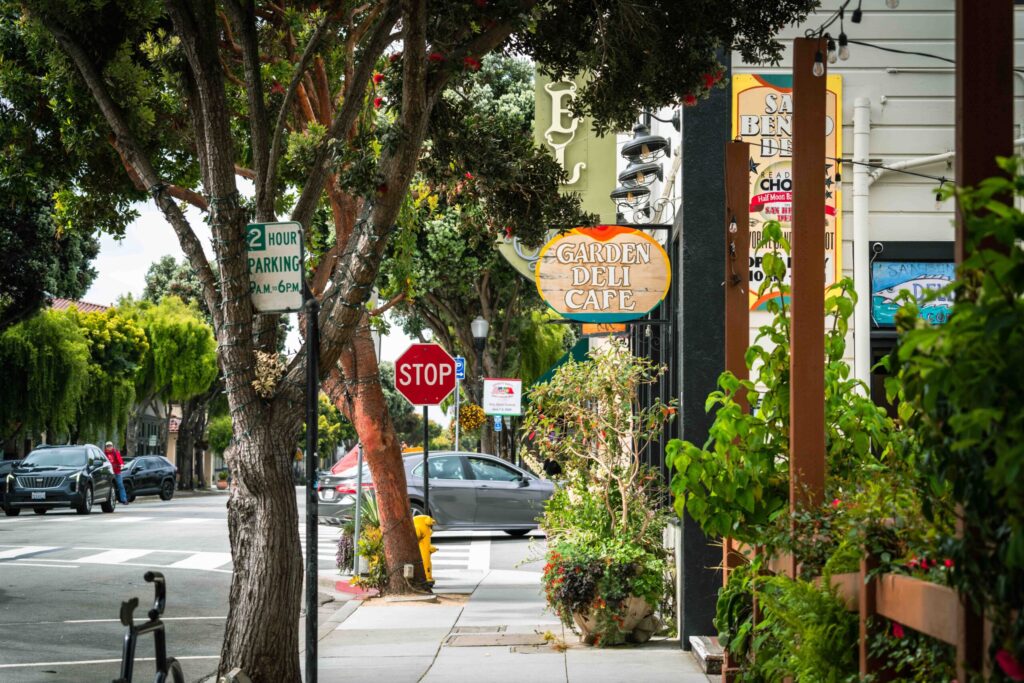
Pacific Avenue is quiet enough that musicians on the streets can often be heard from a full city block away most Saturday afternoons, playing against the scent of freshly brewed coffee wafting from the doorways of one house in three.
Quick Info
Detail | Info |
Location | Pacific Ave, Santa Cruz, CA |
Entry Fee | Free |
Best Time | Saturday for the farmers market |
Time Needed | 2 to 3 hours |
Best For | Shoppers, foodies, people watching |
Why You Should Visit
Santa Cruz’s downtown is filled with unique independent bookstores, vintage stores, and local restaurants on an easily accessible street that was completely rebuilt after being destroyed in the 1989 Loma Prieta earthquake. The rebuilding process created a downtown with wider sidewalks and more public art than other beach communities its size.
What to Expect
Street performers, painted walls, and patios occupy the sidewalks during most afternoons. On Wednesdays, the farmers’ market blocks off some parts of Lincoln Street, with farm stands, food vendors, and live entertainment. Side streets off the main street have small shops that many visitors pass by without even noticing.
Pro Tips
- The Santa Cruz Downtown Farmers Market runs Wednesdays year-round, rain or shine.
- Parking garages on Cedar Street and Front Street tend to be cheaper than metered street spots for longer visits.
- Many downtown restaurants offer happy hour specials between 3 pm and 6 pm on weekdays.
- If you arrive by bus, downtown sits a short walk from the Santa Cruz Metro Center, making it an easy first or last stop of your trip.
How to Get There
Downtown is located along Pacific Avenue from Water Street to Laurel Street, within walking distance of the Metro Center bus stop. Anyone traveling via BoletoXpress lines into downtown begins their journey here, which naturally becomes a destination for a trip to the beach.
14. Pleasure Point: Where Locals Actually Surf

Avoid Steamer Lane’s tourists and venture a bit east. Pleasure Point attracts fewer photographers and many more surfers, many of whom have been riding the waves here their whole lives.
Quick Info
Detail | Info |
Location | East Cliff Dr, Santa Cruz, CA |
Entry Fee | Free |
Best Time | Morning for glassy waves |
Time Needed | 1 to 2 hours |
Best For | Surf watching, coastal walking |
Why You Should Visit
One of the most dependable surf break sites on this particular coast is Pleasure Point, which is also known as Soquel Point. Another feature of this point is that you can enjoy ocean views from its bluff-top trail, like on West Cliff Drive, but with no crowds.
What to Expect
Surfers form close-packed line-ups in the ocean, taking their turns on sets that come more reliably than at most breaks in Santa Cruz. On dry land, there are some cafes and surf shops dotted along East Cliff Drive, endowing it with a more lived-in, rough-around-the-edges look than West Cliff Drive.
Pro Tips
- Bring binoculars if you want to actually follow individual surfers through their rides from the bluff. Mornings offer the best light for photos, since the sun sits behind you facing the waves.
- Several surf shops nearby rent surfboards and wetsuits if you want to try the water yourself at a nearby beginner-friendly beach.
Getting There and Parking
Drive east from the harbor towards 41st Avenue on East Cliff Drive. Street parking at East Cliff is limited by noon on weekends, so aim to arrive by 7 am or 8 am.
15. Davenport and Shark Fin Cove: A Short Coastal Day Trip North

Leave Highway 1 at the right unmarked turnout to arrive at a small inlet that has a rock formation emerging from the waters in the shape of its very name.
Quick Info
Detail | Info |
Location | Highway 1, about 12 miles north of Santa Cruz |
Entry Fee | Free |
Best Time | Midday for the clearest water color |
Time Needed | Half day including drive |
Best For | Photographers, scenic drives |
Why You Should Visit
Driving on Highway 1 to Davenport is like hugging the coastline, with virtually no buildings interrupting the view, which is quite an uncommon occurrence for the California coastline to be found within a 20-minute drive from a mid-size city.
What to Expect
Shark Fin Cove can be found down an easy trail from a small pullout, which will take you to a tiny cove with crystal blue waters and the fin-like rock formation that the location is named after. The town of Davenport, on the other hand, is no more than just a few blocks long.
Pro Tips
- Parking is limited to a small unmarked pullout, so arrive early or expect to wait for a spot on weekends.
- The trail down to the cove is steep and unmaintained in spots, so wear real shoes, not sandals.
- Stop at the Davenport Roadhouse for coffee or lunch to break up the drive.
- Combine this trip with a stop at Wilder Ranch State Park, which sits along the same route.
How to Get There
Drive up Highway 1 from Santa Cruz. The Davenport exit and Shark Fin Cove pullout are located directly on the highway.
16. DeLaveaga Park: Hiking and Disc Golf in the Hills Above Town
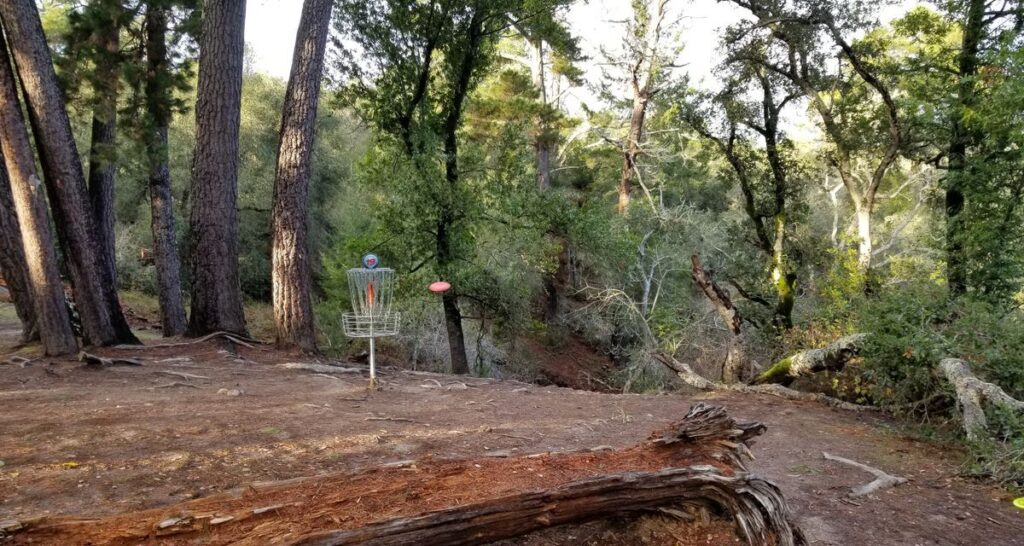
Above the fog line, this 450-acre park is home to one of America’s most highly regarded disc golf courses, nestled among hiking trails tourists may not know about.
Quick Info
Detail | Info |
Location | 66 Upper Park Rd, Santa Cruz, CA |
Entry Fee | Free |
Best Time | Weekday mornings |
Time Needed | 2 to 4 hours |
Best For | Hikers, disc golf players |
Why You Should Visit
The DeLaveaga disc golf course has hosted national-level tournaments and attracts disc golfers from far beyond Santa Cruz County. Beyond the course, miles of hiking and mountain biking trails wind through oak woodlands and grassy slopes, with vistas reaching out to Monterey Bay.
What to Expect
The park is much quieter and more local compared to the beaches. Disc golfers sneak around the baskets placed in the woods, and hikers walk the fire roads on weekends with the mountain bikers. The small pond and picnic area located at the park entrance attract families.
Pro Tips
- Bring your own discs if you want to play, since rentals are limited.
- Trail maps posted at the main entrance help first-time visitors avoid getting turned around in the wooded sections.
- Weekday visits are far quieter than weekends, when the disc golf course draws a steady stream of local players.
How to Get There
The park sits just above town, near downtown on Branciforte Drive.
17. Antonelli's Pond and Neary Lagoon: Quiet Bird Watching Stops
Ducks splash about in circles, while the blue heron remains perfectly still near the edge of the water, right in the heart of the city where one can still hear cars in the distance past the reeds.
Quick Info
Detail | Info |
Location | Delaware Ave and Bay St areas, Santa Cruz |
Entry Fee | Free |
Best Time | Early morning |
Time Needed | 30 to 60 minutes |
Best For | Bird watchers, a quiet break |
Why You Should Visit
Both small wetlands sit within city limits yet feel far removed from the beach crowds, giving visitors a break from the busier tourist stops without needing a long drive.
What to Expect
Boardwalks and short gravel paths loop around both ponds, with benches positioned for quiet birdwatching. Herons, egrets, and ducks are common year-round, and the surrounding native plants attract butterflies in warmer months.
Pro Tips
- Bring binoculars for the best birdwatching experience.
- Both spots make a good stop between larger attractions if you need a short, calm break.
- Neary Lagoon connects to a small nature trail system worth the extra 20 minutes if you have the time.
How to Get There
Antonelli’s Pond is located near Delaware Avenue, almost on the western edge of town. Neary Lagoon, on the other hand, is closer to downtown.
18. Santa Cruz Mountains Wineries: Wine Tasting Above the Fog Line

Drive up into the mountains on a foggy morning in the coastal area, and fifteen minutes later you will find yourself in bright sunshine with rows of vineyards planted in hills that never feel the marine layer on the beach.
Quick Info
Detail | Info |
Location | Scattered through the Santa Cruz Mountains |
Entry Fee | Tasting fees typically $15 to $30 |
Best Time | Weekday afternoons |
Time Needed | 2 to 4 hours |
Best For | Wine lovers, scenic drives |
Why You Should Visit
The Santa Cruz Mountains are an appellation situated at a higher elevation than other vineyards in California. It creates a cooler climate, resulting in wines with a distinct flavor compared to those grown in valleys.
What to Expect
Small, family-run tasting rooms are scattered along winding mountain roads, with many having limited hours and producing small quantities that aren’t available at local supermarkets. Views from here extend to redwood-covered ridges, and some wineries have outside seating to turn your tasting into a picnic.
Pro Tips
- Call ahead before visiting smaller wineries, since many keep limited weekend-only hours.
- Designate a driver or book a tour van, since these roads are winding and mountain driving after tasting is not worth the risk.
- Pair a wine day with a stop at Roaring Camp Railroads or Henry Cowell Redwoods, since both sit along the same general route into the mountains.
How to Get There
Most wineries sit off Highway 9 or Summit Road, about 20 to 40 minutes from downtown Santa Cruz, and many require calling ahead since tasting rooms keep limited hours.
19. Felton Covered Bridge and Fall Creek Unit: An Easy Slice of History

California’s highest covered bridge is in Felton, an easy detour many visitors traveling to Roaring Camp miss.
Quick Info
Detail | Info |
Location | Covered Bridge Rd, Felton, CA |
Entry Fee | Free |
Best Time | Anytime |
Time Needed | 1 to 2 hours with the Fall Creek trails |
Best For | History fans, easy hikes |
Why You Should Visit
The Covered Bridge was built in the 1890s and sits within a small county park with picnic sites and a shaded creek. Not far from here is the Fall Creek Unit of Henry Cowell Redwoods State Park, which is less busy than the entrance to the state park.
What to Expect
You can see the bridge in just a few minutes, but the park also offers a longer picnic by the San Lorenzo River. Just a short distance from here, you’ll find Fall Creek, where trails meander through second-growth redwoods, passing the ruins of a former lime kiln operation.
Pro Tips
- Combine this stop with Roaring Camp Railroads and Henry Cowell Redwoods, since all three sit within a few minutes of each other in Felton.
- Fall Creek’s trails are steeper than the main park’s Redwood Grove Loop, so plan more time if you want to see the lime kiln ruins.
- The park makes a good picnic stop between bigger, busier attractions.
How to Get There
Felton is located approximately 7 miles northwest of Santa Cruz’s central district via Highway 9 or Graham Hill Road.
20. Twin Lakes State Beach and Santa Cruz Harbor: Calm Water and Working Boats

Want a Santa Cruz beach where the water actually stays calm? Watch the fishing vessels sailing away beyond the jetty at dawn, when the beach next to it is quiet enough for children to take their first steps into the water without a wave ever toppling them.
Quick Info
Detail | Info |
Location | East Cliff Dr near the Santa Cruz Harbor |
Entry Fee | Free |
Best Time | Morning |
Time Needed | 1 to 3 hours |
Best For | Families, boat watchers |
Why You Should Visit
Twin Lakes sits adjacent to the Santa Cruz Small Craft Harbor and offers more peaceful swimming conditions than the beach closer to town because of the harbor.
What to Expect
The beach is expansive and level, and families and beach volleyball players frequent it. Adjacent to this area, the harbor has docks with sportfishing boats and sailboats, and walking the jetty offers excellent views of the Boardwalk in the distance.
Pro Tips
- Free parking exists along East Cliff Drive, though it fills fast on warm weekends.
- The harbor hosts a small farmers market and food stalls on certain days, so check before you visit.
- Sportfishing charters depart from the harbor most mornings if you want to try deep-sea fishing during your trip.
How to Get There
The beach and harbor are along East Cliff Drive, a short drive or cycle ride from downtown Santa Cruz.
21. Seacliff State Beach: The Cement Ship

An old concrete ship lies partly submerged near this pier, one of the most unusual sights on the California coastline and a favorite sunset photo spot.
Quick Info
Detail | Info |
Location | State Park Dr, Aptos, CA |
Entry Fee | $10 vehicle day use |
Best Time | Late afternoon |
Time Needed | 1 to 2 hours |
Best For | History fans, fishing, photos |
Why You Should Visit
The SS Palo Alto, a concrete-hulled vessel built near the end of World War I, was towed here and deliberately sunk in 1930 to serve as a pleasure pier and ballroom until storms finally broke it apart. What remains still attracts tourists interested in this peculiar episode of Californian coastal history.
What to Expect
The pier that once led out to the wreck was demolished in 2023 after storm damage, and the state has no plans to rebuild it, so today you view the ship from the beach or bluffs rather than up close. The beach still has a much more residential atmosphere than the crowded beaches of Santa Cruz.
Pro Tips
- Fishing here now means casting from the beach itself, since the pier is gone, and beach fishing in California still requires a fishing license, unlike the license-free fishing allowed on the Santa Cruz Municipal Wharf.
- Sunset lighting gives the best photos of the wreck, since the low angle highlights the ship’s remaining structure.
- Combine this stop with a Capitola Village visit, since Seacliff sits only a short drive further along the coast.
How to Get There
Seacliff State Beach sits in Aptos, about 8 miles southeast of downtown Santa Cruz along Highway 1.
5 Mistakes Most Visitors Make in Santa Cruz
- People always make attempts to cover the whole Municipal Wharf, West Cliff Drive, and the Boardwalk in one single day. However, each of these places needs its own amount of time. So, choose two for each day.
- Many drivers don’t realize how busy Highway 1 and Highway 17 get on summer weekends. Traveling during off-peak hours, from 10 am to 3 pm, is the best way to avoid this rush, but BoletoXpress bus riders aren’t affected at all.
- People often forget sunscreen because the coastal fog makes you feel so cold. UV radiation remains intense under clouds, and applying sunscreen every couple of hours will help prevent unexpected sunburn.
- The assumption that all beaches in Santa Cruz are dog-friendly is wrong. Many beaches, including the most popular one at the Municipal Wharf, do not permit any dogs in their vicinity.
- Furthermore, tourists often spend an entire day visiting the redwoods without water or food. Since Henry Cowell and Wilder Ranch offer few facilities once you leave the parking lots, bring everything you need.
Hidden Gems Locals Actually Use
- Moore Creek Trail, just past Natural Bridges, is a quiet coastal path most tourists skip because it is not marked from the main parking lot. Ask the visitor center desk for the trailhead, and you will likely have it to yourself.
- Its Beach, tucked below Lighthouse Point next to the Surfing Museum, is a small sandy cove that most people walk right past on their way to photograph Steamer Lane. It is one of the calmer swimming spots in town.
- The free 20-minute parking strip at Natural Bridges lets you see the arch and grab a few photos without paying the full day use fee, ideal for a quick stop between other plans.
- Corcoran Lagoon, between Pleasure Point and Twin Lakes, is a small wetland with a footbridge that most visitors never notice from the road. Herons and egrets show up reliably at low tide.
- Companion Bakeshop and Verve Coffee are both a short walk from downtown Pacific Avenue. Many Santa Cruz locals grab their morning coffee there, rather than at the busier cafes directly on the tourist strip.
- The bluff-top park at the end of Davenport, past the main roadhouse, has free parking and a clear view of the coastline with almost no crowd, even on busy weekends.
Santa Cruz Budget Breakdown
Traveler Type | Estimated Cost Per Day | What It Covers |
Budget | around 70 dollars | free attractions like West Cliff Drive and the museums, one paid attraction, a casual lunch, and Metro bus fare |
Mid range | around 150 dollars | two or three paid attractions, a sit-down seafood lunch and dinner, and parking at two locations |
Higher spend | 300 dollars or more | a full day at the Boardwalk with a ride wristband, a wine tasting stop, a nicer dinner on the wharf, and a hotel closer to the beach |
These numbers do not include lodging unless noted, since hotel and rental rates swing widely by season.
Where to Stay in Santa Cruz
Downtown Santa Cruz
In downtown Santa Cruz, you can easily walk to Pacific Avenue, the farmer’s market, and the Metro Center bus station. Downtown Santa Cruz is a great place to stay if you’re arriving by BoletoXpress, since the bus station, the beach, and the dining areas are just a block apart.
Beach Flats and the Boardwalk area
The Beach Flats and Boardwalk district offers easy access to attractions and the wharf, perfect for families who enjoy walking without using transportation. A Dream Inn also overlooks Cowell Beach nearby, where you can see the wharf and the Boardwalk from the front seat. At nighttime in the summer, the area is very noisy.
Capitola
Capitola provides a peaceful base with access to its own beach and village, and it’s just a short drive back into Santa Cruz. The Inn at Depot Hill sits right in the village. Rates here are slightly lower than those in beachfront Santa Cruz.
Aptos and Seacliff
Aptos and Seacliff are farther from the strip, have easier parking, and a slower pace, making them suitable for longer vacations or those who prefer the state beaches over the Boardwalk experience. Seacliff Inn Aptos is a solid base for this side of town.
Crowd Levels by Attraction
Attraction | Weekday | Weekend |
Santa Cruz Beach Boardwalk | moderate | very busy |
Municipal Wharf | light | busy |
Natural Bridges State Beach | moderate | busy |
West Cliff Drive | light to moderate | busy near the lighthouse |
Capitola Village | moderate | very busy in summer |
Henry Cowell Redwoods | light | moderate |
Mystery Spot | moderate | busy and prone to selling out |
Where to Eat in Santa Cruz
Ideal Bar and Grill
Ideal Bar and Grill is located at the Municipal Wharf, where patrons order a bowl of clam chowder every time they visit. A bread bowl should cost roughly $12. Keep in mind that almost all tables accept cash and credit cards.
Pizza My Heart
At Pizza My Heart, on the Capitola Esplanade, pizza slices are sold by the pound and include toppings such as roasted garlic and portobello mushrooms. Prices start at a few dollars per slice, and despite the long lines, they move quickly; you can pay with cash or credit card.
Zelda's on the Beach
At Zelda’s on the Beach in Capitola Village, breakfast comes with an ocean view worth the wait, and patrons time their visits to sit at the patio table. A full breakfast will cost you in the mid-teens range.
Final Thoughts
Santa Cruz can’t decide whether it’s a beach town, college town, or mountain town, and that uncertainty packs so many fun things to do into one vacation. You can watch sea lions bark under a century-old wharf in the morning, stand beneath 1,800-year-old redwoods by afternoon, and catch a sunset over Steamer Lane before dinner, all without leaving a 20-mile radius. Few places pack that much range into one trip, and fewer still let you do it without ever really needing to rush.
Frequently Asked Questions
What is Santa Cruz best known for?
Santa Cruz is best known for the Santa Cruz Beach Boardwalk, one of the last traditional seaside amusement parks in California, along with its surf culture centered around Steamer Lane and West Cliff Drive.
Is Santa Cruz good for a day trip?
Yes, A single day covers the Boardwalk, the Municipal Wharf, and West Cliff Drive comfortably, though a full weekend lets you add the redwood parks and Capitola Village without rushing.
What are free things to do in Santa Cruz?
West Cliff Drive, the Santa Cruz Surfing Museum, the Santa Cruz Museum of Natural History, downtown Pacific Avenue, and walking the Municipal Wharf are all free. Several state parks charge only a parking fee, not a per-person entry fee.
What is there to do in Santa Cruz with kids?
The Boardwalk, Seymour Marine Discovery Center, the Mystery Spot, and the tide pools at Natural Bridges State Beach all rank among the best kid-friendly stops in town.
Is Santa Cruz walkable without a car?
Downtown, the Boardwalk, the Wharf, and West Cliff Drive are all walkable from each other or reachable by Santa Cruz Metro bus. Redwood parks and Capitola require a car, bike, or bus ride further out.
When do the monarch butterflies arrive in Santa Cruz?
Monarchs typically arrive at Natural Bridges State Beach in mid-October, peak in late November and early December, and migrate out by mid to late January, based on tracking from park docents.
What is the best beach town near Santa Cruz?
Capitola Village, about 6 miles east, is the most popular nearby beach town thanks to its Esplanade restaurants, small wharf, and colorful Venetian-style buildings.
Do I need a car to visit Santa Cruz?
Not necessarily. If you arrive by bus, such as through a BoletoXpress route into the downtown Metro Center, you can reach the Boardwalk, the Wharf, and downtown entirely on foot or by local Metro bus.
Is Santa Cruz worth visiting?
Yes. Few California coastal cities pack a century-old amusement park, ancient redwood groves, and a college town into one 20-mile radius, which is why Santa Cruz draws repeat visitors year after year.
What are the best beaches in Santa Cruz?
Natural Bridges State Beach, Cowell Beach next to the Boardwalk, Twin Lakes State Beach, and Seacliff State Beach offer everything from tide pools to calm swimming to a historic shipwreck.
-
 Author: Roberto GarciaView all posts
I am a Digital Transformation Leader and travel technology professional based in San Antonio, Texas. With over 20 years of experience in transportation systems, digital platforms, and customer-focused technology solutions, I help travelers discover secure, affordable, and efficient bus routes across the USA and Mexico. At BoletoXpress, I write and review travel guides covering cross-border bus travel, FIFA World Cup 2026 transportation, route planning, and affordable travel options for diaspora and international passengers. My expertise spans travel operations, mobility technology, digital booking systems, and modern transportation solutions designed to improve the passenger experience.
Follow on - LinkedIn