Best Time to Visit Arizona: A Season-by-Season Guide
- Home
- Travel Tips
- Best Time to Visit Arizona: A Season-by-Season Guide
Best Time to Visit Arizona: A Season-by-Season Guide

Easy & Secure Booking with Boletoxpress
This guide uses 1991 to 2020 climate normals from the Arizona State Climate Office, visitation and park operations data from the National Park Service, and monsoon dates from the National Weather Service in Phoenix. Fees, hours and North Rim status were checked in October 2026. The Peak, Shoulder and Low labels are our own editorial groupings, not official tourism categories.
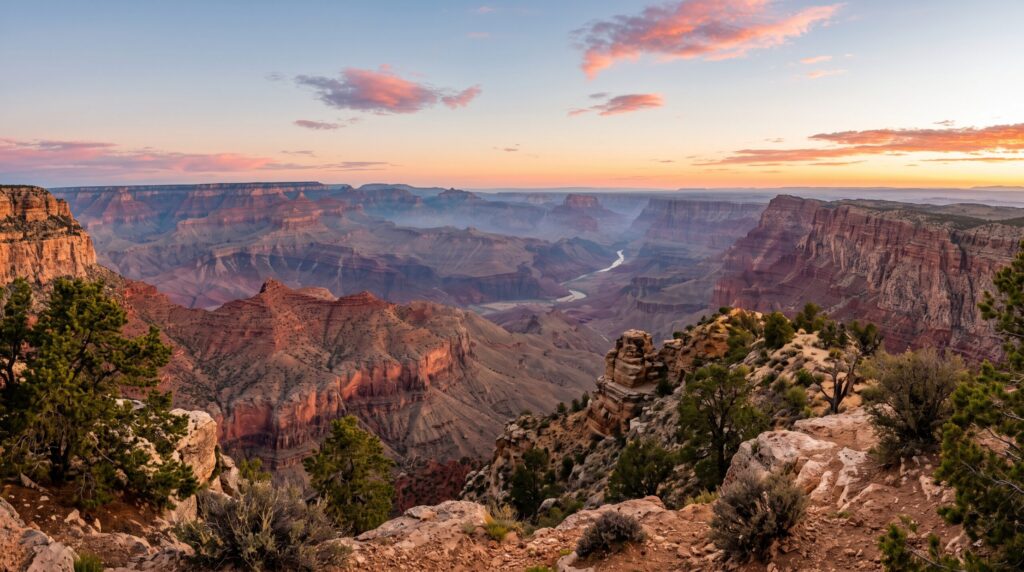
Arizona is a state in the American Southwest, and its landscapes change fast as you travel. Phoenix, where many trips start, sits in the Sonoran Desert. Sedona sits at about 4,500 feet among red rocks, and Flagstaff sits at about 7,000 feet beneath the San Francisco Peaks, according to the U.S. Geological Survey. The Grand Canyon is one of the state’s best-known sights, with 4,430,653 visits in 2025, according to the National Park Service. Arizona is also home to 22 federally recognized tribes, according to the Heard Museum, and Navajo Nation lands include Monument Valley and Canyon de Chelly. This mix of desert, mountains, canyons, and culture is why the best time to visit Arizona varies by place.
What is the best time to visit Arizona?
For most of the state, the best time to visit Arizona is March to May and September to November, but the low desert is only comfortable from October to April. Phoenix still averages a 100.4°F high in September and 94.5°F in May, so pair the desert with March, April, or October to November, and head to the high country from May through September. The best time to visit Arizona varies by location because Arizona is large and elevation changes the answer; if you are deciding when to go, pick April or October for a multi-stop trip, or November or March for Phoenix and Tucson only.
- Phoenix, Scottsdale, and Tucson (low desert): October to April.
- Sedona: March to May and September to November.
- Best time to visit Grand Canyon South Rim: April to May and September to October. Winter is the quiet season at the South Rim, when viewpoints feel empty and rooms that sell out in summer are easier to book.
- Flagstaff and the high country: May to October for hiking, December to March for snow.
- Cheapest in the low desert: June to August, when resorts cut prices. Flagstaff and the Grand Canyon run the other way in summer.
For most first-time visitors to Phoenix and Tucson we recommend November or March, sisince Phoenix highs average 76.5°F in November and 78.1°F in March, and November also skips the spring-training rush.
Where you go matters more than when you go, because Arizona has multiple climates. The low desert around Phoenix and Tucson is best from October to April. The high country around Flagstaff and the Grand Canyon is best from May to October, so the same month can be perfect in one place and miserable in another. For example, Phoenix averages a high of 106.5°F in July, while Flagstaff averages 82.0°F.
That is why the guide starts with an activity lookup, then breaks down each season and destination with weather, crowds, and costs.
Which time of year fits what you want?
Best time to visit Arizona at a glance: use this as a lookup. The sections after it explain each one.
If you want | Go in | Where | Trade-off |
Mild weather | March to April and October to November in the low desert, March to May and September to November in Sedona | Phoenix, Tucson, Sedona | Spring is the busiest season |
The lowest hotel rates | June to August in the low desert, November to late February at Page, winter at the South Rim | Phoenix, Scottsdale, Tucson, Page, Grand Canyon | Summer heat or winter cold |
Fewer crowds | Winter at the South Rim, November to late February at Antelope Canyon, November to March at Monument Valley | Grand Canyon, Page, Monument Valley | Limited services at Monument Valley |
Snow and skiing | December to March, with Arizona Snowbowl often open into April | Flagstaff | Winter road conditions |
Baseball | Late February to March | Phoenix area | Book hotels before tickets |
Desert wildflowers | Mid to late March | Saguaro National Park, Desert Botanical Garden | Depends on winter rain |
Saguaro blooms | April to May, peaking toward the end of May | Saguaro National Park | Heat builds by May |
Fall color | Late September to October | Lockett Meadow, Flagstaff | Check the LEAF-ometer |
Hiking | October to April at sunrise in the low desert, May to October in the high country | Papago Park, McDowell Sonoran Preserve, Sedona, Flagstaff | Carry extra water |
Stargazing | October to April | Away from city lights in the low desert | Skip nights near a full moon |
Resort pools and spas | June to August | Phoenix, Scottsdale, Tucson | Extreme heat outside |
Other attractions are time-bound as well. Balloons fly above the London Bridge in Lake Havasu City in January; wine sampling is best in autumn in Verde Valley, Sonoita, and Willcox; and bird watching is best in spring in Sierra Vista and Cave Creek Canyon near Portal. Yuma River Tubing operates from April 1 to September 30 and provides tubes, coolers, and a shuttle. Route 66 communities of Williams, Seligman, and Winslow are best visited in spring and fall, but Oatman is good in winter.
What is the best month to visit Arizona for weather?
Pick your month, then read the section for your place. Temperatures for every month are in the climate tables further down. In the low desert regions of Phoenix, Scottsdale, and Tucson, December to March is peak, April to May and September to November are shoulder, and June to August is low season. These classifications are our editorial groupings based on monthly temperatures, event calendars, and published seasonal rates in low desert resorts. Flagstaff and the Grand Canyon have a different summer pattern; therefore, the above classifications don’t apply to them.
Month | Best for | Pair these places | Watch out for |
January | Desert sightseeing, winter sunshine, Lake Havasu balloons | Phoenix, Scottsdale, Tucson, Lake Havasu City | Busy winter hotels, cold nights up north |
February | WM Phoenix Open, Tucson Gem and Mineral Show, spring training opens | Phoenix, Tucson | High demand in both cities |
March | Wildflowers, baseball, Sedona hiking | Phoenix, Sedona, Grand Canyon South Rim | Spring crowds |
April | Desert hiking, national parks, road trips | Phoenix, Sedona, Grand Canyon South Rim | The low desert starts to warm up |
May | Saguaro blooms, northern Arizona | Flagstaff, Sedona, South Rim, plus Tucson for blooms | Hot afternoons in the desert |
June | Mountain escapes, resort deals | Flagstaff and its Heritage Festival (usually June), plus a resort pool day in Scottsdale | Extreme low desert heat. Monsoon season starts June 15 |
July | High country escapes, resort pools, indoor museums | Flagstaff and its Celtic Festival, plus a morning Jeep tour in Sedona | Heat and monsoon storms |
August | Budget desert stays, cooler mountain towns | Grand Canyon South Rim at sunrise, plus the Heard Museum on a hot afternoon in Phoenix | Extreme heat and thunderstorms |
September | Northern Arizona hiking, wine regions | Sedona, Flagstaff, Verde Valley | Late heat. Monsoon ends September 30 |
October | Desert hiking, fall color, outdoor dining, Arizona State Fair | Sedona, Flagstaff aspens, Page, Monument Valley | Event weekends can be busy |
November | Comfortable desert weather, scenic drives | Phoenix, Tucson, South Rim | Thanksgiving week crowds, see which restaurants are open on Thanksgiving if you are planning a holiday dinner out. |
December | Desert holidays, South Rim, snow play | Phoenix, Tucson, South Rim | Cold mountain weather, holiday rates |
Which Arizona destination fits your trip?
Elevation creates microclimates across the state, so the right place can matter more than the right month. If you are choosing between Phoenix and Tucson, pick Tucson for food and Saguaro National Park, or pick Phoenix for resorts, golf, and the Desert Botanical Garden.
For a summer escape, we pick Flagstaff for the coolest weather or Sedona for red-rock views and sunrise hikes.
Which month fits your type of trip?
The best time to visit Arizona also depends on who you’re traveling with, from families and budget travelers to hikers, photographers, and skiers.
Who you travel with matters as much as the month you travel. Families with young children do best in the desert in November or March, when spring training and the Desert Botanical Garden keep them entertained; they should avoid July and August in Phoenix. Budget travelers can find the cheapest desert deals from June to August, or a mix of savings and comfort in April and early October.
November in Phoenix and Scottsdale appeals to couples for patio dinners and sunset hikes at Papago Park; October in Sedona offers less crowded red-rock hiking paths. Photographers should shoot mid- to late March for wildflowers, fall at Lockett Meadow, and sunrise at Horseshoe Bend and the South Rim. Hikers should start at sunrise in either place, in the low desert from October to April and in the high country from May to October.
Birders do best in spring at Sierra Vista and Cave Creek Canyon, and culture fans do best in fall at the Heard Museum, the Hopi Arts Trail, and Canyon de Chelly, where an authorized Navajo guide is required for most hikes into the canyon. Skiers can enjoy Arizona Snowbowl from December into April.
What is Arizona weather by month, and how does it change by place?
Arizona has four seasons, but they vary by location. Phoenix sits in the Sonoran Desert and runs hot. The San Francisco Peaks, the state’s tallest mountain range, rise above Flagstaff. The tables below use 1991-2020 normals for Phoenix, Tucson, Flagstaff, and Page from the Arizona State Climate Office, which we checked in October 2026.
How do Phoenix, Tucson, Flagstaff, and Page compare month by month?
Each cell shows the average high and low temperatures in °F so that you can compare Arizona weather month by month.
Month | Phoenix (high/low) | Tucson (high/low) | Flagstaff (high/low) | Page (high/low) |
January | 67.6 / 46.0 | 66.5 / 40.8 | 43.4 / 17.6 | 46.2 / 30.2 |
February | 70.8 / 49.0 | 69.2 / 43.2 | 45.7 / 19.6 | 53.0 / 33.9 |
March | 78.1 / 54.5 | 75.8 / 48.0 | 52.2 / 23.8 | 63.3 / 40.9 |
April | 85.5 / 60.8 | 82.9 / 53.3 | 59.2 / 28.2 | 71.5 / 47.4 |
May | 94.5 / 69.5 | 91.8 / 61.8 | 68.1 / 34.6 | 81.8 / 56.4 |
June | 104.2 / 78.6 | 101.2 / 71.1 | 79.1 / 42.5 | 93.6 / 66.3 |
July | 106.5 / 84.5 | 100.2 / 76.3 | 82.0 / 51.4 | 98.0 / 72.5 |
August | 105.1 / 83.6 | 98.6 / 75.2 | 79.3 / 50.6 | 94.7 / 70.2 |
September | 100.4 / 78.1 | 95.1 / 70.4 | 74.1 / 42.5 | 86.7 / 62.1 |
October | 89.2 / 65.6 | 86.3 / 59.0 | 63.6 / 31.5 | 72.1 / 49.4 |
November | 76.5 / 53.7 | 75.1 / 47.9 | 52.1 / 23.0 | 56.6 / 37.6 |
December | 66.2 / 45.3 | 65.5 / 40.5 | 43.0 / 16.9 | 45.2 / 29.9 |
We did not find an official monthly table for Sedona, so we do not list numbers for it. Sedona sits at a much higher elevation than the low desert, so it runs cooler than Phoenix, though summer afternoons still run hot.
How much cooler is each place than Phoenix?
This is our own calculation from the table above. It shows the drop in average high compared with Phoenix.
Compared with Phoenix, Tucson’s average high is only 1.1°F to 6.3°F cooler in January, April, July, and October, so don’t pick it to dodge summer heat. Flagstaff runs 24.2°F to 26.3°F cooler in those same months, and Page falls in between, from 8.5°F cooler in July to 21.4°F cooler in January. That gap is why Flagstaff is the real summer escape.
How big is the swing between day and night?
Also, our calculation: average high minus average low, in °F. Flagstaff swings the most between day and night, with an average high 36.6°F above the average low in June, compared with 25.6°F in Phoenix, 30.1°F in Tucson, and 27.3°F in Page. A cold dawn can be followed by a warm afternoon, so pack layers in every season.
How much rain does each month bring?
Rainfall in inches, from the same normals. Arizona as a whole averages 12.26 inches a year, but that statewide figure hides big differences, so use the city columns below when you plan a trip.
Month | Phoenix | Tucson | Flagstaff | Page |
January | 0.87 | 0.84 | 2.05 | 0.59 |
February | 0.87 | 0.84 | 2.17 | 0.55 |
March | 0.83 | 0.56 | 1.88 | 0.51 |
April | 0.22 | 0.24 | 0.89 | 0.43 |
May | 0.13 | 0.20 | 0.77 | 0.35 |
June | 0.02 | 0.23 | 0.30 | 0.16 |
July | 0.91 | 2.21 | 2.61 | 0.59 |
August | 0.93 | 1.98 | 3.04 | 0.79 |
September | 0.57 | 1.32 | 1.84 | 0.63 |
October | 0.56 | 0.67 | 1.52 | 0.98 |
November | 0.57 | 0.56 | 1.55 | 0.51 |
December | 0.74 | 0.96 | 1.90 | 0.67 |
Year | 7.22 | 10.61 | 20.52 | 6.76 |
Which months are too hot or too cold?
This is our own count from the monthly averages above. Phoenix has four months with an average high above 100°F, from June through September, and Tucson has two, in June and July. Flagstaff’s average high never tops 100°F, but its average low drops below 32°F for seven months, from October through April. Page’s average low falls below freezing in December and January.
How many days a month reach 90°F in Phoenix?
In Phoenix, days at 90°F or higher rise from none in February and two in March to 10 in April and 24 in May. They peak at 31 in July and August, then fall to 17 in October and one in November, based on NOAA 1991 to 2020 normals as compiled by Climate-Zone. The source does not list January or December. Phoenix also averages 111 days a year at 100°F or higher, per ABC15.
Is spring the best time to visit Arizona?
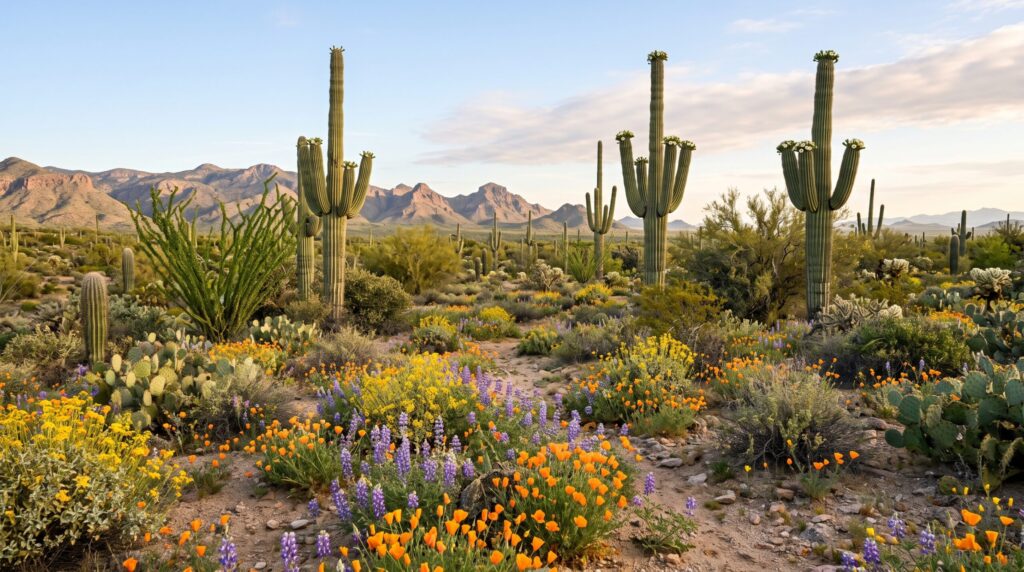
Yes, for most people, because March and April bring warm days and cool mornings in the low desert. By May, Phoenix highs average 94.5°F and 24 days reach 90°F. Everyone knows it, so baseball enthusiasts, hikers, and winter vacationers all arrive together, which means booking ahead and starting hikes at dawn.
For the Phoenix leg of your trip we would choose November or March, because the weather is nearly identical while November avoids the spring-training hotel crush. April has fewer baseball crowds, but the 90°F day count above shows the trade-off: 10 such days in April and 24 in May.
Which attractions are best in spring?
Spring is the best time to go to Arizona for baseball, wildflowers, and cool-morning hikes. Use this table to match each spring activity to its place, and book early, because March is peak season in the low desert.
Attraction | Where | Why go in spring | Best for |
Phoenix area | Major League Baseball teams play here from late February through March | Baseball fans, families | |
Pinnacle Peak, Tom’s Thumb, Brown’s Ranch, and the Bajada Trail | Scottsdale and the McDowell Sonoran Preserve | Cool mornings and open trails. Trailheads fill fast during spring training, so go early | Hikers |
Phoenix, in Papago Park | Desert plants bloom after a wet winter | Couples, families, photographers | |
Tucson | Saguaro blooms typically April to May, peaking toward the end of May. Wildflowers peak mid-to-late March | Photographers, nature lovers | |
Red rock trails | Sedona | Warm days for hiking and mountain biking | Hikers, bikers |
Free interpretive walks with Friends of the San Pedro River | Sierra Vista | Cottonwood and willow trees draw migrating birds, and the Friends of the San Pedro River list the walks as free | Birders, budget travelers |
Cave Creek Canyon | Portal | Shaded creek bottoms and rocky walls near Portal make it a favorite for birders | Birders, quiet-trip seekers |
If you only have one morning in Scottsdale during spring training, choose the hike first, because the trails are in their best shape early and you can still catch an afternoon game.
When is the best time to see wildflowers in Arizona?
Peak bloom is typically from March to April in the low desert, but it comes later at higher elevations. Winter precipitation drives it, so a good winter season could mean colorful hills while a dry one might mean very little. Check with the Desert Botanical Garden for bloom reports before planning around it.
In Saguaro National Park, wildflower blooms usually peak in mid-to-late March.
When is spring training in Phoenix?
Cactus League Spring Training takes place in February and March at various stadiums in and around Phoenix. The opening date for Cactus League 2027 is February 19, according to the event chart listed below, so make your hotel reservation before buying your ticket.
Is fall a good time to visit Arizona?
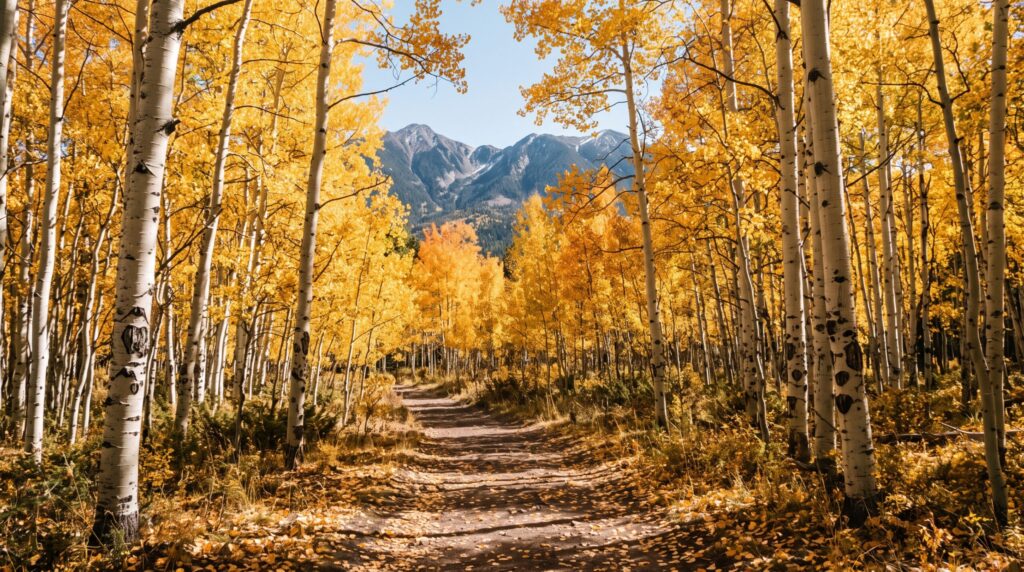
Fall is our favorite season in the north and a close second in the desert. It is also shoulder season in the low desert, so crowds and prices sit in the middle. The heat breaks in October and the low desert is comfortable again by November. The weather is great, so rooms and tables fill up fast, and weekends and events are worth booking early.
Which attractions are best in fall?
Fall brings shoulder-season prices, mild weather, and the year’s best colors. This table shows where to hike, taste wine, and explore culture, and which spots fill up first on weekends.
Attraction | Where | Why go in fall | Best for |
Lockett Meadow and the Inner Basin Trail | Flagstaff, in Coconino National Forest | Golden aspens cover the San Francisco Peaks. Check Discover Flagstaff’s LEAF-ometer before you drive | Photographers, hikers, couples |
Navajo Nation | Admission is free, and you can either drive the rim or book a guided hike with an authorized Navajo guide or a park ranger. | History fans, budget travelers | |
Navajo National Monument | Navajo Nation | Also free to enter, with canyon scenery and Native American history | Quiet-trip seekers |
Hopi lands, near Moenkopi or Hopi Reservation | Galleries and shops sell jewelry and Katsina doll carvings | Craft and culture lovers | |
Verde Valley, Sonoita, and Willcox wineries | Central and southern Arizona | Wine tasting in harvest season | Couples, food lovers |
Papago Park and the McDowell Sonoran Preserve | Phoenix and Scottsdale | Sunset hikes are comfortable again | Hikers, couples |
Old Town Scottsdale | Scottsdale | Patios reopen as evenings cool | Couples, food lovers |
Phoenix | Food, rides, and concerts | Families |
Where to sleep near the Navajo and Hopi sites is in the stay table below.
For fall color we favor Flagstaff for its golden aspens and Sedona for cooler red-rock hiking, but if you only have one weekend simply go where Discover Flagstaff’s LEAF-ometer shows the peak color.
Planning the North Rim this fall?
The Grand Canyon North Rim has a limited 2026 season. The gas station closed on September 19, the General Store closes on October 15, and the scenic roads close from October 15 to November 3. Read the full list in our Grand Canyon section below before you drive.
Is winter a good time to visit Arizona?
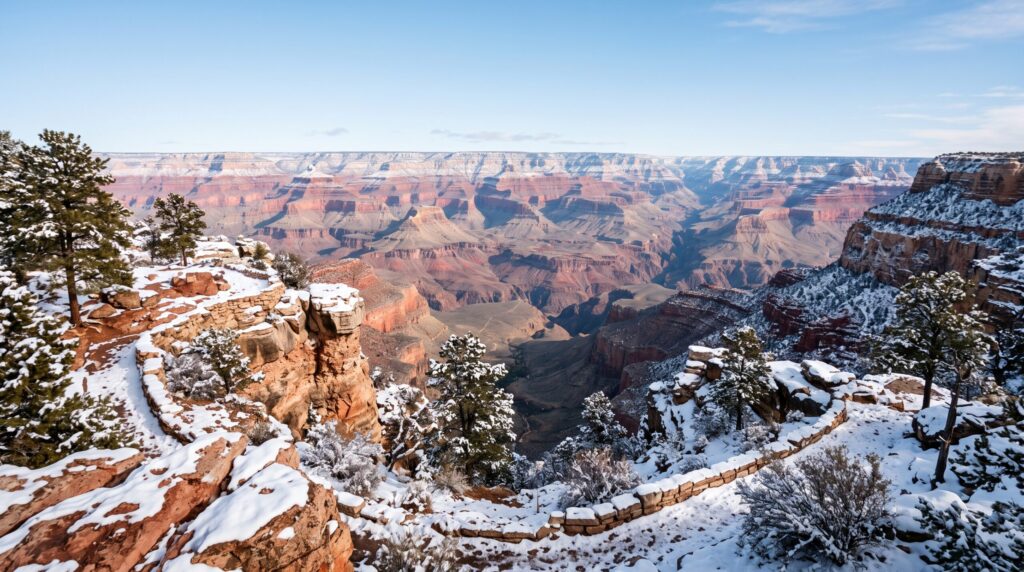
Winter is high season in the low desert, Phoenix lands on plenty of roundups of the best places to travel in December. Nights are cool, and higher towns such as Flagstaff get real snow. In Phoenix, Scottsdale, and Tucson, prices climb with demand, and the busiest stretch runs from January through March. The big events of those months are in the event table below. Flagstaff and the Grand Canyon South Rim are quieter in winter, and rooms are easier to find than in summer.
Which attractions are best in winter?
Winter is high season in the low desert but off-season in Flagstaff and at the South Rim, where crowds thin and rooms are easier to find. The South Rim is the main draw, because snow brightens the cliffs and the air is often clear enough to show distant peaks. Walk from Mather Point to the Canyon View Information Plaza, then visit the Yavapai Geology Museum, and note that Hermit Road is open to private vehicles in winter. Road trippers can add Oatman, where wild burros wander Main Street, and the Route 66 towns of Williams, Seligman, and Winslow, while skiers and families can head to Arizona Snowbowl near Flagstaff for skiing and snow play.
The best time to visit Grand Canyon to avoid crowds is winter at the South Rim, provided you can handle the cold, because the viewpoints stay quiet and rooms that sell out in summer become much easier to find.
What is the best time to ski in Arizona?
You can ski at Arizona Snowbowl near Flagstaff, which often stays open into April and runs spring deals. Season dates depend on snowfall, so check the Arizona Snowbowl site before you book.
Is Arizona too hot in summer?

For most visitors, yes, in the low desert. Phoenix’s average high tops 100°F from June to September (104.2°F in June, 106.5°F in July). Even dry heat still feels punishing, making midday hiking dangerous and leaving car seats and metal railings hot enough to burn skin.
Summer, the desert’s low season, still has a case. Resorts in Phoenix, Scottsdale, and Tucson typically cut summer rates by 30% to 40%, as detailed in PHOENIX magazine’s Staycation Guide. Air conditioning keeps your room as comfortable as in winter, so we suggest morning golf, an afternoon massage, and a monsoon sunset to finish the day.
If you go in summer, do your outdoor plans at sunrise and spend afternoons at a pool or museum. Carry more water than you think you need, never leave kids or pets in a parked car, and head north when you can.
Which attractions are best in summer?
Summer is low season in the desert, with extreme heat and monsoon storms, but it also brings the best summer deals and budget-friendly resort stays. This table covers what to do, from a luxury resort staycation to river tubing and sunrise hikes up north.
Attraction | Where | Why go in summer | Best for |
Luxury resorts | Phoenix, Scottsdale, Tucson | Pools, spas, and morning tee times, which make a summer staycation easy if you live nearby | Couples, budget travelers |
Sedona adventure tours | Sedona | Jeep tours, vortex tours, helicopter rides, hot-air balloon flights, golf tee times, and mountain bike rentals. Ask about summer deals. Pink Adventure Tours is one Jeep tour option | Couples, families |
Yuma, on the Colorado River | A long, lazy float on the Colorado River | Groups, families | |
Salt River tubing | Near Phoenix | A cool-off close to the city. Check season dates | Groups |
Lake Pleasant and Lake Powell | Phoenix area and northern Arizona | Boating and jet skiing | Families, groups |
Flagstaff festivals | Flagstaff | The Heritage Festival is usually in June, and the Celtic Festival usually runs in July. | Families |
Grand Canyon sunrise | South Rim | Cooler air and thinner crowds than midday | Photographers |
Heard Museum | Phoenix | Indoor Native American art and culture on a hot afternoon | Culture lovers, families |
If you want to see the red rocks, choose a morning Sedona tour over a pure resort-pool day, then cool off by the pool afterward.
Choose Yuma tubing for a long, lazy float if your trip passes through the southwest corner, or choose the Salt River if you are already in the Phoenix area.
When does monsoon season start in Arizona?
Monsoon season runs June 15 to September 30, according to the National Weather Service in Phoenix. Storms often build in the afternoon and bring lightning, dust storms, and fast flash floods.
Flash floods are the biggest danger, so never drive through a flooded wash, and stay out of slot canyons and dry creek beds when storms are anywhere nearby, even if your sky is clear.
Monsoon season has an upside, too: rain brings a sweet creosote smell, lightning shows, and red-and-gold sunsets.
What is the worst time to visit Arizona?
The worst time to visit Arizona depends on your destination, as some places experience the highest temperatures and others the lowest just a few hours apart. In the low desert, the worst time is July and August, when Phoenix’s average high is 106.5°F in July and 105.1°F in August. The average low stays above 83°F, and the city sees 111 days a year at 100°F or higher, per ABC15.
The worst time looks different in the high country. Flagstaff’s average low stays below freezing from October to April, so winter driving and trail conditions can be the problem there, and summer is the busiest and most expensive season at the Grand Canyon South Rim. Slot canyons near Page are most likely to close from June to September, and Monument Valley’s loop road is impassable in rain, so monsoon season is the risky window for both.
If you are flexible, avoid Phoenix in July and August, avoid the South Rim in the peak summer weeks, and skip slot canyons whenever storms are anywhere nearby. Those same desert weeks bring the lowest resort rates, so the worst time for hiking can be the best time for a pool-and-spa trip.
What is the best time to visit Phoenix and Scottsdale?
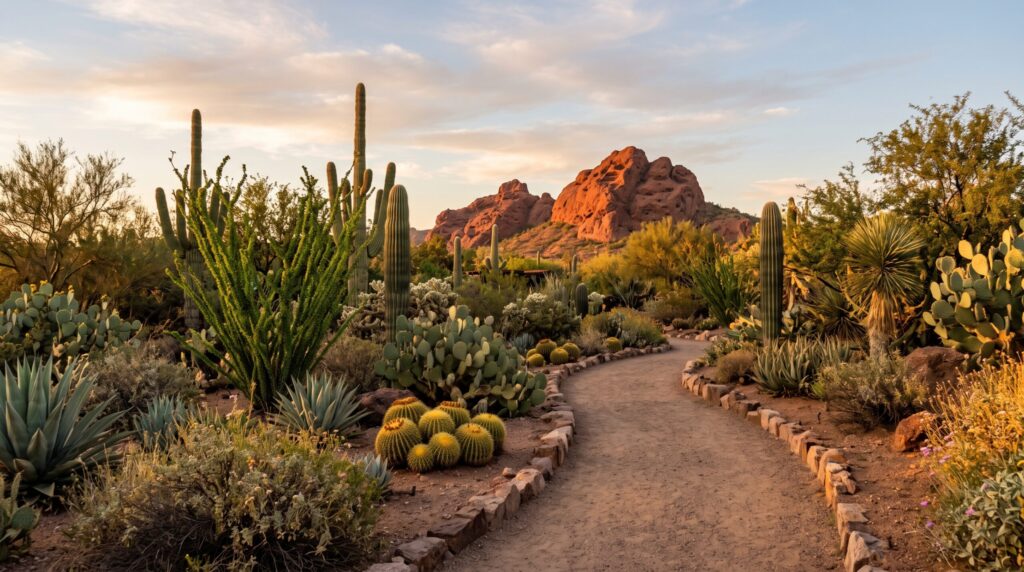
The best time to visit Phoenix Arizona is October to April, when the city feels like a vacation, because June to September feels like an oven. The city gets about 300 sunny days a year, according to the Office of Tourism, so winter is ideal for a resort trip, see our guide to things to do in Phoenix for how to fill those sunny days.
Peak season runs from December to March, with the biggest event crush from late January to March, when Barrett-Jackson, the WM Phoenix Open, and Cactus League Spring Training fill hotels.
For the best time to visit Phoenix, we pick November over March. The weather is nearly the same, with one day at 90°F or more in November and two in March, but November skips the spring training rush, so choose March if you want baseball or desert bloom.
What is the best time to visit Tucson, and how do you avoid the snowbirds?
Tucson is hard to book in February, when the Tucson Gem and Mineral Show and related gem shows take over the city. Winter visitors also fill rooms from fall into spring.
To avoid the snowbirds, the winter visitors who fill Tucson rooms, we would pick April or early October, when the winter rush is just starting or ending. By May, the heat builds on a schedule close to Phoenix’s.
Tucson is a UNESCO City of Gastronomy so you can eat well any month. Saguaro National Park is the anchor sight, with saguaro blooms peaking April to May and wildflowers peaking mid-to-late March. Tombstone, the historic Old West town southeast of Tucson, makes an easy day trip in cooler months.
What is the best time to visit Sedona Arizona?
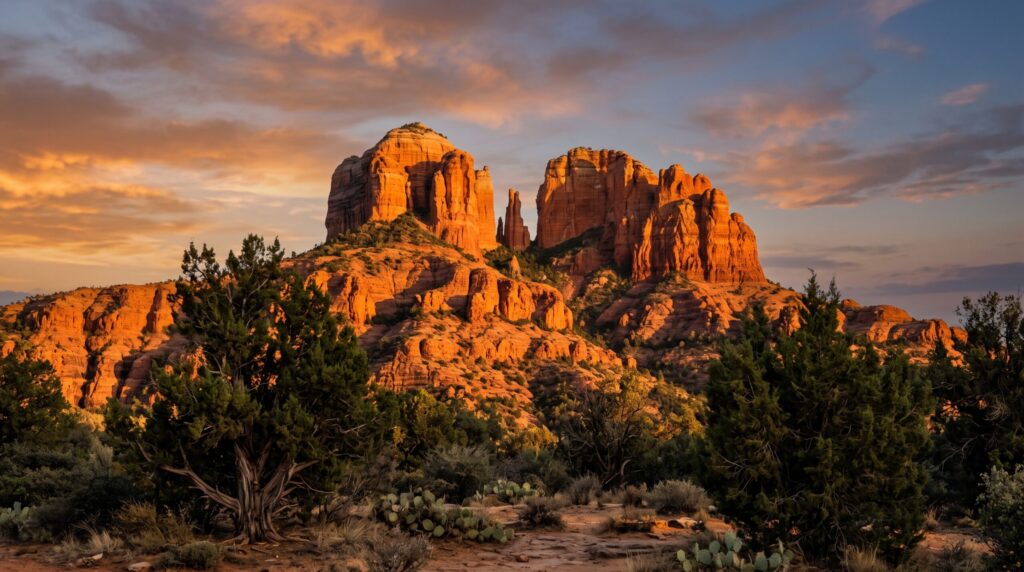
Sedona looks good in every season, but it does not feel good in every season. The best time of year to visit Sedona Arizona is March to May and September to November. Mornings and evenings are cooler than in Phoenix, but summer afternoons still get hot.
Spring is Sedona’s busiest season, and resorts and many tour companies cut prices once it ends. That makes summer the cheapest time to visit Sedona, as long as you plan outdoor time for early morning.
Winter is quiet and crisp, with a light dusting of snow possible, and the Sedona International Film Festival draws visitors in February.
In our view the best time to visit Sedona is October, when the summer heat has eased and the crowds are smaller than in spring, so aim for midweek and reach the popular trailheads early, our roundup of things to do in Sedona covers which red-rock trails to prioritize.
What is the best time to visit Flagstaff?
Flagstaff is Arizona’s cool escape, and the climate tables above show how cool it is. It sits below Humphreys Peak (also called Mount Humphreys), the state’s highest point at 12,633 feet, according to the U.S. Geological Survey. Flagstaff also gets about 260 sunny days a year, according to Discover Flagstaff. The best time to hike in Flagstaff is May to October, when highs range from 68.1°F in May to 82.0°F in July. For snow, go December to March, with Arizona Snowbowl often open into April. Late September to October brings aspen color at Lockett Meadow. Hotel rates dip in January and February and summer weekends cost the most. The city is also a common base for the Grand Canyon.
What is the best time to visit Grand Canyon National Park?
The best time to visit Grand Canyon Arizona is April to May and September to October at the South Rim, though the rim stays open through winter, so the right month also depends on how quiet you want it. Winter feels quiet and still once summer crowds leave, while summer is the busiest season.
At the South Rim we recommend sunrise in summer for cooler temperatures and thinner crowds, while in winter the mornings are freezing so sunset becomes the easier option.
How do the rims and the inner canyon compare?
The canyon is deep, so the weather changes a lot from the rim to the river. Figures are from the National Park Service weather page.
Area | Elevation | Weather notes | Snow per year |
South Rim | About 7,000 feet | Summer highs in the 80s, lows in the 40s and 50s. Winter highs in the 40s, lows in the teens | About 58 inches. The park’s climate overview says the rims get 50 to over 100 inches |
North Rim | About 8,000 feet | Summer highs in the 70s. Lows can drop near or below freezing | 142 inches |
Inner canyon (Phantom Ranch) | About 2,400 feet | Summer highs regularly exceed 100°F (38°C), with winter highs in the 50s and lows in the 30s | Less than 1 inch |
Monsoon storms hit the canyon mostly between 11 a.m. and 6 p.m. from July to early September, according to the National Park Service. They can bring heavy rain, lightning, and flash floods in the side canyons, and dry lightning can also start forest fires.
How busy is the Grand Canyon?
The park logged 4.43 million visits in 2025, down from 4.92 million in 2024. Here are the yearly totals from the National Park Service. These are park-wide totals for all of Grand Canyon National Park. They don’t show how crowded a viewpoint or trail feels, and the South Rim, the North Rim, and a trail at sunrise can feel very different on the same day.
Year | Total visitation |
2021 | 4,550,921 |
2022 | 4,732,101 |
2023 | 4,733,705 |
2024 | 4,919,163 |
2025 | 4,430,653 |
Visits fell about 10% from 2024 to 2025, and closures tied to the Dragon Bravo Fire on the North Rim and Transcanyon Waterline construction likely contributed.
September shows how the parks compare. Grand Canyon National Park logged 369,315 visits in September 2025, down from 471,930 in September 2024, and Saguaro National Park logged 34,966, down from 43,486. The Arizona portion of Glen Canyon National Recreation Area logged 280,478, down from 415,161, according to National Park Service visitor statistics.
We could not find a month-by-month table for the Grand Canyon in a source we could open. For a full monthly breakdown, use the park’s statistics reports on the National Park Service site.
What is open at the North Rim in 2026?
The North Rim has a limited season this year after the Dragon Bravo Fire. We checked the National Park Service on October 13, 2026. The park is open through November 30, 2026, or until the first major snowstorm, whichever comes first. Modified fall operations begin October 15, and some services have already ended. Here is what the National Park Service says:
- The North Rim reopened May 15, 2026, for a scaled-back season with all paved roads open.
- Modified fall operations begin October 15.
- Cape Royal Road and Point Imperial Road, the two scenic roads, are closed from sunset October 15 through sunrise November 3 for road repairs. The closure is temporary, and the other limits below stay in place.
- The North Kaibab Trail is closed after the August 29 flash flood.
- The entrance gate on State Route 67 closes at sunset on November 30, 2026, or after the first major snowstorm. Winter driving can be hard, and emergency response will be very limited.
- The park has no fuel. The North Rim gas station closed on September 19. The nearest fuel is at Jacob Lake, about 45 miles north.
- The General Store closes for the season at 4 p.m. on October 15, and the North Rim Campground closes the morning of October 16.
- There is no overnight lodging at the North Rim this season. Lodging, food, and fuel are available at Jacob Lake, and more lodging is in Fredonia, Arizona, and Kanab, Utah.
- The park’s summer notice said there is no potable (drinkable) water at the North Rim. The fall notice does not say water is available, so bring all the water you need.
- The North Rim Backcountry Information Center closes at noon on October 15. You can get backcountry permits at the South Rim center and on recreation.gov.
- Check the official North Rim status page again after October 15.
Park officials described their approach this way: “We will open what we can, where we can, when we can.”
Our tip is simple: if you want the canyon in late fall or winter, plan for the South Rim, where lodging is easier to find. If you still want the North Rim, fill your tank at Jacob Lake, about 45 miles north, and bring your own food and water. Check the park’s website for updates before you go.
What is the best time to visit Arizona's national parks and landmarks?
Each big sight has its own best season. Fees and rules were checked in October 2026 and can change, so confirm on each park’s own page.

Place | Best time | Cost | Booking and access | Weather notes | Best for |
April to May, September to October | $35 per private vehicle (good for 7 days) | Open all year | Summer crowds, winter snow | First-time visitors, photographers | |
Saguaro National Park, Tucson | March for wildflowers, April to May for saguaro blooms | $25 per vehicle, good for 7 days, per the National Park Service | Two districts, Tucson Mountain (West) and Rincon Mountain (East). One fee covers both | Heat builds by May, so go early | Photographers, hikers |
Our pick: spring or fall | $25 per vehicle, good for 7 days, per the National Park Service | The fee page does not list hours or timed entry. Call 928-524-6822 or check the park’s alerts page | Check conditions before you go | Road trippers | |
Antelope Canyon (Upper and Lower), near Page | Light beams are best late spring to early fall, 10 a.m. to 1 p.m. For fewer crowds and better rates, go November to late February. | Guide fee. The permit is usually included. | Guided tour only. Book ahead, because tours can sell out weeks early. Arrive 15 minutes early. Tours last up to 2 hours | Closures are more likely from June to September | Photographers |
Horseshoe Bend, near Page | Sunrise or weekdays for fewer people | $10 per vehicle, $5 per motorcycle | 0.6-mile trail to the overlook. Open from sunrise to sunset. No drones | Very little shade. In summer, bring 1 liter of water per person every 2 hours | A quick stop for everyone |
April or October. May to September is busiest | $10 per person daily entry, plus an optional $15 per vehicle fee for the scenic drive | The loop road needs high clearance or four-wheel drive and is impassable in rain. No drones | Summer heat and monsoon storms. November to March has far fewer visitors, limited services, and possible snow | Photographers, culture seekers | |
Canyon de Chelly National Monument | Fall | Free | Guided hikes with an authorized Navajo guide or a park ranger. Rim drives | Check conditions before you go | History fans, budget travelers |
Navajo National Monument | Fall (our pick) | Free | On Navajo Nation land | Check conditions before you go | History fans |

Navajo Nation Parks and Recreation for Antelope Canyon and Monument Valley, and the City of Page for Horseshoe Bend. Monument Valley hours are 7 a.m. to 7 p.m. from May to September and 8 a.m. to 5 p.m. in April and October, per Navajo Nation Parks and Recreation.
Antelope Canyon, Monument Valley, and Canyon de Chelly are on Navajo Nation land, so book authorized Navajo guides. Drones are not allowed, and Navajo Nation Parks requires a permit for backcountry hiking and camping. Arizona is home to 22 federally recognized tribes, according to the Heard Museum, so visit with respect.
We recommend Upper Antelope Canyon for an easy, nearly flat walk at ground level with less than a 2% incline, or Lower Antelope Canyon if you don’t mind climbing several flights of stairs and ladders. Canyon X is a quieter option that you book through Taadidiin Tours.
We recommend sunrise at Horseshoe Bend because the overlook is quieter and the canyon colors are richer, whereas early afternoon brings more heat and flatter light.
When is the best time for an Arizona road trip?
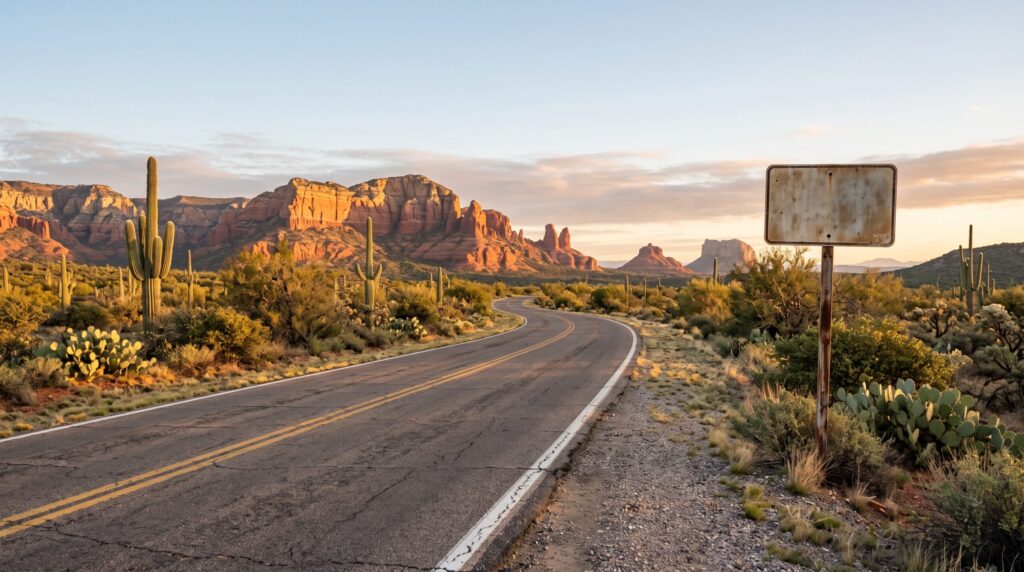
Arizona is big, and each route has its own best season. Fuel up before long gaps, carry water, and leave extra time for weather.
Route | Stops | Best months | Watch out for |
Phoenix, Sedona, Flagstaff, Grand Canyon South Rim | Desert Botanical Garden, Sedona red rock trails, Lockett Meadow, Mather Point | April to May, September to October | Snow on higher roads in winter |
Route 66 loop | Williams, Seligman, Winslow, Oatman | Spring and fall. Oatman also works in winter. | Summer heat in the west. Oatman is roughly three hours southwest of the Grand Canyon by car |
Phoenix to Page and Monument Valley | Horseshoe Bend, Antelope Canyon, Monument Valley | April or October | Slot canyon closures in monsoon season. The Monument Valley loop is unpaved. Phoenix to Page is about 4.5 hours by car |
Tucson, Sierra Vista, Portal | Saguaro National Park, San Pedro River, Cave Creek Canyon, Tombstone | March to April, October to November | Summer heat |
Navajo Nation and Hopi lands | Canyon de Chelly, Navajo National Monument, Hopi Arts Trail, Tuba City | Fall | Follow Navajo Nation rules and book authorized guides |
Check road conditions before you drive in winter or monsoon season. Snow can slow roads near Flagstaff and the Grand Canyon. Flash floods can close washes and slot canyons from June to September. The Monument Valley loop road needs high clearance or Four Wheel Drive and is impassable in rain. This fall, the North Rim scenic roads close from October 15 to November 3, and the North Rim entrance gate closes by November 30. Extreme heat can also slow you down, so carry water on every long drive.
If you don’t want to drive every long leg, take intercity buses between Phoenix, Tucson, and Flagstaff, overnight buses can even save you a hotel night on the longer legs — then rent a car near the parks.
How many days do you need in Arizona, and what should your itinerary look like?
Trip length changes the best time to go to Arizona because a longer trip lets you link desert and high-country stops. Match your days to a route below, then adjust for peak, shoulder, or low season crowd levels, our free travel itinerary template makes it easy to map out each day before you book.
Trip length | Route | Best months | What fits |
3 days | Phoenix and Scottsdale | November or March | Day 1: Desert Botanical Garden and a Papago Park sunset. Day 3: the Heard Museum, then a ballgame if spring training is on |
5 days | Phoenix, Sedona, Flagstaff, Grand Canyon South Rim | April, May, September, October | Phoenix on day 1, Sedona on days 2 and 3, Flagstaff and the Grand Canyon South Rim on days 4 and 5. Add Lockett Meadow in fall or Arizona Snowbowl in winter |
7 days | Phoenix, Sedona, Grand Canyon South Rim, Page | April or October | Add Mather Point and the Yavapai Geology Museum. In Page, book an Antelope Canyon tour and walk to Horseshoe Bend |
10 days | Add Monument Valley and Canyon de Chelly | April or October | Drive the Monument Valley loop or book a jeep tour. Visit Canyon de Chelly with an authorized Navajo guide and browse the Hopi Arts Trail |
7 days in winter | Phoenix, Tucson, Grand Canyon South Rim | December to February | Mild desert days, then a quiet, snowy canyon. Pack a warm coat |
What is the cheapest time to visit Arizona?
The best time to visit Arizona for cheap hotels in the low desert is June to August. Resorts in Phoenix, Scottsdale, and Tucson are cheaper in the off-season because of the heat. December to March are the most expensive months, when winter visitors, spring training, and big events push rates up. Using the groups from the month section, December to March has the heaviest crowds and highest prices, April to May and September to November sit in the middle, and June to August has the lightest crowds and lowest prices.
Flagstaff and the Grand Canyon follow a different pattern, so these labels do not apply there. Summer is their busy season, and rates tend to ease in fall and winter in Flagstaff and at the South Rim.
How do prices change by destination?
“Cheapest” depends on where you sleep. A quiet month in Phoenix can be a busy month in Flagstaff. We did not list nightly hotel prices. Rates change by date, room type, and property, and we found no official dataset that covers them all. The savings patterns in this table describe typical trends, not a discount you are guaranteed on every date or at every property.
Destination | Cheapest time | Priciest time | Basis |
Phoenix, Scottsdale, Tucson | June to August | December to March | Low desert resorts cut rates in summer, as noted in the summer section. The peak months are our editorial read |
Sedona | Summer, after the spring rush | Spring | Resorts, hotels, and many tour companies cut prices after the busy spring season |
Flagstaff | Winter (especially January and February) | Summer weekends and holidays (our read) | Hotel rates dip by at least 10% during these months (checked October 2026) |
Grand Canyon South Rim | Winter | Summer | Rooms are easy to find at lower rates in winter |
Canyon de Chelly (Thunderbird Lodge) | Fall | Not stated | Rates often drop by almost 40% in fall (checked October 2026) |
Page and Antelope Canyon | November to late February, especially January | March to October | Better rates and fewer people in the cold months |
Monument Valley | November to March, with limited services | May to September | May to September is the most popular stretch |
How do you save money and compare prices fairly?
Here is how we would shop for a room.
- Book 60 to 90 days ahead if your dates are fixed, since prepaid, no-refund rates are usually the lowest you will see.
- If your plans are flexible, call the hotel a few days out, because an unsold room earns nothing and front desks will sometimes negotiate.
- Ask what the hotel can add instead of cutting the rate, such as waived resort fees, free breakfast, a room upgrade, or free parking.
- Follow the hotels and tour companies you like on social media or join their email lists, because last-minute offers often appear there first.
- Price Sunday to Thursday stays separately from weekend stays, since midweek nights are often cheaper.
- Check again in July and August even if you looked in May or June, because late-season summer deals appear then, and the price table above shows where fall and winter rates drop.
- Compare the same dates, the same room type, and the same cancellation rule. Add resort fees and parking to the nightly rate.
- Compare one property in two seasons, not two different hotels. Note the date you checked, since prices can change daily.
Here are the entry costs we could confirm in October 2026. Saguaro National Park and Petrified Forest National Park each charge $25 per vehicle, good for 7 days. Horseshoe Bend charges $10 per vehicle. Canyon de Chelly and Navajo National Monument are free. The Tucson Gem and Mineral Show charges $20 for general admission. Hotel and tour prices change too often for us to list, so we show price patterns instead.
Which events change crowds and prices?
Big events increase crowds and fill hotels fast. Book early if your dates overlap. We checked each date row against a published source in October 2026. The WM Phoenix Open dates match the tournament’s own website. The Barrett-Jackson dates come from trade press, so confirm them on Barrett-Jackson’s site. Dates can change, so confirm every event on its own site before you book.
Event | Where | Dates |
Arizona State Fair | Phoenix | October 1 to November 1, 2026, Thursdays through Sundays |
Lake Havasu Balloon Festival and Fair | Lake Havasu City | January 21 to 24, 2027 |
Barrett-Jackson Scottsdale auction | WestWorld of Scottsdale | January 23 to 31, 2027 (nine days) |
WM Phoenix Open | TPC Scottsdale | February 8 to 14, 2027 |
Tucson Gem and Mineral Show | Tucson Convention Center | February 11 to 14, 2027 |
Cactus League Spring Training opening day | Phoenix area | February 19, 2027 |
Sedona International Film Festival | Sedona | February 20 to 28, 2027 |
Heritage Festival | Flagstaff | Usually June |
Celtic Festival | Flagstaff | Usually July |
Sedona Winefest | Sedona | Usually fall |
The Tucson Gem and Mineral Show charges $20 for general admission and $34 for a two-day ticket. Children 14 and under are free with a paying adult, according to TGMS. The State Fair runs through November 1, 2026.
Where should you stay, and when?
We have not stayed at these places. They come from published travel guides and official tourism pages. Check each property’s own site for current rates, since prices can change.
Destination | Place to stay | Why it fits | Best season |
Scottsdale | Mountain Shadows Resort Scottsdale | Sits below Camelback Mountain, with a pool and golf | Summer for deals, November to March for weather |
Tucson | Hacienda del Sol Guest Ranch Resort | A historic ranch in the Santa Catalina Mountains foothills | October to April |
Sedona | L’Auberge de Sedona | On Oak Creek, with L’Apothecary Nature Spa | Spring and fall |
Canyon de Chelly | The only lodging inside the monument | Fall, when rates drop (see the price table) | |
Moenkopi or Hopi Reservation | Staff can help book full-day tours of the Hopi mesas with authorized guides | Fall | |
Portal | Lodging and food near Cave Creek Canyon | Spring for birds | |
Monument Valley | The View Hotel | The only hotel inside the park, per The View Hotel | April or October |
Monument Valley | Goulding’s Lodge | About a 10-minute drive from the park entrance, per Goulding’s Lodge | April or October |
What should you pack for Arizona?

- Sunscreen and a hat, year-round.
- Layers, because desert nights cool fast, even in spring.
- A reusable water bottle, and drink before you feel thirsty.
- Sturdy shoes for trails.
- A warm coat for Flagstaff, the Grand Canyon, and winter evenings.
How do you get around Arizona without a car?

Distances are long, and a rental car makes many trips easier. You can take an intercity bus between these cities, the Phoenix to Tucson bus is the easiest way to hop between the two desert hubs without a car. If you are coming from Mexico or another US city, you can compare tickets on BoletoXpress before you choose your dates, and it helps to know why bus ticket prices change so you buy at the right time.
Comparison sites let you check schedules, stops, and baggage rules in one place, our intercity bus travel guide explains what to expect on the ride. Once you arrive, you can reach Sedona and the Grand Canyon most easily by car or tour. Inside Grand Canyon National Park, a free shuttle runs along the South Rim.
Frequently Asked Questions About Visiting Arizona
Is March a good time to visit Arizona?
Yes, March is a good time for Phoenix and Scottsdale, although it is busy because spring training fills the hotels, so book early. If you can pick between March and April, April has fewer baseball crowds in the Phoenix area, and the weather is still pleasant, though April averages 10 days at 90°F or higher.
Is October a good time to visit Arizona?
Yes, because the average last 100-degree day in Phoenix is October 5, per ABC15; the Arizona State Fair runs through November 1 this year, it made our list of the top fall events in North America, and fall color begins in the high country.
Is May too hot to visit Arizona?
In the low desert May is already warm and getting hot, so hike at sunrise and save the pool for the afternoon. Head north for comfort, because Flagstaff is much milder.
What is the best time to visit Arizona without the heat?
Head north to avoid the heat: Flagstaff’s average high peaks at 82.0°F in July, the South Rim is best from April to May or September to October, and Phoenix is comfortable from November to March.
Is September a good time to visit Arizona?
In the north September is excellent, with comfortable hiking and wine tasting once monsoon season ends on September 30. In the desert it is still hot, so we would wait for October.
Is Arizona too cold in winter?
Not in the low desert, but yes up north. Flagstaff’s average lows stay below freezing from October to April, and Page drops below freezing in December and January. Pack a warm coat for any trip that includes the rim or the high country.
Can you visit the Grand Canyon and Sedona on the same trip?
Yes, because Flagstaff sits between them and makes a good base, but check road conditions first if you go in winter.
What is the best way to plan the order of a first trip?
Start in the low desert if you travel in winter or spring, then end in the high country. Start in the high country if you travel in summer, and end by a hotel pool. Mixing hot and cool places in one trip gets you the best weather in each.
What we would do
If we had to name the best time to visit AZ for one trip, we would go in April or October, rent a car in Phoenix, and drive north through Sedona and Flagstaff to the South Rim. This route balances weather, crowds, and prices. Pick your place first, then your month, then lock in your route.
-
 Author: Roberto GarciaView all posts
I am a Digital Transformation Leader and travel technology professional based in San Antonio, Texas. With over 20 years of experience in transportation systems, digital platforms, and customer-focused technology solutions, I help travelers discover secure, affordable, and efficient bus routes across the USA and Mexico. At BoletoXpress, I write and review travel guides covering cross-border bus travel, FIFA World Cup 2026 transportation, route planning, and affordable travel options for diaspora and international passengers. My expertise spans travel operations, mobility technology, digital booking systems, and modern transportation solutions designed to improve the passenger experience.
Follow on - LinkedIn