15 Best Things to Do in Washington, D.C. | 2026 Local Guide

I have been to the National Mall at dawn before all the tour buses show up, have stood in the Capitol Rotunda on an empty Tuesday morning, and have had half-smokes late into the night on U Street. Washington, D.C., is a city that does not reward those who just do things the obvious way.
Most tourists arrive for the monuments and leave surprised by everything else. I was one of them. Now I come back for everything else. This guide is not intended for someone who wants to check off items from an obvious list.
It is here for travelers who wish to find out which museum lines to avoid, which districts become exciting at night, which buildings have 70 secret doors, and how to incorporate Washington, DC, into their travel route down to Virginia from New York. The great spots in Washington, DC, are not the ones on the initial maps one looks at.
Every attraction below includes exact prices, opening hours, transit access, and the one insider detail most travel guides skip. And in 2026, the city is marking America’s 250th birthday, making it the most energized year to visit in a generation.
| What You Want | Where to Go |
| Best free things | National Mall, Smithsonian Museums, Lincoln Memorial, Arlington Cemetery |
| Best for kids | National Zoo, International Spy Museum, Air and Space Museum, Spy Museum |
| Cool and Unusual | Artechouse, Mansion on O Street, Blind Whino, U Street |
| Best food spots | Ben’s Chili Bowl, Maine Avenue Fish Market, Union Market, Georgetown |
| Best tours | DC Monuments Night Tour, Capitol Hill Walking Tour, Old Town Alexandria Bus Tour |
| Best this weekend | Cherry Blossom Tidal Basin walk, The Wharf, Ford’s Theatre show |
Washington, D.C. as a Road Trip Stop: The East Coast Route
DC is located at the geographic center of the country’s busiest road trip route corridor. DC from New York via I-95 is a four-hour drive, and if you are planning your transit back, booking a dedicated Washington DC to New York, bus for the return leg saves you the parking headache entirely. The drive from DC to Virginia Beach takes three hours.
The drive from DC to Shenandoah Valley takes one and a half hours. For those traveling through the East Coast, Washington, D.C., is not a detour but the main event.
For road trippers to have the best experience in DC, they should arrive at least one evening before their sightseeing day, park either close to Union Station or Capitol Hill, where they pay less for parking in garages than in the city center, then switch to the Metro from there on.
A focused two-day stop covers the Mall, one or two Smithsonian museums, Georgetown, and an evening at The Wharf without feeling rushed. A third day opens Arlington, Rock Creek Park, and a day trip to Old Town Alexandria. Whether DC is your destination or your midpoint, check our full Road Trip USA planning guide for the complete East Coast route, then come back here for everything specific to DC.
The Must-See Classics: Washington, D.C. Monuments and Landmarks Every Visitor Needs
1. The National Mall and Monuments: Two Miles of Free American History
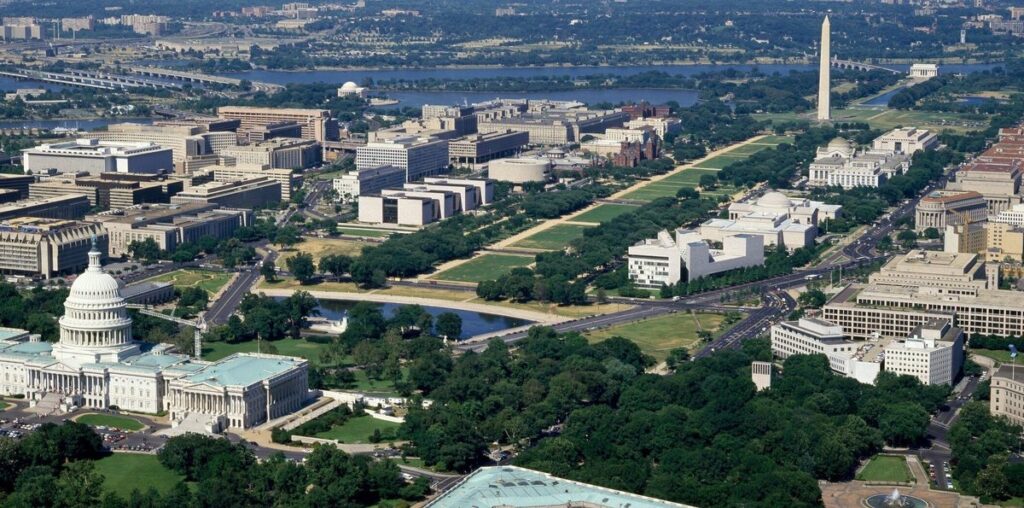
The National Mall stretches for two miles from the steps of the Capitol all the way to the Lincoln Memorial. Each monument, each Smithsonian museum lies along its path, all accessible at no charge. Nowhere else in the world does any city offer that much for one space.
What Sits on the Mall and How Long Each Stop Takes
At the top, most people take one photo and leave. Stay longer and read the memorial stones donated by cities and countries from around the world during construction. That detail alone changes how you see the whole structure. Timed tickets can be obtained from recreation.gov. You should book your ticket the previous day, as all walk-in tickets are usually sold out by morning.
There is a memorial to 16 million American service members, featuring 56 granite columns surrounding a fountain. This memorial is free and accessible 24/7. In addition, the reflecting pool between the WWII Memorial and the Lincoln Memorial is one of the most-photographed half-miles in DC.
Timing the Mall Without Wasting Half Your Day
The Mall is deserted before 8 am, but the light is absolutely superb at that time of day on the Reflecting Pool. Come early in the morning, and beat the heat and the crowds by noon. Just like travelers who rely on affordable regional lines like Philadelphia to Harrisburg to avoid driving stress, visitors here can take advantage of the DC Circulator bus, which runs all the way to $1 per ride.
Pro tip
The Mall will host enormous celebrations all year long in 2026 to mark the 250th anniversary of America’s founding, culminating in an expanded Independence Day celebration on July 4th with spectacular fireworks said to be the biggest ever held in the nation’s capital.
| Quick Facts | Details | Insider Edge |
| Cost | Free | No ticket needed for walking the full Mall |
| Hours | Open 24 hours | Monuments staffed from 9:30 am to 10 pm |
| Best Time | Before 8 am | Light on the Reflecting Pool is best at dawn |
| Time needed | 2 to 4 hours | Half a day if you enter any museums |
| Metro Access | Smithsonian station, Blue/Orange/Silver line | Drops you at the center of the Mall |
| Getting around | DC Circulator bus, $1 per ride | Runs every 10 min along the Mall route |
| Worth it if | First visit, history interest, free day | Covers more ground than any paid attraction in DC |
| Skip if | You only have 1 hour | Come back with proper time, or you will regret rushing it |
Google Maps | National Mall, Washington, DC |
2. The Lincoln Memorial: The Most Powerful Thirty Minutes on the Mall

The Lincoln Memorial is the fourth place I have visited, and my experiences there have varied each time. It is the 19-foot marble statue of Abraham Lincoln, which seems larger to me compared to all the photographs. Standing before the sculpture and then looking towards the Washington Monument from the southern wall, where the Gettysburg Address is inscribed, has been a very moving experience for me. The memorial is free to enter and is open 24 hours a day. Rangers are present till 10 p.m.
What the Walls Actually Say and Where King Stood
The inscription of the Gettysburg Address is made on the south wall. The Second Inaugural Address is inscribed on the north wall. It was at the same steps that Martin Luther King Jr. gave his speech, “I Have a Dream,” in August 1963. A circle marks the site where he delivered his famous speech.
After Dark, This Memorial Becomes a Different Place
Lincoln Memorial is brightly lit in the evening, and there are fewer visitors after 9 pm. The rangers continue their services until 10 pm and are highly responsive to questions about the memorial’s history from any interested visitor. One should go down the left stairs to enter a small lower room that most visitors miss, which contains interesting information about how the monument was constructed and even a plaster cast of Lincoln’s face made before his death.
Tip of the trade
Get there by dawn for an empty staircase, beautiful lighting on the reflecting pool, and an entire monument for yourself for at least 20 minutes before the tour groups come.
| Quick Facts | Details | Insider Edge |
| Cost | Free | No booking required |
| Hours | Open 24 hours, rangers until 10 pm | Rangers answer questions until closing |
| Best Time | Before 7 am or after 10 pm | Empty stairs, no tour group, best light |
| Time needed | 30 to 45 minutes | Add 15 minutes for the lower chamber; most people miss |
| Metro Access | Foggy Bottom station, then a 20-minute walk | Or take the $1 Circulator from the Mall |
| Hidden Details | Lower chamber beneath the main steps | Contains construction history and Lincoln’s life mask |
| Worth it if | Any visit at all, day or night | Night version hits differently, brighter, and quieter |
| Skip if | You have under 15 minutes | It deserves more than a glance from the stairs |
Google Maps | Lincoln Memorial |
3. The Smithsonian Museums: 21 Free Museums and the Best Rainy Day in Any City

The Smithsonian has 21 museums and galleries within Washington, D.C., all of which are free to enter. The average new visitor does not really grasp this until he finds himself at an exhibit of international prestige that costs him nothing to view.
Which Museum to Prioritize
The National Museum of Natural History features the Hope Diamond, a 45.52-carat blue diamond that attracts more visitors than any other item at the Smithsonian Institution. Among the artifacts housed at the National Air and Space Museum are the Wright Brothers’ original plane, the Spirit of St. Louis flown by Lindbergh, and the Apollo 11 command module. Opening times for both are from 10 am to 5:30 pm.
The One Museum That Requires Booking Before You Book Your Flight
The National Museum of African American History and Culture opened in 2016. It is the sole national museum in America focused exclusively on the experience of African Americans. The tickets are free, yet must be booked weeks in advance due to high demand. Visit si.edu once you know your dates to book your visit to this unique Smithsonian museum.
Pro tip:
The Freer and Sackler Galleries host some of the best collections of Asian art in the West and rarely feature queues of visitors. These galleries are the peaceful alternatives to the big museums when the latter prove too crowded.
| Quick Facts | Details | Insider Edge |
| Cost | Free, all 21 museums | No catch, no premium section |
| Hours | 10 am to 5:30 pm at most locations | Check si.edu for individual museum hours |
| Best Time | Weekday mornings | Saturday afternoons are the most crowded |
| Time needed | 2 hours per museum minimum | Do not try more than two in one day |
| NMAAHC booking | Free but must book weeks ahead | Book the day your travel dates are confirmed |
| Hidden Gem | Freer and Sackler Galleries | World-class Asian art with almost no queues |
| Worth it if | Any interest, any age, any weather | Best rainy day option in the entire city |
| Skip if | You try to do all 21 in one trip | Pick two and do them properly |
Google Maps | Smithsonian National Mall Museums |
4. Cool and Unusual Things to Do in Washington, D.C

The most interesting things to do in Washington, DC, are not on the National Mall. They are in neighborhoods, renovated buildings, and places most visitors never find on a first trip.
Where Technology and Art Share the Same Room
Artechouse at The Wharf is located in a converted industrial building. They fill the whole space with projection, sound, and interactive digital art. There is no ordinary gallery like that.
What to Expect Inside
The exhibitions rotate multiple times each year, and each is unique. Previous exhibitions have featured large-scale visual representations of weather data and recreations of natural landscapes. The exhibition takes about 60 to 90 minutes, depending on how long you spend in each room.
Tickets, Hours, and Why You Must Book Ahead
The ticket price ranges from $20 to $25 depending on the show. Children younger than 3 years old have free admission. Please note that you need to book your tickets in advance via artechouse.com as the events are usually fully booked during weekends. They operate from Wednesday to Sunday from 12 pm to 9 pm.
You can grab drinks at the Artechouse bar downstairs, inspired by the show currently running. It’s totally worth the additional 20-minute delay.
| Quick Facts | Details | Insider Edge |
| Cost | $20 to $25, depending on the show | Children under 3 are free |
| Hours | Wednesday to Sunday, 12 pm to 9 pm | Closed Monday and Tuesday |
| Booking | Must book in advance at artechouse.com | Weekend slots sell out days ahead |
| Time needed | 60 to 90 minutes | Longer if you engage with interactive activities |
| Location | The Wharf, a converted industrial building | Combine with a fish market for a full evening |
| Bar | Downstairs, themed to the current exhibition | Worth the extra 20 minutes before or after |
| Worth it if | You want something genuinely unlike any museum | Every exhibition is different, repeat visits work |
| Skip if | You are expecting a traditional gallery | This is immersive and loud, not quiet art viewing |
Google Maps | Artechouse, Washington, DC |
5. The Mansion on O Street: Find the Secret Doors
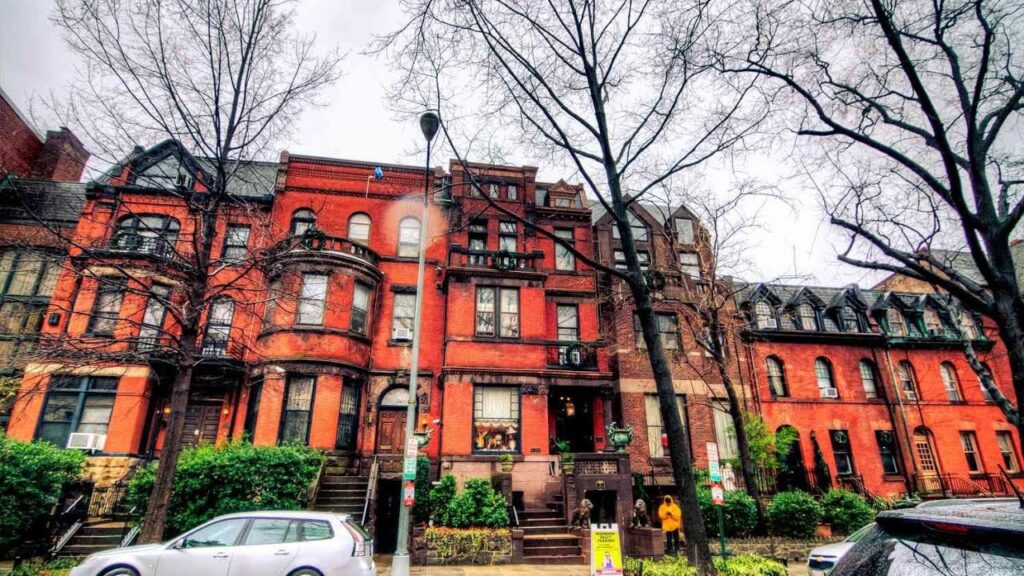
I walked past this building three times before I understood what it actually was. From the outside, it looks like a connected set of townhouses. Inside it is an elaborate club, museum, and hotel containing over 100 antique-filled rooms, with 70 doors hidden within the walls.
How the Secret Doors Actually Work
Doors are concealed in books, in the fireplace, and behind walls. Some lead to a room. Others lead to private suites. And some do not lead anywhere at all. This is precisely the purpose of visiting.
Weekend tours are priced at $35 per individual. Other activities, such as private tours, dinner, and overnight stay, are also offered. Make reservations on omansion.com two weeks in advance, since weekend tours can fill up early. This place is one of the few awesome places in DC that very few tourists know about.
Insider Tip
Let your tour guide know that you are hunting specifically for the doors. Though they will not divulge their whereabouts to you, they will give you clues regarding whether you are hot or cold in your search efforts.
| Quick Facts | Details | Insider Edge |
| Cost | $35 per person for weekend tours | Private dinners and overnight stays are also available |
| Booking | Reserve at omansion.com, two weeks ahead | Weekend tours fill fast, book early |
| Time needed | 90 minutes to 2 hours | Longer if you get deep into door hunting |
| Hidden Doors | 70 concealed doors throughout | Hidden in bookshelves, fireplaces, and walls |
| Rooms | Over 100 antique-filled rooms | Each room has a different theme and era |
| Worth it if | You want something no other city has | One of the genuinely unique experiences in DC |
| Skip if | You dislike unstructured exploration | This rewards curiosity, not efficiency |
Google Maps | Mansion on O Street |
6. Blind Whino: The Most Colorful Building in Washington DC

Blind Whino at 700 Delaware Avenue SW is a converted Apostolic church turned arts venue. Artist Aniekan Udofia painted the entire exterior in a floor-to-roof geometric mural that stops people mid-street.
What Goes On Inside
This indoor space has been used for art gallery openings, film presentations, market stalls, and other performances. However, it’s best to visit their website, blindwhino.org, to verify the schedule since programming is not set in stone. There are many free or inexpensive activities available. This site is situated in the southwestern portion of DC, just around the wharf area.
The exterior mural looks its best when taken later in the day from the intersection of Delaware and I streets. This perspective captures the full view of the mural and allows you to see its geometric design clearly.
| Quick Facts | Details | Insider Edge |
| Cost | Free or low cost for most events | Check blindwhino.org for each event’s pricing |
| Hours | Varies by events, check the website | No fixed, daily hours, programming changes |
| Location | 700 Delaware Avenue SW | Near the Wharf, it’s easy to combine both |
| Building | Converted Apostolic Church | Full exterior mural by artist Aniekan Udofia |
| Best Photo Stops | Corner of Delaware and I Street, late afternoon | Captures the full geometric mural in the best light |
| Programming | Art opening, film, markets, performances | The schedule is not fixed; always verify ahead of time |
| Worth it if | You are already visiting the Wharf area | Add almost no extra travel time |
| Skip if | You do not check the schedule first | Showing up without checking risks a closed building |
Things to Do in Washington, D.C. with Kids
I have watched kids get bored at the Jefferson Memorial in three minutes and stay two hours at the Spy Museum. The difference is not the child. It is the attraction.
Google Maps | Blind Whino, Washington, DC |
7. The National Zoo: Panda Spotting and 2,700 Animals for Free

The Smithsonian National Zoo, located within Rock Creek Park, houses more than 2,700 animal species across 163 acres and charges no admission fee. In late 2024, giant pandas were reintroduced to the zoo through an arrangement with China and now form the main attraction in the Asia Trail area. I showed up at 10 am on a Saturday and waited 40 minutes just to enter the Panda area. Come to the opening. The pandas are also visibly more active before noon, which nobody tells you until after you’ve already waited.
How to Plan the Visit So Kids Do Not Run Out of Energy First
The zoo covers a significant amount of ground, and a full exploration takes three to four hours. The Great Ape House, Elephant Community Center, and American Trail, featuring sea lions, gray wolves, and bald eagles, are the three places that seem to attract kids’ attention more than others. Wheelchair strollers can be hired at the entrance gate for $10. There are food options throughout the zoo, but packing a lunch box saves time and money.
Zoo parking is $30 per day and fills up by 10 am on weekends. You should take the Metro instead. Ride the Red Line to the Woodley Park stop and then head downhill for five minutes.
| Quick Facts | Details | Insider Edge |
| Cost | Free admission | Parking is $30; use Metro instead |
| Hours | Opens 8 am daily | Gates close at 6 pm, buildings close at 5 pm |
| Metro Access | Red line to Woodley Park | 5-minute walk downhill to the entrance |
| Time needed | 3 to 4 hours for a full visit | Half a day with kids is realistic |
| Pandas | The Asia Trail area will be reintroduced in late 2024 | Most active before noon, arrive at opening |
| Stroller rental | Available at the entrance gate, $10 | Covers a lot of ground, worth it for young kids |
| Worth it if | You have kids or a full free morning | A free world-class zoo is rare anywhere in the world |
| Skip if | You arrive after 10 am on a weekend | Parking gone, pandas less active, crowded |
Google Maps | Smithsonian National Zoo |
8. The International Spy Museum: The Most Fun Your Kids Will Have Indoors

The International Spy Museum, located near L’Enfant Plaza, is the world’s only spy museum and Washington, DC’s top tourist destination. Over 600 genuine spy items are on display in this museum, including the famous KGB shoe transmitter, a Soviet lipstick pistol, and an authentic Enigma machine used during World War II.
What Children Actually Do Inside the Museum
My nephew refused to answer to his real name for the rest of the day after getting his cover identity at the door. That should tell you everything about how well this place works on kids. There are various places where kids can decode messages, learn spy tactics, and even test their memory using real intelligence training techniques. This attraction suits children over eight years old.
The price for an adult ticket is about $35. The price for children aged 7 to 12 years old is around $22. Children under 7 years of age are admitted free of charge. Visit the website for more information on prices and to book tickets and avoid long lines on weekends. The opening hours are from 9 am to 7 pm daily.
The Operation Spy adventure activity is independent of the museum exhibit and is more appropriate for older kids and grown-ups than for children. Pay for it only when you have kids aged 13 and above.
| Quick Facts | Details | Insider Edge |
| Cost | Adults $35, ages 7 to 12 around $22, under 7 free | Operation Spy add-on costs extra, ages 13 and up only |
| Hours | 9 am to 7 pm daily | Last entry one hour before closing |
| Booking | Book online to skip weekend lines | The wait time can exceed 45 minutes on Saturday |
| Time needed | 2 to 3 hours | More if kids engage with every interactive station |
| Cover identity | Assigned at entry, must maintain throughout | Kids take this seriously, plan accordingly |
| Best for | Kids aged 8 and above | Under 8 can attend, but miss most of the interactive depth |
| Worth it if | You have kids between 8 and 15 | Hands down, the most engaging indoor experience for that age group |
| Skip if | You have very young children only | The depth is wasted on under-7s. Save it for when they are older |
Google Maps | International Spy Museum |
9. National Air and Space Museum: Where Children Understand Why Space Matters

The Objects That Stop Children in Their Tracks
The National Air and Space Museum, located on the Mall, has no entry fee and contains the world’s most popular exhibition of aircraft and spacecraft. One can view the Wright Brothers’ 1903 Flyer, which undertook the first powered flight, hanging from the ceiling of the main building.
Charles Lindbergh’s Spirit of St. Louis, in which he made the first solo flight across the Atlantic Ocean in 1927, stands by its side. Next is the Apollo 11 command module, which brought back to Earth the first team to land on the moon, placed at eye level, and one can even feel the lunar rocks brought back from the Apollo 17 expedition.
The IMAX theater in the museum screens aircraft and space movies on a five-story-high screen. Ticket prices for adults are $15, while those for children are $13. These may prove worthwhile to incorporate into your schedule if you plan to visit as part of a family, especially with children who like such movies.
Pro tip:
The Steven F. Udvar-Hazy Center, located in Chantilly, Virginia, is the sister location of the National Air and Space Museum and houses the Space Shuttle Discovery, as well as many other aircraft. This place is just a half-hour away from DC via automobile and can be visited by kids who love planes.
| Quick Facts | Details | Insider Edge |
| Cost | Free entry, IMAX adults $15. Children $13 | Skip IMAX if time is tight |
| Hours | 10 am to 5:30 pm daily | Arrive by 10 am to beat school groups |
| Metro Access | L’Enfant Plaza station, all lines | 5-minute walk to the entrance |
| Time needed | 2 to 3 hours minimum | Add 45 min if doing IMAX |
| Must-see Objects | Wright Brother Flyer, Spirit of St. Louis, Apollo 11 module | The Apollo module is at eye level, and you can get very close |
| Touch Points | Apollo 17 lunar rock sample | One of the few places on earth where you can touch a moon rock |
| Sister Location | Udvar-Hazy Center, Chantilly, Virginia, 30 min by car | Houses Space Shuttle Discovery, far less crowded than the Mall location |
| Worth it if | You have kids or any interest in flight and space | The free version of the museum beats most paid ones worldwide |
| Skip if | You only have 30 minutes | The main hall alone needs more time than that |
Google Maps | National Air and Space Museum |
10. Bureau of Engraving and Printing: Watch Real Money Being Made

The Bureau of Engraving and Printing, located on 14th Street SW, is where the US government produces its currency. Tours are free and operate from Monday to Friday, lasting about 40 minutes. While the tour goes on, you observe the printing, cutting, and stacking of the currency notes via large glass windows while your guide explains everything that happens at each step of the way. This one gets children’s immediate attention after visiting the Air and Space Museum or Spy Museum all morning, because nothing can be boring about seeing money being printed.
The tickets for tours are free of charge and can be obtained on-site beginning from 8 a.m., on a first-come, first-served basis. During the summer months, visitors must wait in line before the building opens, so it is advisable to arrive around 7:30 a.m. if you wish to visit then.
Pro tip:
The gift shop sells bags of shredded currency for $2, which is the most genuinely DC souvenir available anywhere in the city.
| Quick Facts | Details | Insider Edge |
| Cost | Free | Tickets distributed on-site from 8 am, first-come, first-served |
| Hours | Monday to Friday only, tours run from 9 am to 2 pm | Closed weekends and federal holidays |
| Arrive by | 7:30 am in summer | Tickets run out fast, and lines from before the building opens |
| Tour length | 40 minutes | Self-paced viewing through glass windows with guide narration |
| What you see | Printing, cutting, and stacking of US currency notes | You watch real money being made in real time, not a simulation |
| Gift Shop | Sells bags of shredded currency for $2 | Most genuine DC souvenir in the city |
| Best paired with | Spy Museum or Air and Space Museum in the same morning | Kids stay engaged after a big museum if money printing follows |
| Worth it if | You have kids or a free weekday morning | Nothing else in DC shows you how the government actually works up close |
| Skip if | You can only visit on weekends | It is not open, no exception |
Best Food and Fun Spots in Washington, D.C
Washington, D.C.’s food culture has changed significantly over the last ten years, and the most enjoyable places to eat in DC are all located within just three districts, each providing a unique atmosphere.
Google Maps | Bureau of Engraving and Printing |
11. Union Market: The Best Indoor Food Hall in Washington, D.C

Forty Vendors, One Building, No Bad Options
The Union Market, located at 1309 5th Street NE in NoMa, is an old warehouse that has been transformed into a permanent food hall with over 40 vendors offering an array of foods, including lobster rolls, Ethiopian injera, and freshly ground nut butters. The market runs on Thursdays, Fridays, Saturdays, and Sundays and is the top place in DC to try the city’s culinary offerings.
Opening hours are from 8 am until 9 pm on weekends. The Union Market District in the neighborhood has grown considerably, and it now features stores such as Trader Joe’s, small cafes serving coffee, wine bars, and weekend markets that pop up in the parking lots around the building. It is ten minutes away from the Capitol by Metro via the Red Line to the NoMa-Gallaudet stop.
Pro tip:
Rappahannock Oyster Bar, located in Union Market, offers oysters from their farm in the Chesapeake Bay region. Half a dozen oysters are priced at roughly $18, and enjoying these oysters at the bar counter is definitely one of the best fast-food experiences available in town.
| Quick Facts | Details | Insider Edge |
| Cost | Free to enter, food prices vary by vendor | Budget $15 to $25 per person for a solid meal |
| Hours | Thursday to Sunday, 8 am to 9 pm | Closed Monday through Wednesday |
| Metro Access | Red Line to NoMa-Gallaudet station | 10 minutes from the Capitol, 5-minute walk from the station |
| Vendors | Over 40 permanent vendors | Lobster rolls, Ethiopian injera, nut butters, pastries, and more |
| Must try | Rappahannock Oyster Bar inside the market | Half a dozen Chesapeake Bay oysters for around $18 at the bar counter |
| Neighbourhood | Union Market District has expanded significantly | Trader Joe’s wine bars, weekend pop-up markets in surrounding lots |
| Best time | Saturday morning before noon | Busiest but also the most vendors operating at full capacity |
| Worth it | You want the best single food stop in DC | 40 vendors in one building means everyone in your group finds something |
| Skip if | You are visiting only on a weekday | Fewer vendors open Monday through Wednesday |
Google Maps | Union Market DC |
12. Georgetown: Waterfront Dining and the Best Shopping Street in DC

The area surrounding M Street, NW, Georgetown, and the Potomac riverside makes up Washington’s prettiest area to enjoy food, take a stroll, and spend an afternoon doing nothing in particular. The area is 40 years older than the rest of the District because it was built before the federal city, and its Federal architecture makes it feel unique.
Where to Eat, Walk, and Spend an Afternoon With No Agenda
Water Street in Georgetown runs along the Potomac River and features a series of restaurants with open-air seating overlooking the river. Some of the establishments with such terraces include Sequoia, Farmers Fishers Bakers, and Tony and Joe’s Seafood Place. C&O Canal Towpath starts at the waterfront and offers a quiet, tree-lined walk along the former lock system.
Martin’s Tavern at 1264 Wisconsin Avenue has been open since 1933. Booth 3 is where JFK allegedly proposed to Jackie Bouvier. It is still marked, still bookable, and still a working restaurant. Reserve ahead for dinner.
| Quick Facts | Details | Insider Edge |
| Cost | Free to explore, dining varies | Waterfront restaurants run $20 and $50 per person for lunch |
| Getting there | DC Circulator from Dupont Circle or Foggy Bottom, $1 | No Metro Station in Georgetown; the Circulator is the easiest option |
| Time needed | 2 to 4 hours | Half a day if you include a walk along the C&O Canal Towpath |
| Waterfront dining | Sequoia, Farmers Fishers Bakers, Tony and Joe’s | All have open-air terraces directly overlooking the Potomac |
| Martin’s Tavern | 1264 Wisconsin Avenue, open since 1933 | Booth 3 is where JFK allegedly proposed to Jackie, still marked and bookable |
| Canal Walk | C&O Canal Towpath starts at the waterfront | Quiet, tree-lined, completely free, runs for miles |
| Worth it if | You want the most visually beautiful neighborhood in DC | Nothing else in the city looks or feels like this |
| Skip if | You are short on time and monument-focused | Georgetown rewards slow afternoons, not rushed stops |
Google Maps | Georgetown Waterfront Park |
13. The Wharf: Live Music, Fresh Crabs, and Washington DC’s Best Evening
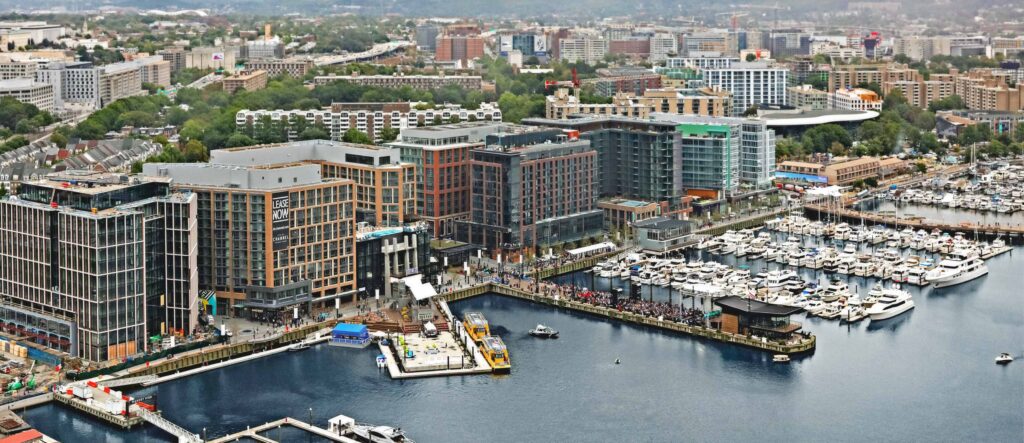
The Wharf is where Washington stops pretending to be serious. I have eaten crabs there at midnight in November with government staffers who spent the whole day debating federal policy. Nobody was talking about policy anymore. Over a mile long and lined with a Michelin-starred restaurant, a fish market, the Anthem venue for live music performances, fire pits outside, and a fleet of boats in the harbor.
The Fish Market That Has Outlasted Every Administration
The Maine Avenue Fish Market, located at the west end of The Wharf, is America’s oldest open-air fish market, established way back in 1805. Watermen sell freshly harvested Chesapeake blue crabs and oysters straight from their boats. Oysters cost about $12 for a dozen. Enjoying them while seated at the outdoor tables, with the harbor as your backdrop, is a quintessential DC experience.
Live Music Every Night of the Week
The Anthem at The Wharf seats 6,000 and brings big national acts to town. The Pearl Street Warehouse is a small venue across the street that hosts concerts with a capacity of 300. Visit theanthem.com for their schedule. Having a show at one of these venues, along with dinner at the fish market, will make for a great night out in Washington, D.C.
Pro tip
The water taxi that operates between The Wharf and Georgetown on the weekends costs $15 for a one-way trip. The 20-minute journey across the Potomac is much more pleasant than any other mode of surface transport.
| Quick Facts | Details | Insider Edge |
| Cost | Free to walk, fish market from $12 per dozen oyster | Budget $30 to $50 per person for a full evening with food and drinks |
| Hours | Open daily, the fish market from early morning | Anthem and Pearl Street Warehouse have individual show schedules |
| Getting there | Metro Green/Yellow Line to Waterfront Station | 5-minute walk to The Wharf entrance |
| Fish Market | Maine Avenue Fish Market, established in 1805 | America’s oldest open-air fish market, still run by Chesapeake watermen |
| Live Music | The Anthem seats 6,000, Pearl Street Warehouse seats 300 | Check theanthem.com for the current schedule before you visit |
| Water taxi | Runs to Georgetown on weekends, $15 one way | 20-minute Potomac crossing, far more enjoyable than any road option |
| Best Time | Friday or Saturday evening | Fire pits, boats in the harbor, a full market, and venues are all operating |
| Worth it if | You want the best single evening DC offers | This is where the city actually relaxes, not a tourist performance |
| Skip if | You visit only on a Tuesday or Wednesday at midday | The energy is an evening and weekend thing entirely |
Google Maps | The Wharf, Washington, DC |
14. The People’s House: The White House Experience That Actually Lets You Inside
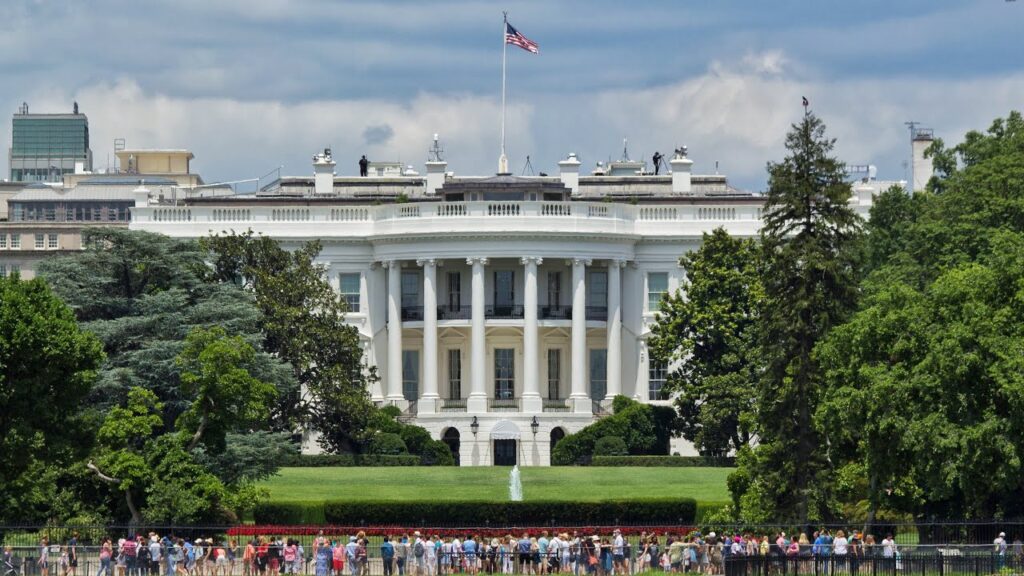
The People’s House opened directly across the street from the White House and is the most technologically impressive new attraction in Washington, D.C. Most visitors walk past it, assuming it is another government building. It is not. It is the closest any member of the public will ever get to standing inside the White House itself.
The White House stands at 1600 Pennsylvania Avenue and is free to view from the pedestrian plaza on Pennsylvania Avenue, which is open daily. Interior tours require advance coordination through your congressional representative and must be requested at least 21 days in advance. International visitors should contact their embassy several months in advance. If interior access is not possible, The People’s House directly across the street is the next best option.
What You Actually Experience Inside
You stand in a projected Blue Room and Yellow Room where the walls respond to your movements. You sit at a replica of the Oval Office desk. You join a simulated Cabinet meeting with Abraham Lincoln. The technology is genuinely unlike anything else in the city and makes most traditional museums feel dated by comparison. Plan for 60-90 minutes inside.
Tickets, Hours, and the One Thing to Know Before You Go
Entry is free, but timed tickets are required. Book at thepeopleshouse.org at least one week in advance. School groups take up significant capacity on weekday mornings, so midweek afternoon slots or weekend visits give you more room to move through the experience at your own pace. The building is open Tuesday through Sunday.
Pro tip
Book your People’s House slot for the same morning as your White House exterior visit. Both are within two minutes of each other on foot, and together they give you the complete picture of 1600 Pennsylvania Avenue that neither one delivers alone.
| Quick Facts | Details | Insider Edge |
| Cost | Free, timed tickets required | Book at thepeopleshouse.org at least one week ahead |
| Hours | Tuesday through Sunday | Closed Mondays, check the site for exact session time |
| Location | Directly across from the White House on Pennsylvania Avenue | Two-minute walk from the White House exterior viewing area |
| Time needed | 60 to 90 minutes | Midweek afternoons or weekends give you more space to move |
| What you experience | Projected Blue Room, Yellow Room, Oval Office replica, simulated Cabinet meeting | Walls respond to movement, and technology is unlike anything else in the city |
| White House tour | Require congressional coordination, minimum 21 days advance notice | International visitors contact their embassy several months ahead of time |
| Best Pairing | Book People’s House the same morning as White House exterior visit | Both are within two minutes on foot, and together they give the full picture |
| Worth it if | You cannot get a White House interior tour, or even if you can | The technology makes traditional museums feel dated by comparison |
| Skip if | You book less than a week ahead without checking availability | School groups dominate weekday morning; plan accordingly |
Google Maps | The People’s House, Washington, DC |
15. Arlington National Cemetery: The Most Solemn Hour You Will Spend Near DC
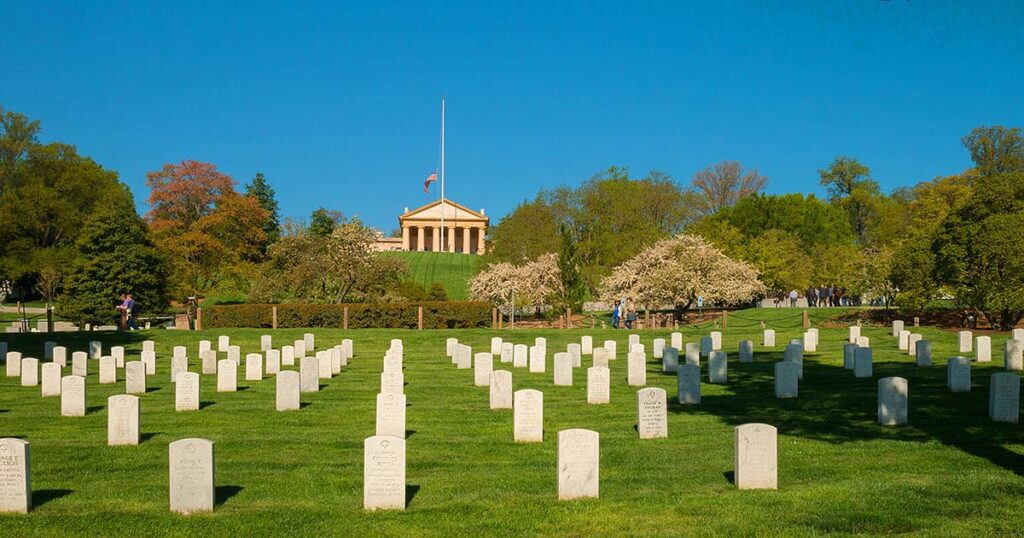
Arlington National Cemetery lies just across the Memorial Bridge from the Lincoln Memorial and covers 624 acres on a hillside above the Potomac. More than 400,000 service members, veterans, and their families are buried here.
The Changing of the Guard at the Tomb of the Unknown Soldier runs every 30 minutes from April through September and every hour from October through March. The ceremony takes exactly three minutes and has not been interrupted once since 1937, including through hurricanes and blizzards. Admission is free.
The cemetery is open daily from 8 am to 7 pm in summer and 8 am to 5 pm in winter. Take the Metro Blue or Yellow Line to Arlington Cemetery station, which is a two-minute walk from the entrance. Section 60, where recent war dead are buried, is the most visited and most quietly emotional part of the grounds. JFK’s eternal flame is in Section 45, marked by a curved stone wall overlooking the river and the city beyond.
| Quick Facts | Details | Insider Edge |
| Cost | Free admission | No booking required, open to all visitors |
| Hours | 8 am to 7 pm in summer, 8 am to 5 pm in winter | Open daily, including weekends |
| Metro Access | Blue or Yellow Line to Arlington Cemetery Station | 2-minute walk from the station to the entrance |
| Size | 624 acres, over 400,000 burials | Allow at least 90 minutes, more if walking to multiple sections |
| Changing of the Guard | Every 30 minutes, April through September, hourly, October through March | The ceremony lasts exactly 3 minutes, uninterrupted since 1937 |
| JFK memorial | Section 45, eternal flame with curved stone wall | Overlooks the Potomac and the DC skyline, one of the most quietly powerful views near the city |
| Section 60 | Most recently fallen service members buried here | The most visited and most emotionally heavy part of the grounds |
| Worth it if | Any visit to DC, especially with family | Nothing else near the city puts American history into this kind of perspective |
| Skip if | You are pressed for time on your only day | This deserves a slow, unhurried visit, not a rushed walk-through |
Google Maps | Arlington National Cemetery |
While Washington DC offers a deep dive into history and monuments, if you’re looking for a completely different adventure amidst red rocks and desert landscapes, don’t miss our guide on the Best Things to Do in Sedona, Arizona.
Mistakes to Avoid in Washington, D.C.
- Trying to do the National Mall in one morning. It looks small on a map. It is not. Two miles with museums on both sides will eat your entire day if you are not selective before you leave the hotel.
- Trying to book the National Museum of African American History and Culture on the day you arrive. Tickets are free, but they disappear weeks in advance. This is the one booking that needs to happen the moment your travel dates are confirmed, not after you land.
- Paying for parking near the Mall. Garages in that area charge $30 to $40 for a few hours. The Metro gets you to the Smithsonian station in the same time for under $3. There is no situation where driving to the Mall makes sense.
- Showing up at the Washington Monument without a timed ticket. Walk-in tickets are gone by mid-morning on most days. Book the night before at recreation.gov or accept that you are looking at it from the outside.
- Skipping Georgetown because there is no Metro stop. That missing Metro stop keeps crowds lower than they should be for one of the city’s most beautiful neighborhoods. Take the $1 Circulator and go.
- Underestimating the National Zoo. People budget for one hour. The zoo needs three to four, especially with kids. Budget the time, or you will spend the whole visit rushing between animals.
- Leaving Arlington for a rushed final hour. It is not a quick stop. Section 60 and the Changing of the Guard alone deserve ninety minutes. Give it a proper morning or save it for a return trip.
Bus Tours vs Walking Tours: Which One to Book
| Tour Type | Best For | Average Cost | What You Get | What You Miss |
| Hop-on Hop-off Bus | First-timers covering maximum ground | $45 to $55 per adult | 40 plus stops, flexible timing, audio commentary | The street-level detail and insider knowledge of a good guide |
| DC Monuments Night Tour | Anyone visiting for the first time | $35 to $45 per adult | All major monuments lit at night, small group, expert guide | Daytime context and museum interiors |
| Capitol Hill Walking Tour | History and politics enthusiasts | $35 to $45 per adult | Capitol exterior, Supreme Court, Library of Congress, underground tunnels | Speed and distance coverage of a bus |
| Old Town Alexandria Day Trip | History buffs and road trippers | $40 to $60 per adult | George Washington’s neighborhood, colonial architecture, and waterfront | Time in central DC itself |
| Potomac River Cruise | Families and couples | $35 to $50 per adult | Skyline views, monuments from the water, daytime or sunset options | Ground-level monument access |
The DC Monuments Night Tour is your best two-hour investment for first-time visitors to DC. The monuments look spectacular under the lights, there are fewer crowds, and the tour guides who cover the night shift are usually the most seasoned in the business. Reserve your tickets at Washington DC Night Tours or Old Town Trolley Tour for just $39 per person.
If you travel with kids, the hop-on-hop-off bus will address tired feet, letting you get off wherever the kids want to stay the longest.
Pro tip
The best tour for walking around Capitol Hill, offered by DC By Foot, uses a pay-what-you-want model, so you pay whatever you think the tour was worth at the end. They have some of the best guides in the city, and they show you the Capitol building, the Library of Congress, and the Supreme Court building.
Official site for night tours: dctours.us
Official site for DC By Foot: dcbyfoot.com
Planning beyond DC? Our complete guide to tourist attractions across the USA maps out what pairs well with a DC visit on either side of the trip.
Where to Eat in Washington, D.C.: Three Places That Define the City
For the Dish That Was Born Here (Ben’s Chili Bowl)
The Ben’s Chili Bowl at 1213 U Street NW began selling its half-smoke back in 1958. This hot dog is spicier and smokier than a regular one; it comes with chili, mustard, and onions on top of a steamed bun for about eight dollars. Obama ate at Ben’s Chili Bowl. The long lines on weekends are not a problem once you have your meal in front of you.
For Chesapeake Bay Crab Cakes Done Right (Old Ebbitt Grill)
Old Ebbitt Grill at 675 15th Street NW has been serving Washington since 1856 and sits one block from the White House. It is the highest-grossing restaurant in DC by volume and the place where government, press, and tourists all end up in the same room without it feeling forced. The Chesapeake crab cakes are the thing to order. Dinner for two runs $60-$90. Reservations at opentable.com are worth making for weekend evenings.
For the Fine Dining Moment in Penn Quarter (Jaleo by José Andrés)
At Jaleo, located at 480 7th Street NW, Chef José Andrés’ premier Spanish tapas restaurant, one can enjoy authentic tapas. Established in 1993 in Washington, the restaurant is just two minutes from Ford’s Theatre and Capital One Arena and is ideal for those looking for a sit-down dinner on a particular evening. The cost for two people is between $80 and $120. Make your reservation through exploretock.com at least one week before your visit.
Where to Stay in Washington, D.C.
- Capitol Hill for first-timers who want to walk everywhere. You are ten minutes from the Mall on foot, close to Union Market, and in one of the most architecturally distinct neighborhoods in the city. Mid-range hotels here run $180 to $250 per night.
- Dupont Circle for people who want nightlife and neighborhood character alongside the sightseeing. Restaurant rows, independent bookshops, and the $1 Circulator connection to Georgetown make this the most livable base in DC. Similar price range to Capitol Hill.
- The Wharf for couples or anyone treating DC as a proper destination rather than a quick stop. You wake up on the water, the fish market is outside your door, and the Anthem is a five-minute walk. Expect to pay $250 to $350 per night for that address.
- Georgetown for those who want the prettiest streets and the Potomac on their doorstep. The trade-off is no Metro access, so every Mall trip needs a Circulator or rideshare. Boutique hotels here run $220 to $320 per night.
- NoMa and H Street are great for budget-conscious travelers who still want a real neighborhood. Less polished than Dupont or Georgetown, more honest about what DC actually looks like day to day. Hotels run $130 to $180 per night, and the Red Line puts you everywhere you need to be.
One rule across all of it
Avoid hotels on New York Avenue or near the convention center unless the price difference is dramatic. You will spend more time and money on what matters.
Practical Tips for Visitors
Getting Around Washington, D.C
| How You Move | What it Costs | Best Used For | The One Thing to Know |
| Metro Rail | $2 to $6 per trip | Getting between major attractions quickly | Buy a SmarTrip card on arrival. Paper tickets cost more per ride |
| DC Circulator Bus | $1 per ride | National Mall. Georgetown, Union Station | Runs every 10 minutes on peak routes. Easiest option on the Mall |
| Capital Bikeshare | $1 per 30 mins with a day pass | Short trips between neighborhood | 700 stations across the city. Fastest for trips under two miles |
| Rideshare | Varies | Late night, Georgetown, luggage | Georgetown has no Metro station. Circulator or rideshare are the only options |
| Walking | Free | National Mall, Capitol Hill, Georgetown | Most Mall attractions are within 30 minutes of each other on foot |
| Reagan National Airport Metro | $2.25 flat fare | Airport arrivals on Blue and Yellow lines | 15 minutes to central DC. Far cheaper and faster than a taxi or rideshare |
Best Time to Visit Washington, D.C
| When You Go | What Happens | What Crowds Do | The Honest Verdict |
| Late March to Early April | Cherry blossom season. Peak bloom lasts 4 to 7 days around the Tidal Basin | Highest crowds of the year | Worth it if you book 6 months ahead. Book accommodation the moment dates open |
| May and June | Warm weather, long days, Smithsonian Folklife Festival in late June | Busy but manageable | Strong choice. Best balance of the weather and crowds |
| July 4th 2026 | America’s 250th birthday. Largest firework in the city’s history on the Mall | Maximum crowds, maximum prices | I have been in DC on a normal July 4th. The 250th is a different animal entirely. Plan well ahead, and it will be worth every logistical headache. |
| September and October | Cooler temperature, fall color in Rock Creek Park, shorter lines everywhere | Noticeably thinner than summer | The best overall time to visit. Comfortable weather, manageable crowds |
| November and December | Holiday decorations, National Christmas Tree on the Ellipse | Low to moderate | Underrated. The city is beautiful, and prices drop after Thanksgiving |
| January and February | Cold, all museums and monuments remain open | Lowest crowds of the year | Best value. The Smithsonian feels like a private visit |
Cherry Blossom dates are the number-one seasonal query for Washington, D.C. The National Cherry Blossom Festival happens every year from late March through mid-April. The peak blossom period of the cherry blossoms on the Tidal Basin occurs only for 4 to 7 days in any one year. The National Park Service offers a forecast of peak dates on its website at nps.gov/cherry, beginning in February.
Washington, D.C., Does Not Need a Sales Pitch
The monuments speak, the museums teach, and the neighborhoods feed you better than you expect. The city is free in ways no other capital city on earth can match. Book the NMAAHC passes before anything else. Get to the Lincoln Memorial before the city wakes up. Save one evening for U Street or The Wharf. The city gives more than almost any destination on earth. Almost all of it for free.
Many travelers visiting Washington, D.C. often include a stop in New York City as part of a larger East Coast journey, sometimes aligning it with major transport networks like Atlanta to New York to see the whole coast. If you are heading to the Big Apple next, make sure you know the best way to visit its most famous icon., make sure you know the best way to visit its most famous icon. Read our guide on the 5 best ways to see the Statue of Liberty to pick the right ferry or viewpoint for your schedule.
People Also Ask
Is Washington, D.C. expensive?
More affordable than most people expect. Every Smithsonian, monument, and memorial is free. Hotels average $180 to $280 per night, and $50 to $80 per day comfortably covers food and transport. Our budget travel guide for expensive US cities includes the exact tactics to stretch your budget further.
What are the best things to do in Washington, D.C. this weekend?
Mall at dawn Saturday, one Smithsonian in the morning, monuments night tour Saturday evening, Arlington Sunday morning, dinner at The Wharf to close it out. That is 48 hours done right. Arriving from New York? The Washington, D.C. to New York bus route drops you at Union Station, Metro-connected to all of it.
Can you see everything in 2 days?
Two days cover the highlights comfortably but not exhaustively. Day one for the Mall, monuments, and one or two Smithsonian museums. Day two for Capitol Hill, Georgetown, and an evening at The Wharf or U Street. A third day lets you add Arlington, the Spy Museum, and the neighborhoods.
What should I not miss in Washington, D.C.?
The Lincoln Memorial at dawn, the National Museum of African American History and Culture, the US Capitol free tour, Ben's Chili Bowl on U Street, and one evening at The Wharf. Those five better cover the city's historical, cultural, and local experience than any other combination.
What are the best free things to do in DC?
The entire Smithsonian system, every monument on the Mall, Arlington National Cemetery, the Library of Congress, the National Archives, and the US Botanic Garden. Washington, D.C., has more free world-class experiences than any other city in the United States.
Is Washington, D.C., good for kids?
It is one of the best family cities in the United States. The combination of free world-class museums, the National Zoo, interactive experiences at the Spy Museum, and open outdoor spaces on the Mall makes it easier to keep children genuinely engaged here than in almost any other American city.