18 Best Places to Visit in Canada (2027 Guide)
- Home
- Travel Tips
- 18 Best Places to Visit in Canada (2027 Guide)
18 Best Places to Visit in Canada (2027 Guide)

Easy & Secure Booking with Boletoxpress
Canada is huge, and that is the entire issue. Ten provinces, three territories, and an extensive coastline large enough to encircle the Earth twice made the real question not where to go, but where to begin. Here are the best places to visit in Canada: Banff and Jasper for the mountains; Vancouver and Victoria for the coastal and urban experience in one; Toronto and Niagara Falls for tourism; and Quebec City and Montreal for history and cuisine. First-timers should allocate 7 to 10 days for each destination instead of trying to connect two coasts.
You don’t have to experience everything, and trying to do so is where most first-time visits to Canada go wrong. Choose one area and tailor your trip around it rather than a list of activities. Below are 18 examples, grouped by cities, national parks, and coasts, along with the best time of year to visit and how to travel between them without flying.
What Are the Best Places to Visit in Canada?
Here is a quick look at the destinations covered in this guide, grouped by what they are known for.
Destination | Province | Famous for | Recommended Trip Length |
Toronto | Ontario | Skyline, food, museums | 3 to 4 days |
Vancouver | British Columbia | City and ocean combined | 3 to 4 days |
Whistler | British Columbia | Ski resort and mountain village | 2 to 3 days |
Tofino and Vancouver Island | British Columbia | Old-growth forests, surfing, whales | 3 days |
Montreal | Quebec | Food, nightlife, culture | 3 days |
Quebec City | Quebec | Old World architecture | 2 to 3 days |
Banff and Lake Louise | Alberta | Mountains, turquoise lakes | 3 to 5 days |
Ottawa | Ontario | History, museums, canals | 2 days |
Victoria | British Columbia | Gardens, coastal charm | 2 days |
Jasper | Alberta | Wildlife, dark sky views | 2 to 3 days |
Niagara Falls | Ontario | Waterfalls, wine country | 1 to 2 days |
Halifax and Peggy’s Cove | Nova Scotia | Coastal towns, seafood | 2 to 3 days |
Bay of Fundy | New Brunswick, Nova Scotia | Highest tides on Earth | 2 days |
Cabot Trail | Nova Scotia | Coastal driving loop | 2 to 3 days |
Gros Morne | Newfoundland | Fjords, remote hiking | 3 days |
Prince Edward Island | PEI | Red sand beaches, small fishing towns | 2 to 3 days |
Yellowknife | Northwest Territories | Northern Lights | 3 to 4 days |
Churchill | Manitoba | Polar bears | 3 days minimum |
Best Cities to Visit in Canada
Toronto, Ontario

As Canada’s largest city, Toronto is the nation’s financial capital. It offers wonderful views of high-rise buildings, which look like different towns within themselves. The CN Tower is a must-see, especially for its glass floor and rotating restaurant. Victorian buildings in the Distillery District, now home to galleries and restaurants, make for great random walks. St. Lawrence Market has some of the city’s most delicious cuisine.
Best Things to Do
Travel by ferry in 15 minutes to the Toronto Islands to get the best photographs of the city skyline, enjoy car-free beaches that are car free, cycle tracks, climb up the CN Tower, and have an experience of visiting St. Lawrence Market and Distillery District in a morning.
According to FIFA’s official host city page, Toronto will co-host the FIFA World Cup in summer 2026, and the best time to explore the city by walking is from May to September. For accommodation in Toronto, Le Germain Hotel Toronto Mercer is a highly rated downtown boutique option that puts you within easy walking distance of both the CN Tower and Transit lines to the Distillery District.
Recommended Stay: 3 to 4 days.
The Niagara Falls are within easy driving distance, only 90 minutes by car or train, and thus are a good place to start your vacation even if the falls are the only place you intend to see. You can easily reach all these attractions by subway and streetcar; a rental car would be little more than a place to park.
Travel tip
Most attractions are accessible by subway and trolleybus, and a car rental is basically an expensive parking spot.
Why is it special? Few other Canadian cities pack so much food, architecture, and cityscape highlights into such a small downtown area, not to mention the nearby CN Tower and Distillery District.
Vancouver, British Columbia

Vancouver has been chosen as one of the host cities for the 2026 FIFA World Cup. The mountains and the sea come together in just one day in Vancouver, and maybe it’s the only city in Canada where it is possible. In Stanley Park, an 8.8-kilometer trail known as “the seawall” runs around the park, offering mountains, sea, and city in one day. It is recommended that you visit Granville Island’s public market to check out their food and art classes. Finally, Gastown, Vancouver’s oldest part, is worth seeing for its cobblestones and steam clock.
Recommended Things to do
Take a walk/bike on the Seawall of Stanley Park, explore the market at Granville Island, and take the gondola to Grouse Mountain and Capilano Suspension Bridge, which is around 20-30 minutes away from the downtown area and can be done without staying overnight.For accommodation, L’Hermitage Hotel is a well-reviewed downtown boutique option.
Days Needed: 3 to 4 days
Good for those who don’t want to compromise on either vacation choice, but perhaps not for those on a strict budget; Vancouver is one of Canada’s most expensive cities. Whistler is definitely worth visiting, and it’s only two hours from Vancouver. Victoria can be reached by ferry.
Travel tip
Both the SkyTrain and buses serve the central area and surrounding suburbs well, but for a car to pay off its expenses, you must use it for excursions away from downtown.
What distinguishes it from other places? It is rare to find yourself skiing in the morning and strolling along the beaches in the afternoon, thanks to the proximity of both the mountains and the ocean.
Whistler, British Columbia

Whistler lies about 120 kilometers north of Vancouver and is about a 90-minute to two-hour drive along the Sea-to-Sky Highway, depending on traffic. Whistler’s pedestrianized center sits at the foot of two mountains where the 2010 Winter Olympics alpine skiing competition took place.
Best things to do
Experience the ride on the Peak 2 Peak Gondola, which previously had the record of being the highest unsupported lift span in the world until a German cable car surpassed it in 2017. The ride ascends 436 meters above sea level in an 11-minute trip between Whistler and Blackcomb. Take part in Village Stroll; during your climb up from Vancouver, you could visit Sea to Sky Gondola at Squamish. A round-trip ticket costs CAD 57. Looking for adventure? Try a 3-hour tour on off-road buggies in the backcountry at CAD 349 per head.
Skiing and snowboarding take place during winter. However, summer has become a season of its own for activities like mountain biking and hiking. People there will even say summer is underrated compared to the ski season.
Recommended Stay: 2 to 3 days, though a day trip from Vancouver works if you leave early.
This is a great choice for skiers, families, and anyone based in Vancouver for a mountain day out. However, you will need to budget well for this place. For accommodation, Fairmont Chateau Whistler is an ideal slopeside location with a ski-in-ski-out experience. At the same time, Crystal Lodge is a good mid-range option within the village
Travel tip
Drive out of Vancouver at the start of the day. The Sea-to-Sky Highway gets jammed quickly on ski-season weekends and holidays.
Why is it special? Very few mountain villages of its reputation are as close to a big coastal city as Whistler. You will be in the glass floor gondola cabin just a couple of hours from your Vancouver hotel.
Tofino and Vancouver Island, British Columbia

The untamed west coast of Vancouver Island, and the closest Canada comes to having a genuine surf town. Top highlights include Long Beach in Pacific Rim National Park Reserve, Cathedral Grove’s ancient Douglas fir trees, which have been around for more than 800 years, and Hot Springs Cove, a natural hot spring accessible by boat only.
Best things to do
Whether you want to try your hand at surfing or just sit back and watch the surfers do their thing at Long Beach (wetsuits are a must due to the cold waters all year long), visit Cathedral Grove to see some old-growth trees and whale watch for grays and humpbacks.
Summertime is perfect for visiting due to the calm waters and nice weather, whereas winter is a good time to see the storms, an activity Tofino has made an industry out of. Long Beach Lodge Resort puts you steps from the surf if you want to stay right on Cox Bay Beach.
Recommended Stay: 3 days.
For surfing, storm watching, and anyone who desires an old-growth forest and coast on one journey. It takes about a 4- to 5-hour drive from Victoria around the island, or you can fly.
Travel tip
The drive itself, the Pacific Rim Highway, is part of the destination; budget extra time rather than treating it as a transit leg to rush through.
What makes it different
This is truly Canada’s surf capital, not just a marketing phrase, because the waves and water temperatures here form the basis of the long-standing surf community.
Montreal, Quebec

It is the largest city in the continent of French speakers, with a distinctive European atmosphere, a distinct culinary culture, and an event schedule that most other North American cities can’t match.
Notable places to visit in Montreal include the Basilica of Notre Dame, built in the Gothic Revival style in 1824 with stained glass windows, the cobbled streets of Old Montreal, and the Old Port of Montreal.
Best things to do
Instead of taking a guided tour of Old Montreal, why don’t you explore the place on your own, try a smoked meat sandwich (one of which is Schwartz’s, but there are lots more you can try), and go up the Mount Royal to view the sun setting from a high point of the city.
The best time to visit Montreal is summer because many festivals are happening, including the Montreal International Jazz Festival, one of the biggest jazz festivals in the world.
Recommended Stay: 3 days
Lovers of food, tourists in festivals, and honeymoon couples who wish to experience Europe without going to North America. You can reach Quebec City to Montreal in about 3 hours by road, train, or bus.
Travel tip
Walking around Old Montreal without a destination is one of the best ways to explore it; the charm lies in getting a little lost in its narrow lanes. If you want to stay in Old Montreal, LHotel Montreal is a well-reviewed historic boutique option in the old quarter.
What makes it different from other cities? The “joie de vivre” of Montreal is not simply a slogan, but rather a reality supported by its festival circuit, jazz, comedy, and films, which operate almost non-stop from June to September, more so than any other city in Canada.
Quebec City, Quebec
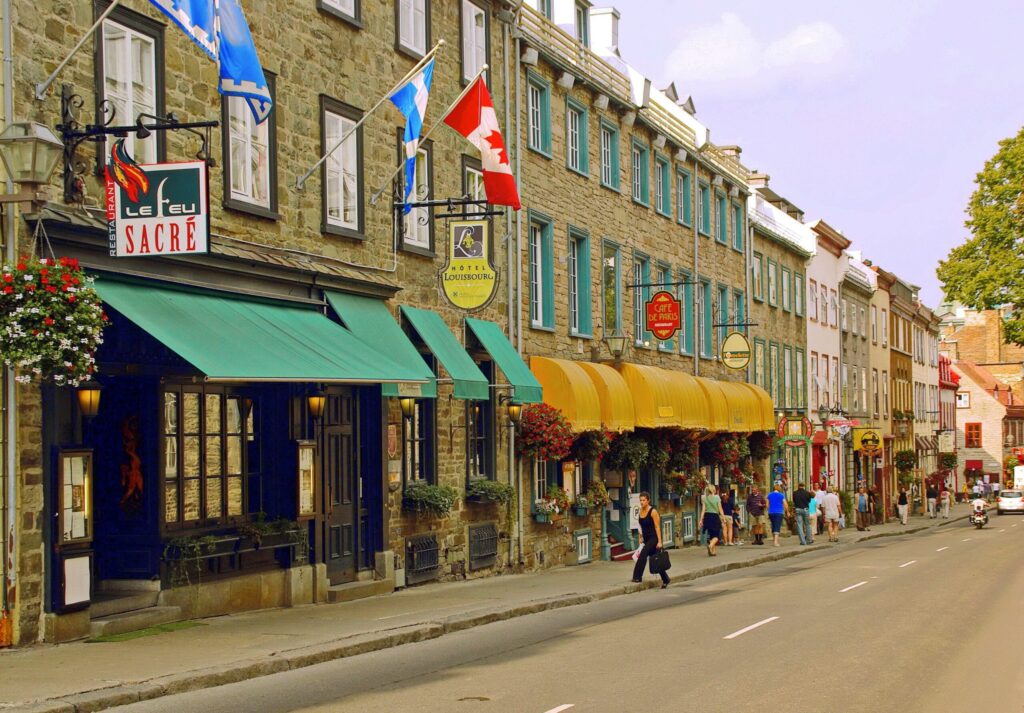
It is the only walled city in North America that is located above the region of Mexico, and it feels like a French transplant, down to the language on the signs posted around the city.
Some of the highlights of the city include Château Frontenac, a hotel of the Canadian Pacific Railway from 1893 known as the world’s most photographed hotel, according to Britannica and other sources, which is not verifiable in today’s smartphone age; the walled city and Citadelle of Old Quebec, which is a UNESCO World Heritage site; Montmorency Falls, which is taller than Niagara Falls.
Best things to do
Stroll along the historic Rue du Petit-Champlain, the oldest shopping district in North America, marvel at the scenic beauty of the St. Lawrence River from Dufferin Terrace promenade, and cross the aerial pedestrian bridge spanning Montmorency Falls to admire the scenery from above the waters. When looking for an excellent place to have your French dinner, Le Clocher Penché will not let you down. Located in a stunningly renovated 1916 bank building, this MICHELIN-recommended restaurant offers delicious dishes with award-winning cocktails.
The Best Time of Year to visit Quebec City is Winter, specifically the time when the Quebec Winter Carnival, one of the largest winter festivals in the world, takes place in January and February. Still, summer offers more comfortable walking around the historic sites.
Recommended Stay: 2-3 days
This trip is best for couples, history buffs, and anyone who wants European city life without traveling abroad. Montreal is only a three-hour drive, train, or bus ride from us.
Travel tip
Old Québec is small enough that a horse-and-buggy ride, as silly as it may sound, is actually one of the best ways to tour the place; after all, its streets are cobblestone and narrow, and aren’t really meant for automobiles.
Historic Value
The Château Frontenac hosted the Quebec Conferences of 1943 and 1944, where Churchill and Roosevelt laid out their plans for the D-Day invasions, and some of the most frequently reproduced World War II photographs show the two men posing together on Dufferin Terrace with the Château Frontenac behind them.
Banff and Lake Louise, Alberta

You can best experience the Rockies through Banff town or Lake Louise, and where you stay will have more impact than most visitors realize. Banff offers dining, grocery shopping, and transportation, while Lake Louise sits close to the lake and Moraine Lake, making it ideal for hikers who want an early start.
Best things to do
Both locations work well for traveling to the Icefields Parkway, the road that runs from Banff to Jasper, and to the Banff Upper Hot Springs, which can be an amazing way to end your hiking day. If you want an adrenaline-pumping day, options include a three-hour white-water rafting adventure on the Kicking Horse River for 136 dollars CAD and Via Ferrata on Mount Norquay for 199 dollars CAD.
Summer, between June and September, is the best time for hiking and trail access, while winter is for skiing.
Recommended Stay: 3-5 days
Best for first-time Rockies tourists. Shuttle service runs from Calgary to Banff, but after that, a car is recommended because you can’t reach Lake Louise or Moraine Lake by public transportation.
Travel tip
For Banff, the obvious choice is the iconic Fairmont Banff Springs Hotel, which is closer to the town’s shopping and dining areas. For Lake Louise, the only hotel is the Fairmont Chateau Lake Louise, located next to the lakeside area.
Features that set it apart
Very few National Parks have an established town this close to glacier-fed lakes; similar views elsewhere require much more driving to reach a restaurant or grocery store.
Ottawa, Ontario

Capital of Canada and the only one on this list to be built around a UNESCO World Heritage Site, which becomes the world’s biggest skating rink in winter.
Parliament Hill; the Rideau Canal, a national historic site in the summer and, according to Guinness World Records, the world’s largest natural ice rink in winter; the National Gallery of Canada; ByWard Market.
Best things to do
Roll on the Rideau Canal Skateway (free, 7.8 km, including BeaverTails pastry stops), see Parliament Hill, and explore ByWard Market’s food kiosks.
Winter is the best time to visit, more accurately February when Winterlude takes place, to see the canal skating which the city is famous for. Summer is great for visiting museums and touring Parliament, but you won’t experience Ottawa’s uniqueness then.
Recommended Stay: 2 days
Ottawa will appeal to people interested in history and museums, as well as those looking for activities beyond winter skiing. Montreal is reachable by train or bus within two hours of Ottawa, and if you travel farther west, Algonquin Park is a must.
Travel tip
Skate rentals are available right at the canal if you don’t own your own; no need to plan gear.
What’s unique about it? This UNESCO river is the only place in Canada or in the entire world where the river freezes to become a 7.8-kilometer ice skating rink used to commute to work.
Victoria, British Columbia
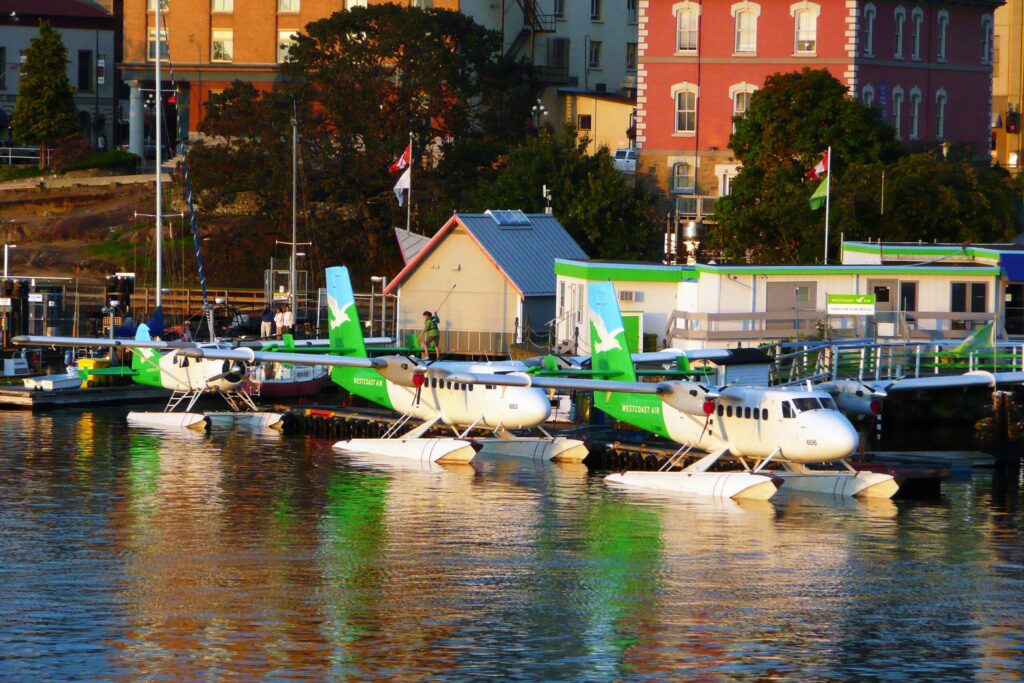
A less lively alternative to Vancouver is in the southwest of Vancouver Island. It is smaller and more relaxed with its own rhythm and British colonial architecture.
Butchart Gardens, a National Historic Site of Canada, features more than 900 plant species across 55 acres; the Inner Harbor and its luminous Parliament Buildings; and Fisherman’s Wharf and its houseboats.
Best things to do
You can spend half a day at Butchart Gardens, walking around the Inner Harbor as it gets dark since Parliament Buildings get lit up, and going whale watching, as some active orcas would be great for this part of the coast. Spring to fall is the best time to visit, as the gardens open then and look different each month. For a splurge, the Fairmont Empress on the Inner Harbor is the city’s landmark hotel; its afternoon tea is a whole experience on its own.
Recommended duration of stay: 2 days
This place is a good choice for couples and travelers who want relaxation and city sightseeing at the same time. It is accessible via ferry boat from Vancouver (1 and a half hours) and by floatplane.
Travel tip
Book Butchart Gardens tickets in advance during the summer season; it is the most popular pay-to-enter site on the island.
What makes Victoria unique? Victoria ranks high in restaurants per capita among Canadian cities, making it more of a city of food than gardens.
The Unique National Parks and Natural Wonders in Canada
Banff National Park, Alberta

Some of the most famous attractions are Lake Louise and Moraine Lake. The Icefields Parkway joins Banff and Jasper together, and it is claimed to be one of the most scenic drives in the world. For additional information about these attractions, visit the Banff and Lake Louise pages above. The 2026 Parks Canada fee policy sets the entry fee for an adult:
- Banff National Park: $12.25
- Annual Parks Canada Discovery Pass: $83.50
Jasper National Park, Alberta

Parks Canada has officially declared that Jasper is second only to Wood Buffalo as home to the world’s largest dark sky preserve, and the former is larger than Banff.
Spirit Island is a favorite spot at Maligne Lake, the largest natural lake in the Canadian Rockies. The Athabasca Glacier and Columbia Icefield are in the vicinity of the Icefields Parkway. Maligne Canyon is another place to see.
Best activities to do
Go for a boat ride to Spirit Island on Maligne Lake, walk the trails of Maligne Canyon to view the waterfalls, and after night falls, just gaze into the heavens. This is the place where the Milky Way is visible on moonless nights better than anywhere else on the continent.
Summer is best for hiking and lakes; October is best for the annual Jasper Dark Sky Festival.
Ideal trip length: 2-3 days
Jasper National Park offers a unique place for Nature enthusiasts and anyone who wants to see Banff’s landscape without the crowds. The park has grizzly bears, elk, moose, and an endangered herd of mountain caribou. It takes about a 4-hour drive by Icefields Parkway from Banff toward the south.
Travel tip
Book the Dark Sky Festival stargazing sessions ahead; they sell out well before October. For food, Famoso Neapolitan Pizzeria and Evil Dave’s Grill are local favorites.
What makes it different
You don’t need to travel into the wilderness to see a real dark sky, since the town lies in the protected region. It is special because most dark sky reserves don’t have facilities nearby.
Niagara Falls, Ontario

This is the single most identifiable feature in Canada and the one that somehow lives up to expectations: a trio of waterfalls (Horseshoe, American, and Bridal Veil) that move 2,800 cubic meters of water per second.
The Horseshoe Falls, being the biggest of the three, along with creating the famous mist and rainbow; the tunnels of Journey Behind the Falls, giving you an experience behind the curtain of water; and the Niagara Wine Region, just outside of town, having more than 40 wineries.
Best things to do
Take a boat ride to the bottom of Horseshoe Falls by means of Niagara City Cruises, where an adult ticket is estimated at 48 dollars CAD from Niagara Park; tour the tunnels of the Journey Behind the Falls; and take some time off at a vineyard in Niagara on the Lake if you travel by yourself.
Late spring through early fall, when the boat tours run at full capacity, though the falls are genuinely striking half-frozen in winter too. The Skylon Tower’s Revolving Dining Room turns a full circle every hour, so your view changes as you eat.
Suggested trip length: 1-2 days
For first-time visitors and anyone doing Toronto as a base, it’s an easy add-on, not a destination that needs its own dedicated trip. It is about 90 minutes from Toronto by car or bus.
Travel tip
The Canadian side always gives much better sights than the American side because you are observing from a distance at the Horseshoe Falls and not standing right above it, which is something you should take into consideration when choosing your site.
What makes it different
Since the beginning of Hollywood movies, the falls have served as a filming site, most notably in the 1953 movie “Niagara,” featuring Marilyn Monroe, which was filmed here and is said to have given the area its reputation as a honeymoon destination.
Halifax and Peggy's Cove, Nova Scotia

Nova Scotia’s capital city has a rich maritime history, along with Atlantic Canada’s most photographed lighthouse, located 45 minutes down the coast.
Top places to visit include the Halifax Citadel, a star-shaped fort overlooking the harbor; the Maritime Museum of the Atlantic, where you will find exhibits on the Titanic and the Halifax Explosion, since Halifax ships recovered many of the Titanic’s victims in 1912. The city still holds Titanic graves at Fairview Lawn Cemetery, and Peggy’s Cove Lighthouse, built in 1915, is recognized as the most photographed lighthouse in the nation.
Best things to do
Take a stroll on the waterfront boardwalk in Halifax, visit the Citadel, and take a trip out to Peggy’s Cove for the lighthouse and the quaint fishing community that surrounds it, preferably during sunrise or sunset before the tour buses come along.
The summer months are great for a walk on the boardwalk or a drive along the coast, but the lighthouse and rocks look spectacular in any month.
Recommended Duration: 2 to 3 days
History enthusiasts, photographers, and those who love seafood will find it easier to get their lobsters here without having to take a detour. Peggy’s Cove is 45 minutes away from Halifax, while the Cabot Trail takes 4 to 5 hours.
Travel tip
Peggy’s Cove rocks seem solid, but they aren’t; the waves have carried people away from them, so don’t go too close to the water’s edge, despite the great pictures you can take from there.
What makes it different
This isn’t just a tourist lighthouse; it’s an active fishing community where families have lived for generations, and for many years this lighthouse served as the only post office within the light of Canada.
Bay of Fundy, New Brunswick and Nova Scotia

Home of the greatest tides in the world, as proven by NOAA in measurements reaching 16 meters (53 feet) bi-daily.
The Top must-see attractions are The Hopewell Rocks, where you can literally walk the sea floor during low tide and paddle in the same place a few hours later during high tide; The Fundy Trail Parkway coastal viewpoints; Fundy National Park hiking paths.
Best things to do
Arrange your trip to Hopewell Rocks on the same day when both low and high tides take place, and you will see what a difference it makes, from exploring the flower pot rock formations during low tide, to seeing them all submerged in water a few hours later.
Summer is the best season to visit Hopewell Rocks because of warmer weather and more daylight.
Tour Duration: 2 days
Families and individuals looking for a natural wonder that is truly breathtaking in its appearance, not just in description. Nearby Halifax is about 3 hours away on the Nova Scotia side, while Saint John, New Brunswick, is closer to the Hopewell Rocks side.
Travel tip
Do not wait until arriving there to check the tides; tide tables at the Hopewell Rocks will tell you when the tide comes in and out, which means that you will have to choose between walking on the bottom or kayaking.
What makes it unique
It is not a tidal wave; the speed at which the tide moves allows the incoming tide to flow opposite the river’s natural direction, which surprises most first-time visitors expecting regular beach tides.
Cabot Trail, Nova Scotia

A drive loop covering 298 kilometers along the coast, rated among the most scenic drives in the world by Travel + Leisure, Condé Nast Traveler, and Lonely Planet, also chosen to be one of the top motorcycle routes in the world according to USA Today readers.
Top things to see include the Skyline Trail, an approximately 5-mile hike ending at a clifftop lookout on the Gulf of St. Lawrence; the Acadian fishing village of Chéticamp; and Cape Breton Island, named #1 island in Canada by Travel and Leisure World’s Best Awards.
Best things to do
Drive the loop counter-clockwise to enjoy the traditional seaside view (opinions differ on the direction, but this one is more often suggested), go up the Skyline Trail to watch the sunset, and then visit Chéticamp to enjoy Acadian cuisine and live Gaelic or Acadian music.
Fall is the Best season to visit for autumn colors in the highlands, and summer for trail access and warm weather along the coast.
Suggested Duration: 2 to 3 days, longer if you plan to stop at every lookoff
Road trip enthusiasts and hikers should know that weather plays an important role, as beautiful coastal scenery can be shrouded in fog on cloudy days. The nearby city of Halifax is about 4 to 5 hours away from the Trans-Canada Highway.
Travel tip
Don’t try to do the whole loop in one day; you’ll need time to stop and enjoy the lookouts, since that is where the journey takes place.
What sets it apart from other roads
It goes through Acadian French, Gaelic Scottish, and Mi’kmaq communities on the same circuit, a rare combination of culture that few other scenic routes can offer.
Gros Morne, Newfoundland

A World Heritage Site of UNESCO and a place where you get to walk on the mantle rocks of the earth, which are normally found several miles below the earth’s surface and are one of the rarest places on earth where you can find such rocks at the surface.
Top things to do include Tablelands, the mantle rocks, an orange landscape completely different from the green fjords around it; Western Brook Pond, a landlocked fjord reached only after a 3 km walk; and Gros Morne Mountain, the park’s tallest mountain.
Best things to do
Enjoy the journey by boat around the Western Brook Pond inside the fjord walls, hike to the Tablelands to see the mantle rock, and climb to the top of Gros Morne Mountain when you have enough time for hiking. The best time to visit Gros Morne National Park is in the summer, from June to September.
Recommended Stay: 3 days
Serious hikers and geology enthusiasts will be interested in this spot in Newfoundland, since it is the most secluded major destination on this list. Given that Nearby St. John’s is a day-long drive from here, this destination is a destination in its own right.
Travel tip
Book the Western Brook Pond Boat Tour in advance during peak summer, as it is the most popular activity at Gros Morne Park.
What's the Difference
While other national parks let visitors see nature shaped by weather and time, Gros Morne lets visitors see the inside of the Earth. Geologists from around the world visit the Tablelands of Gros Morne because it is one of the few places where visitors can see the planet’s mantle without excavation.
Prince Edward Island

The smallest province in Canada and home to the world portrayed in Anne of Green Gables, the famous book published in 1908 by Lucy Maud Montgomery, which has sold in tens of millions of copies worldwide and made the red sand beaches of PEI a literary pilgrimage site.
Top Tourist Attractions include Green Gables Heritage Place at Cavendish, the farm where the action takes place in the book; the historic downtown of Charlottetown; and the province’s red sand beaches, caused by the iron oxide content in the soil.
Best things to do
Check out Green Gables Heritage Place, explore the small downtown of Charlottetown, and take an afternoon break at one of the famous red sand beaches, either Cavendish Beach or Basin Head. In Charlottetown, The Great George is an award-winning historic boutique hotel built from restored heritage buildings. The best time to visit is Summer, when the beaches and countryside views are at their best.
Recommended Stay: 2 to 3 days
For families, literature-bound tourists, and those who prefer a relaxed travel style compared with the other destinations listed, PEI is designed around small communities and farming rather than sightseeing.
Nearby PEI is linked to New Brunswick via the Confederation Bridge, which, at 12.9 km, is one of the longest bridges in the world across frozen waters and is worth seeing on its own.
Travel tip
Green Gables Heritage Place is truly bustling with foreign tourists during the busy summer, especially on the anniversary of the book’s 1908 publication, so it’s better to visit on a weekday than a weekend.
What distinguishes it
This is one of those unusual destinations in Canada whose tourism appeal rests on a single novel, and it remains believable because of its authenticity: real farmhouses, real red cliffs, and a landscape that matches the book.
Yellowknife, Northwest Territories

Yellowknife lies underneath the auroral oval. That’s why Yellowknife ranks among the best places on the planet to see auroras. Auroras are visible for up to 240 days a year, according to Destination Canada.
Best things to do
Reserve a night at Aurora Village, an out-of-town observatory with heated teepees for observing the night sky. Take some time to explore the Prince of Wales Northern Heritage Center, where you can find art and history from Indigenous cultures. For lodging, Great Slave Lakeside Bed and Breakfast puts you right on the lake with aurora views from the property.
Best viewing is from mid-November through April, with another opportunity from late August through October when darkness prevails but weather is warmer. If seeing the aurora is a priority, this Northern Lights Canada guide can help you understand the best destinations and seasons for planning your trip.
Recommended Stay: 3 to 4 days; aurora sightings depend on clear skies, so more nights improve your odds
Ideal for those whose main goal is to see the Northern Lights, not a secondary one. It’s not an economical place to travel to, with flights as the only feasible transport option.
Travel tip
Arrange your Aurora hunting trip in advance, before the winter holiday, because you will be hard-pressed to find a package deal once the high season arrives.
What makes it different
While most locations where Northern Lights are visible require you to book Northern Lights Chase tours with no guarantee, Yellowknife offers chances that are good enough to make several visits.
Churchill, Manitoba

Churchill is referred to as the capital of polar bears in the world. This town borders the shores of Hudson Bay where the bears congregate at the onset of autumn in anticipation of the freezing ice.
Best things to do
A trip on a tundra buggy for observing bears in their natural habitat in the tundra will be best experienced from October to November, says Travel Manitoba. Tourists can visit the Itsanitaq Museum to learn about Inuit culture and history, and Churchill is also a good place to watch the aurora borealis. Bears Den Guest House is a small, well-reviewed guesthouse right in town.
The polar bear season is October and November, while the Aurora Borealis season is January to March. If you want both experiences, the fall shoulder season may offer a chance to see polar bears and the Northern Lights.
Recommended Stay: 3 days minimum; flights from Winnipeg run about two hours.
Perfect for people who love seeing polar bears, since it has one of the highest densities. It’s expensive compared to other destinations mentioned here, and it is remote too.
Travel tip
Book tundra buggy tours months before October because seats tend to fill up quickly when it’s prime time for seeing bears.
What sets it apart
This is the only place where you can have such an opportunity to see polar bears right from your specially designed vehicle.
Best Time to Visit Canada by Season
Season | Months | Good For | Watch Out For |
Summer | June to August | Hiking, national parks, festivals | Peak prices, crowded trails |
Fall | September to October | Foliage, fewer crowds, wine harvest | Some mountain roads close early |
Winter | December to February | Skiing, skating, Quebec City charm | Extreme cold in the Prairies and North |
Spring | April to May | Lower prices, city sightseeing | Mountain trails may still be snowed in |
If autumn colors are the draw, check out a list of the best fall foliage bus routes in North America worth checking before you lock in September or October dates. Travelers often choose summer because it easily blends national parks, road tours, and city visits into one trip, even if travel times vary by location.
Best Places to Visit in Canada for Different Types of Travelers
Traveling with kids? Ottawa, Niagara Falls, and Toronto are your safest bets. Museums, the Toronto Zoo, and short distances between stops mean less time in transit and less chance of a meltdown two hours into the day.
Couples
Pairs like Quebec City, Montreal, or Tofino, since these destinations are compact, walkable, and focused on good food or sights rather than tourist activities.
Adventure travelers
For hikers, adventurers need to head towards Banff, Jasper, and Gros Morne, while for surfers, Tofino is the way to go.
Budget travelers
For budget-minded tourists, Montreal and Ottawa should definitely be on the list, since daily costs are low thanks to cheap or free accommodation at hostels and museums, plus good transport.
First-time Visitor
Here’s the mistake almost every first-time visitor makes: trying to see Banff and Quebec City on the same trip. They’re a roughly four-hour flight apart. Pick one coast, go deep, and save the other half of the country for next time.
Western Canada vs Eastern Canada
Factor | Western Canada | Eastern Canada |
Main draw | Mountains, wilderness, coastline | Cities, history, French Canadian culture |
Core route | Mountains, wilderness, coastline | Toronto, Ottawa, Montreal, Quebec City |
Best for | Outdoor and adventure travelers | City, food, and culture travelers |
Minimum days | 7 days | 7 days |
Getting around | Rental car recommended for parks | Trains and buses connect cities well |
If you travel via Banff, Jasper, or Vancouver Island, a rental car can take you where buses or trains can’t, such as Moraine Lake and the Pacific Rim Highway. Plan during the summer months, when cars sell out in the same national parks as hotels.
The cities in Eastern Canada are close enough together that a bus may be the easiest way to travel between them without renting a car or parking it in the city center. Our platform provides information on bus transport across borders and within the region, such as the route from New York to Toronto.
Best Canada Itineraries by Trip Length
Trip length | Recommended route |
3 days | Toronto plus Niagara Falls |
5 days | Vancouver plus Whistler |
7 days | Vancouver, Victoria, and Whistler, or Toronto, Ottawa, and Montreal |
10 days | Calgary, Banff, and Jasper, or Toronto, Niagara Falls, Ottawa, Montreal, and Quebec City |
14 days | Vancouver plus the full Canadian Rockies, or Toronto plus Quebec and Atlantic Canada |
They are points of departure rather than hard-and-fast itineraries. Be sure to verify driving and travel time between each stop before deciding on the date, as distances can be longer in Western Canada than they appear on the map.
How to Travel Between Canada's Best Places Without Flying
Route | Best option | Why |
Toronto to Niagara Falls | Bus or train | Easy day trip, no car needed |
Toronto to Ottawa | Train or bus | Direct city to city connection |
Ottawa to Montreal | Train or bus | Short intercity trip |
Montreal to Quebec City | Bus or train | Straightforward eastern route |
Vancouver to Victoria | Ferry or bus | No flight needed |
Vancouver to Whistler | Bus | Simple mountain connection |
Calgary to Banff | Bus or shuttle | Common way to reach the park without a rental car |
Road transport is almost always cheaper than flying, but in most Eastern Canada regions, it’s also faster once you factor in airport wait times.
Crossing the Border: What US Travelers Need to Know
If you want to travel from America to Canada by road, US nationals must have a passport to enter Canada. Your passport just needs to be valid on the day you enter Canada; per the Canada Border Services Agency, there’s no minimum months-remaining rule like some countries require. US citizens also don’t need a visa for stays under six months. If you already hold a NEXUS card, it’s worth carrying as an additional accepted form of ID at the border. Bring documents for where you will be staying, and be prepared to declare food, drink, and gifts. Be prepared for potential delays at the border if you are carrying someone else’s child. General station awareness matters here too. This bus station safety guide covers the basics you should know before you wait at an unfamiliar terminal on either side of the border.
For travelers planning a Seattle to Vancouver journey, this simple cost comparison can help you choose the most convenient way to enter Western Canada, as it is one of the most commonly used land routes for Americans visiting the region.
Mode of transportation | Approximate One-Way Cost | Approximate Travel Time |
Bus | 30 to 55 dollars | 3.5 to 4.5 hours |
Flight | 120 to 250 dollars | 1-hour flight plus airport time |
Rental car and gas | 60 to 90 dollars | 3 to 4 hours, plus border wait |
Staying connected on the road
Canada is big enough that you can get disconnected between stops, especially in the Rocky Mountains and the north. An eSIM lets you get a mobile network the minute you set foot in Canada without changing a SIM card, and most smartphones bought in recent years support it. Before you travel, ask your carrier whether your phone is eSIM-compatible, among other things.
Do you need travel insurance for Canada?
Health insurance offered in the US will not cover Canada. Medicare, Medicaid, and employer insurance do not apply outside the United States, as noted in the US Department of State’s travel advisory for Canada, which advises travelers to purchase travel insurance before travel. One ER trip in Canada without insurance will cost more than $ 1,000, Travel Guard states.
How to Plan a Trip to Canada
Don’t think about cities; think about regions. Figure out what you like: the western part with mountains and seaside, or the eastern cities rich in history. It will be difficult to see everything in two weeks without rushing. After that, choose the first city you plan to visit in Canada, e.g., Vancouver, Toronto, or Montreal. You’ll travel by train or bus within the region, not fly, since that would cost more for a shorter distance.
Always pack in layers, whatever season it is, as temperatures in the mountains of either Banff or Jasper can vary by up to 20 degrees Celsius from morning to afternoon, even in July.
Conclusion
Among the best places to visit in Canada, the ones worth going deep on beat the ones you try to rush through in one trip. Whether that means chasing turquoise lakes in Banff, eating your way through Montreal, or walking the ocean floor at the Bay of Fundy, the country has a version of the trip for almost every kind of traveler. Start by choosing Western or Eastern Canada, build your route around two or three anchor cities, and use ground transportation like bus routes to connect them without the cost of extra flights.
Frequently Asked Questions
What is the best overall place to visit in Canada?
Banff National Park is the most recommended single destination for mountain scenery, hiking, and easy access to Lake Louise and Moraine Lake.
How many days do you need to see Canada?
Ten to fourteen days lets you cover one region well. Seeing both coasts properly needs three weeks or more.
Do US citizens need a passport to enter Canada?
Yes, A valid passport is the standard document, though a NEXUS card also works for pre-approved travelers.
Is Western or Eastern Canada better for a first trip?
Western Canada suits outdoor and mountain lovers. Eastern Canada suits travelers who want cities, food, and history.
What is the best time of year to visit Canada?
Summer, from June to August, is the easiest season for combining parks, road trips, and cities, though access still varies by region.
Can I visit Canada by bus from the US?
Yes, Several carriers run daily routes across major crossings like Seattle to Vancouver and New York to Toronto, and BoletoXpress lets you compare fares across them.
Is Niagara Falls worth visiting if I only have one day?
Yes, It works well as a day trip from Toronto and does not require an overnight stay to feel worthwhile.
What is the most budget-friendly Canadian city?
Montreal and Ottawa tend to cost less per day than Vancouver, Banff, or Toronto.
What are the best places to visit in Canada in summer?
Banff, Jasper, and Vancouver Island for hiking and national park access, or Toronto and Niagara Falls for a shorter, city-based trip.
What are the best places to visit in Canada in winter?
Quebec City for Winter Carnival, Ottawa for skating the Rideau Canal, or Whistler and Banff for skiing.
What are the best places to visit in Canada for couples?
Quebec City, Montreal, and Tofino, since all three are compact, walkable, and built around food and scenery rather than a packed sightseeing schedule
What are the best places to visit in Canada for first-time visitors?
Toronto, Niagara Falls, and Ottawa in the east, or Vancouver and Banff in the west, since both routes are well connected and easy to plan.
What are the best places to visit in Canada without a car?
Toronto, Ottawa, Montreal, and Quebec City connect well by train and bus. Banff, Jasper, and Vancouver Island are harder without one.
What are the best places to visit in Canada with family?
Ottawa, Niagara Falls, and Toronto, since all three keep travel distances short between stops.
How many places can you realistically visit in Canada in 7 days?
Two to three destinations in one region, such as Vancouver, Victoria, and Whistler, or Toronto, Ottawa, and Montreal.
Where can you see the Northern Lights in Canada?
Yellowknife in the Northwest Territories, where the aurora is visible up to 240 nights a year according to Destination Canada. Churchill, Manitoba, is another major option, with strong viewing from January through March.
Where can you see polar bears in Canada?
Churchill, Manitoba, is known as the polar bear capital of the world. October and November are peak season, when the bears gather on the shore of Hudson Bay waiting for it to freeze, according to Travel Manitoba.
Where is the best place for orca whale watching in Canada?
Johnstone Strait off northern Vancouver Island, where hundreds of orcas gather from July to early September to feed on salmon. Victoria offers a more accessible option with sightings from May through September.
What is Yoho National Park known for?
Emerald Lake and Takakkaw Falls, Canada’s second-tallest waterfall at 373 meters. It sits right next to Banff on the British Columbia side and gets far fewer visitors.
Is Whistler worth visiting from Vancouver?
Yes. It sits about 120 kilometers north of Vancouver, roughly 90 minutes to two hours by car, and works as a day trip or a full stay depending on how much time you have for the mountain.
-
 Author: Roberto GarciaView all posts
I am a Digital Transformation Leader and travel technology professional based in San Antonio, Texas. With over 20 years of experience in transportation systems, digital platforms, and customer-focused technology solutions, I help travelers discover secure, affordable, and efficient bus routes across the USA and Mexico. At BoletoXpress, I write and review travel guides covering cross-border bus travel, FIFA World Cup 2026 transportation, route planning, and affordable travel options for diaspora and international passengers. My expertise spans travel operations, mobility technology, digital booking systems, and modern transportation solutions designed to improve the passenger experience.
Follow on - LinkedIn