25 Fun Things to Do in LA: 2026 Local Guide (Verified)
- Home
- Travel Tips
- 25 Fun Things to Do in LA: 2026 Local Guide (Verified)
25 Fun Things to Do in LA: 2026 Local Guide (Verified)

Easy & Secure Booking with Boletoxpress
Most guides to things to do in LA hand you a numbered list and wish you luck. That list will send you from Santa Monica to Hollywood to downtown and back in a single afternoon, which is how visitors end up spending more of their trip on the 10 freeway than at the places they came to see.
This guide is built the other way around. The best things to do in LA are clustered, not scattered, so everything below is grouped by neighborhood with the admission price, the hours, and the nearest Metro stop attached. Use this Los Angeles travel guide the way residents plan a weekend: one zone at a time. Every price and opening time was checked against the attraction’s own website on August 31, 2026, and where a figure could not be confirmed from an official source, this guide says so rather than repeating a number from a reseller.
Los Angeles drew 49.5 million visitors in 2025, including 43.1 million domestic and 6.4 million international travelers, according to figures the Los Angeles Tourism & Convention Board published on July 29, 2026, using methodology from Tourism Economics.
Key Takeaways
- Los Angeles has an unusual number of genuinely free world-class attractions. The Getty Center, the Getty Villa, The Broad, Griffith Observatory and the Hammer Museum all charge nothing for admission, though the two Getty sites charge for parking, from $25, with reductions after 3 pm and free parking at the Getty Center on Saturday evenings.
- Metro’s D Line extension opened on May 8, 2026, adding Wilshire/La Brea, Wilshire/Fairfax and Wilshire/La Cienega. Museum Row is on the subway for the first time, which changes how you plan a car-free day.
- Metro fares cap at $5 per day and $18 per week when you tap a card. Cash fares do not count toward the cap.
- The Museum at La Brea Tar Pits is closed for a two-year renovation. The outdoor park, the tar seeps and the dig site remain open.
- Group your days by geography, not by interest. Hollywood, downtown, the Westside beaches and Museum Row are separate days, not stops on the same loop.
What's in This Guide
- What Changed in Los Angeles for 2026
- How to Plan Around LA’s Geography
- Hollywood
- Griffith Park and Los Feliz
- Downtown Los Angeles
- Museum Row and Mid-Wilshire
- Santa Monica and Venice
- Brentwood and the Getty Center
- Malibu and the Pacific Coast Highway
- Beverly Hills and West Hollywood
- Exposition Park
- Things to Do in LA by Trip Type
- Getting Around Los Angeles
- When to Visit Los Angeles
- Are LA Attraction Passes Worth It?
- Things to Do in Lafayette LA vs Los Angeles
- Frequently Asked Questions
- Planning Your Los Angeles Trip
What Changed in Los Angeles for 2026

Five things changed or are about to change in Los Angeles, and most older guides have not caught up with any of them. If you read a list of things to do in LA published before mid-2026, assume it is wrong on at least one.
Metro’s D Line extension opened on May 8, 2026. Three new stations, Wilshire/La Brea, Wilshire/Fairfax and Wilshire/La Cienega, extended subway service from Koreatown west into the Miracle Mile.
Wilshire/Fairfax puts the Academy Museum, LACMA and the La Brea Tar Pits grounds within a short walk of a train for the first time. Sections 2 and 3, reaching Beverly Hills, Century City, Westwood and UCLA, are still under construction.
LACMA’s David Geffen Galleries opened on April 19, 2026. The Peter Zumthor building replaced four of the museum’s older gallery structures.
The Museum at La Brea Tar Pits closed for renovation. Indoor exhibitions and general museum admission are suspended for a two-year overhaul, the site’s first in nearly fifty years, with no published reopening date. Hancock Park, the bubbling tar, the Lake Pit, and the active dig site remain open to visitors. Paid Insider Tours with staff scientists continue to run.
The Lucas Museum of Narrative Art opens on September 22, 2026. The roughly $1 billion, 300,000 square foot building sits in Exposition Park just west of the Coliseum, with five floors and 35 galleries. If you are visiting after that date, it belongs on your Exposition Park day alongside the Natural History Museum and the California Science Center.
One more correction worth making, because outdated guides repeat it constantly: the Clippers no longer play at Crypto.com Arena. They moved to Intuit Dome in Inglewood, which opened on August 15, 2024, and hosted the 2026 NBA All-Star Game. Crypto.com Arena remains home to the Lakers, the Kings, and the Sparks. Note that the arena’s own site still lists the Clippers in its metadata, so cross-check any tenant list you find there against the NBA’s own announcement.
How to Plan Around LA's Geography
Los Angeles is not a city you tour; it is a county you commute across. The single most useful planning decision you can make is to pick one geographic zone per day and stay in it. LA sightseeing rewards depth over distance.
Here is how the areas in this guide group into workable days:
|
Day zone |
What you can realistically combine |
Best served by |
|
Hollywood |
Walk of Fame, TCL Chinese Theatre, Hollywood Bowl in the evening |
Metro B Line (Hollywood/Highland) |
|
Griffith Park and Los Feliz |
Griffith Observatory, a Mount Hollywood hike, Los Feliz dinner |
DASH Observatory shuttle |
|
Downtown LA |
Grand Central Market, The Broad, Walt Disney Concert Hall exterior, Little Tokyo, Angels Flight |
Metro B, D, A and E Lines converge here |
|
Museum Row and Mid-Wilshire |
Academy Museum, LACMA, Tar Pits grounds, Original Farmers Market, The Grove |
Metro D Line (Wilshire/Fairfax) |
|
Santa Monica and Venice |
Santa Monica Pier, the beach path, Venice Boardwalk and skate park |
Metro E Line (Downtown Santa Monica) |
|
Brentwood |
Getty Center, a half day on its own |
Car or bus, then the site tram |
|
Malibu and the PCH |
Getty Villa, El Matador and other beaches, a PCH drive |
Car only |
|
Exposition Park |
Natural History Museum, California Science Center, Lucas Museum from Sept 22 |
Metro E Line (Expo Park/USC) |
|
Beverly Hills and West Hollywood |
Rodeo Drive, Sunset Boulevard at night |
Car or rideshare |
|
Pasadena |
The Huntington, Old Pasadena, Norton Simon (covered in a separate guide) |
Metro A Line |
Two rules make this work. First, the Westside beaches and the eastern neighborhoods, Pasadena above all, should never share a day. Second, treat Anaheim as a separate trip, not one of your Los Angeles activities. Disneyland is roughly thirty miles southeast of downtown, and guides that fold it into a Los Angeles list are padding.

Hollywood
Hollywood is the neighborhood most visitors feel obliged to see, and the one that most often disappoints them. The Walk of Fame is a working city sidewalk, crowded and worn, and it is also the only place on earth where you can stand on it. Give it a morning, not a day.
Walk the Hollywood Walk of Fame

The stars run along Hollywood Boulevard and Vine Street. There is no ticket and no gate, because it is a public sidewalk. The Hollywood Chamber of Commerce will award the 2,855th star to Lea Salonga on September 4, 2026, which puts the current count at more than 2,850 (Hollywood Walk of Fame). Star ceremonies happen throughout the year and are free and open to the public, so it is worth checking the schedule before you go.
Go early. The boulevard between Highland and Vine is at its most crowded in the middle of the afternoon.
See the Hollywood Sign
The Hollywood Sign Trust names two official best viewpoints: Ovation Hollywood at Hollywood Boulevard and Highland Avenue, and Griffith Observatory. The Observatory viewpoint makes the stronger photograph, because it puts the sign on a hillside rather than behind a shopping complex, and it comes with free admission to everything else on the site.
Trails in Griffith Park climb to overlooks above and behind the sign, but the sign itself is fenced and monitored. Plan on photographing it, not reaching it.
Tour Warner Bros. Studio
This is the strongest paid attraction in the area. The Warner Bros. Studio Tour Hollywood costs $79 for adults aged 11 and over and $68 for children aged 5 to 10, runs about three hours, and departs between 8:30 am and 3:30 pm from 3400 Warner Blvd in Burbank. The ticket includes Stage 48: Script to Screen, the Friends Central Perk set, the Big Bang Theory sets, and the DC and Harry Potter exhibit. Longer formats run from $99 to $330.
Visit Universal Studios Hollywood

Universal Studios Hollywood sits just over the hill in Universal City, on the Metro B Line. One-day general admission starts at $109, and Universal states that prices vary by date and season. The upper end of that range is not published as a fixed figure, so budget above the floor price for weekends and holidays and buy for a specific date rather than assuming the starting price.
The Studio Tour tram, which runs through working backlot sets, is the part that distinguishes it from a general theme park.
Catch a Show at the Hollywood Bowl
The Bowl is far cheaper than people assume. The venue runs a $1 ticket program for a selection of LA Phil-presented concerts each summer. When those sell out, the next tier runs $15 to $18 including fees.
One caution: the Bowl’s official page states that all available $1 tickets for the 2026 season are sold out, so this is a plan for next summer unless a return comes up. You will also see a widely repeated claim about $5 bench seats. No official Hollywood Bowl page supports it, so treat it as folklore.
Do not drive to the Bowl. Park & Ride starts at $10 round-trip bought in advance, and the Bowl Shuttle runs from as low as $9 round-trip with a Metro or Metrolink connection.
Griffith Park and Los Feliz
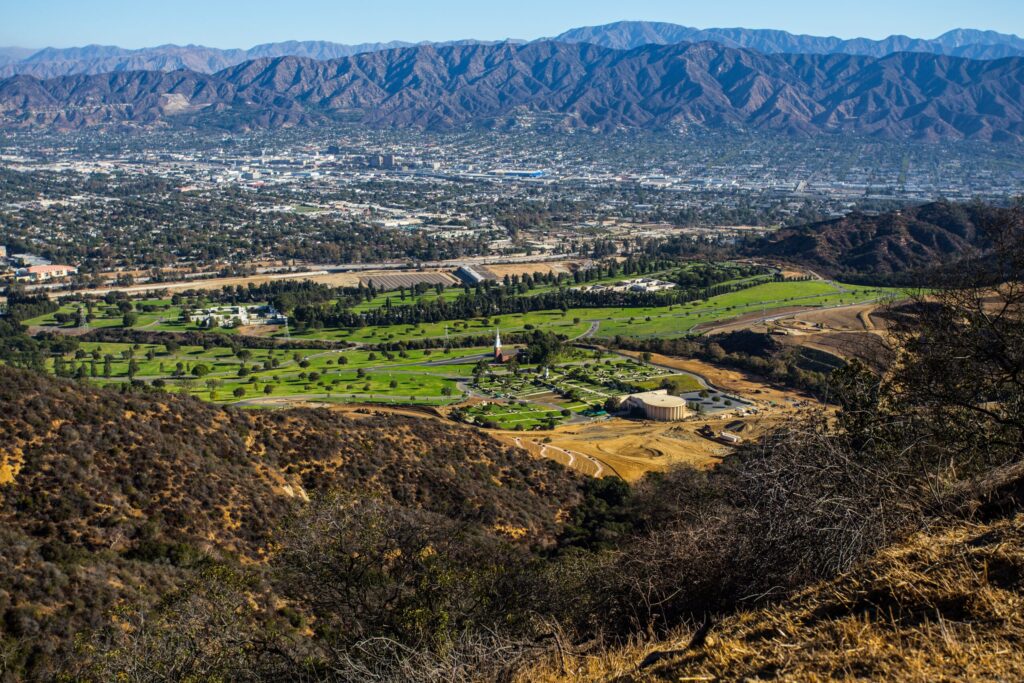
If you only have time for one stop on this entire list, make it Griffith Observatory. It is free, it is open late, and it delivers a remarkable view, a landmark building, and a historic telescope in one stop.
Visit Griffith Observatory
Admission is free every day it is open. Hours are noon to 10 pm Tuesday through Friday and 10 am to 10 pm on weekends. It is closed Mondays.
Three details that will improve your visit and that most guides omit:
- Public telescope viewing is free and daily. Staff runs demonstrations at the historic Zeiss telescope every day the building is open, and free monthly Public Star Parties bring dozens of amateur scopes onto the lawn.
- Planetarium tickets are sold on site only. You cannot buy them in advance. Shows cost $12 for adults aged 13 to 54, $10 for seniors 55 and over and for students and teachers with ID, and $8 for children aged 5 to 12. Current shows are Signs of Life, Centered in the Universe, and Water Is Life, each around 32 to 35 minutes.
- Children under 5 are admitted free but only to the first show of the day, 12:45 pm on weekdays and 10:45 am on weekends. If you have a toddler, that is the show you are going to.
Parking is pay-and-display, credit card only, enforced noon to 10 pm on weekdays and 10 am to 10 pm on weekends. The Observatory does not publish an hourly rate, and Los Angeles Recreation and Parks notes that parking fees increase over peak season and holidays, so check the sign on arrival rather than trusting a number you read online. Free parking exists near the Greek Theatre with an uphill walk of about a mile, but the Observatory notes it is unavailable after 1 pm on Greek Theatre concert evenings.
The cheapest way up is the DASH Observatory/Los Feliz shuttle: 50 cents general, 35 cents with a Metro TAP card, 25 cents for seniors and riders with disabilities, free under 4, running daily 10 am to 10 pm. Bring exact change.
Hike Mount Hollywood

The Mount Hollywood hike via the Hogback Trail runs 3.8 miles round trip with 807 feet of elevation gain, rated moderate, and takes about two hours. The trailhead sits on Vermont Avenue near the Greek Theatre. It is the obvious second viewpoint for anyone who has already done the Observatory.
Hike Runyon Canyon
Runyon Canyon is the celebrity-adjacent hike people mean when they say they went hiking in LA. The full loop using the East and West trails covers 3 miles with 675 feet of gain, rated moderate, about an hour and a half.
Check the trail status before you go. As of August 31, 2026, the park is open, but the West Trail is closed (Los Angeles Recreation and Parks). Hours are sunrise to sunset daily. Dogs are welcome and must be leashed outside the designated off-leash areas.
Parking is the real difficulty. Modern Hiker describes the surrounding streets as permit-restricted with time limits and long no-parking stretches, and worst on weekends. Take the Metro B Line or the 217 bus and walk.
Downtown Los Angeles

Downtown is the most walkable part of Los Angeles and the easiest place to get around without a car. Four Metro lines converge here.
The Broad
General admission to The Broad is always free. Advance timed tickets are recommended but not required. The museum accepts walk-ups daily and releases additional same-day tickets online. Hours are 11 am to 5 pm Tuesday, Wednesday, and Friday, 11 am to 8 pm Thursday, and 10 am to 6 pm on weekends. Closed Mondays.
Some special exhibitions carry a separate charge. The museum does not publish those prices on its visit page, so check when you book.
Grand Central Market

Open daily 8 am to 9 pm at 317 S Broadway, with no admission charge (Grand Central Market). Individual vendors set their own hours. The market lists the garage at 308 S Hill St at $5.50 for the first 90 minutes, $2 per additional 15 minutes, with a $40 daily maximum, which is another argument for the train.
Walt Disney Concert Hall, Angels Flight and the Historic Core
The Frank Gehry exterior of Walt Disney Concert Hall is free to walk around and photograph, and it is among the city’s free attractions. Angels Flight, the restored funicular railway that climbs Bunker Hill, charges a small per-ride fare and takes under a minute.
Disney Hall, Angels Flight and Grand Central Market sit within a few blocks of each other, which makes this the single most efficient cluster in the city. Little Tokyo, Chinatown and El Pueblo de Los Angeles round out the day, and all three are free to wander.
Museum Row and Mid-Wilshire

This is the neighborhood the new D Line changed. Get off at Wilshire/Fairfax, and three major institutions are within a few minutes’ walk.
Academy Museum of Motion Pictures
Open Wednesday through Monday, 10 am to 6 pm, closed Tuesdays, at 6067 Wilshire Blvd.
|
Ticket |
Price |
|
Adult |
$25 |
|
Senior (62+) |
$19 |
|
Student (18+, valid ID) |
$15 |
|
Children 17 and under |
Free |
|
EBT cardholders |
Free |
Free admission for everyone 17 and under makes this one of the best-value family stops in the city.
LACMA
Hours are 11 am to 6 pm Monday, Tuesday, and Thursday, 11 am to 8 pm Friday, 10 am to 7 pm on weekends; and closed Wednesday. That Wednesday closure catches people out, so check it against your itinerary.
|
Ticket |
Non-resident |
LA County resident (with ID) |
|
Adult |
$30 |
$25 |
|
Senior (65+) |
$26 |
$21 |
|
Student (18+) |
$26 |
$21 |
|
Teen (13-17) |
$15 |
Free |
|
Youth (3-12) |
$15 |
Free |
|
Under 2 |
Free |
Free |
Three free-admission windows are worth planning around, all from the same source:
- LA County residents get in free after 3 pm Monday through Friday with valid ID.
- Everyone gets in free on the second Tuesday of every month.
- Active-duty military and their families are free from Memorial Day through Labor Day.
La Brea Tar Pits
The museum building is closed for a two-year renovation with no reopening date announced. Hancock Park, the tar seeps, the Lake Pit, and the observation deck over the active dig site remain open. Paid Insider Tours led by staff scientists still run.
Plan twenty minutes for it. Watching asphalt bubble out of the ground in the middle of a city block is a strange and specific pleasure.
The Grove and the Original Farmers Market
The Original Farmers Market at 6333 W 3rd St opens 9 am to 9 pm Monday through Friday, 10 am to 9 pm Saturday, and 10 am to 7 pm Sunday, and lists no admission charge. The Grove sits directly next door. The Farmers Market has been operating since 1934 and is the more interesting half of the pair.
Santa Monica and Venice

The Westside beaches are the version of Los Angeles that appears in the imagination of people who have never been. They are also, usefully, almost entirely free.
Santa Monica Pier and Pacific Park
Walking the pier is free, and it is open year-round. Pacific Park, the amusement park on the pier, charges no gate admission either. It bills itself as the only admission-free amusement park in Los Angeles. You pay per ride instead.
|
Ticket |
At the gate |
Booked online |
|
Unlimited ride wristband, ages 8+ |
$60 |
$40 |
|
Unlimited ride wristband, ages 7 and under |
$30 |
$20 |
|
Single ride, Pacific Wheel / West Coaster / Sea Dragon |
$20 |
$14 |
|
Single ride, Shark Frenzy / Pacific Plunge / Sig Alert EV |
$14 |
$11 |
|
Kiddie rides |
$8 |
$8 |
|
Funhouse |
$15 |
$7 |
Booking online cuts the adult wristband by a third. Typical park hours are 11 am to 11 pm, with rides subject to rotation and weather.
Venice Beach Boardwalk and Skate Park
Free and open to the public daily. The skate park at 1800 Ocean Front Walk is genuinely open to anyone who shows up with a board.
Muscle Beach’s outdoor weight pen charges a day-use fee. The figures circulating online come from a page last updated in 2015, so check current rates with LA Recreation and Parks rather than budgeting from a decade-old number.
The Strand bike path connecting the beach communities is free, and renting a bike is the best way to link Santa Monica and Venice in an afternoon.
Brentwood and the Getty Center

The Getty Center deserves its own half day and its own heading, because it is the best free half-day in Los Angeles and because visitors routinely confuse it with the Getty Villa, twenty miles away up the coast.
Admission is free, and a free timed-entry reservation is required, bookable online or by phone. Hours are 10 am to 6:30 pm Tuesday through Friday and Sunday, and 10 am to 9 pm on Saturday. It is closed Mondays. Parking is $25, dropping to $15 after 3 pm, $10 after 6 pm, and free on Saturdays after 6 pm.
That Saturday evening window is hard to beat on value: a Richard Meier hilltop campus, the Central Garden, a serious collection and a view across the Westside at sunset, for the price of the gas to get there.
Note the closure days carefully. The Getty Center closes Mondays. The Getty Villa closes Tuesdays. Mixing those up is the most common scheduling mistake visitors make with these two sites.
Malibu and the Pacific Coast Highway

This is a car day. There is no useful transit up the coast.
Getty Villa
Admission is free, but a timed reservation is required, and parking costs $25, dropping to $15 after 3 pm and $10 after 6 pm for evening events. Open 10 am to 5 pm Wednesday through Monday, closed Tuesdays.
The Villa was in the area affected by the January 2025 Palisades Fire. As of August 31, 2026, the Getty’s visit page shows it operating on its normal schedule with no advisory posted. Check Pacific Coast Highway conditions the week you travel.
Malibu Beaches
The Malibu beaches are among the city’s free things to do. El Matador is the one worth the drive for photographs, with sea stacks and a steep stair descent. Parking at the smaller beaches is often a small paid lot or a machine, so carry a card and some cash.
Beverly Hills and West Hollywood
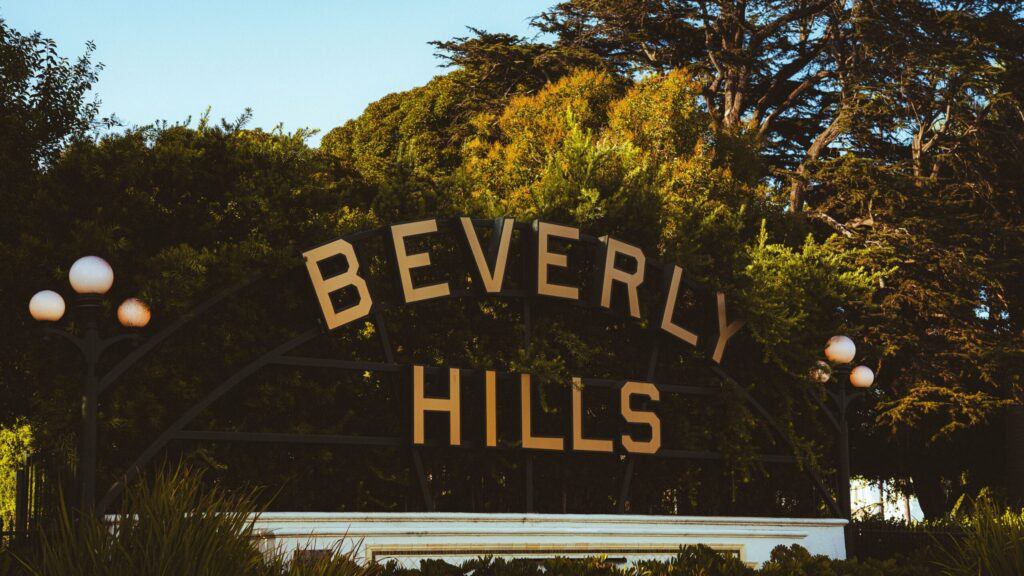
A note on this zone before you plan it: unlike most of this guide, there is nothing here with a ticket price or an opening time, because the attraction is the street itself. Budget it as a browse, not a booking.
Rodeo Drive and Beverly Hills
Window shopping on Rodeo Drive costs nothing and takes about an hour, which is roughly the right amount of time for it. The surrounding residential streets are pleasant to walk.
The Sunset Strip
West Hollywood after dark is the city’s most concentrated nightlife district, running along Sunset Boulevard between roughly Doheny and Fairfax. Venues change constantly, so this is one to research the week of your trip rather than from a static list.
Exposition Park

Natural History Museum of Los Angeles County
Open daily 9:30 am to 5 pm. Closed the first Tuesday of every month except June through August, plus July 4, Thanksgiving, Christmas, and New Year’s Day.
|
Ticket |
Price |
|
Adult |
$18 |
|
Senior (62+) |
$14 |
|
Student or youth, ages 13-17, with ID |
$14 |
|
Child 3-12 |
$7 |
|
Child 2 and under |
Free |
Free admission extends to a long list of groups, all with valid ID:
- LA County residents, 3 pm to 5 pm Monday through Friday, on site only
- Members
- California PreK-12 teachers and school staff
- Active and retired US military
- EBT cardholders, up to two adults and four children
- Personal care attendants accompanying a visitor with disabilities
- USC students and faculty
The Butterfly Pavilion, Spider Pavilion, 3D Theater and special exhibitions all cost extra on top of general admission, and parking is separate.
California Science Center
Permanent galleries are free; this is included on the city’s free museums list; IMAX screenings and special exhibitions cost extra.
Lucas Museum of Narrative Art
Opening September 22, 2026. If your trip falls after that date, this is the newest major museum in the city, and it sits within walking distance of both institutions above.
Things to Do in LA by Trip Type
The neighborhood structure above is the efficient way to plan. But most people arrive with a constraint, a budget, a date, a nine-year-old, and want the top things to do in LA filtered accordingly. Here are the fun things to do in LA, sorted by who you are traveling with and what you want to spend.
Free Things to Do in LA
Looking for things to do in LA for free? Los Angeles is unusually generous here. These charge nothing for general admission:
- The Broad
- Getty Center (reservation required, parking from $25)
- Getty Villa (reservation required, parking from $25)
- Griffith Observatory (planetarium extra)
- Hammer Museum
- California African American Museum
- California Science Center permanent galleries
- Fowler Museum at UCLA
- Hollywood Bowl Museum
Free on specific days:
|
Museum |
Free when |
|
LACMA |
Second Tuesday monthly; LA County residents after 3 pm Mon-Fri |
|
Natural History Museum |
LA County residents, 3 pm to 5 pm Mon-Fri |
|
The Huntington |
First Thursday monthly, advance tickets required |
|
Skirball Cultural Center |
Every Thursday |
|
Museum of Latin American Art |
Every Sunday |
|
Autry Museum of the American West |
Second Tuesday monthly |
|
USC Pacific Asia Museum |
Second Sunday monthly; pay-what-you-wish Thursdays |
|
Kidspace Children’s Museum |
First Fridays |
Also free, and not museums: Venice Beach, Griffith Park, the Hollywood Walk of Fame, El Pueblo de Los Angeles, Chinatown, Little Tokyo, Watts Towers, Leimert Park, Mariachi Plaza, Hermosa Beach Pier, The Strand bike path, the Malibu beaches and the Walt Disney Concert Hall exterior.
One scheduling note: the Japanese American National Museum, normally free on Thursdays, is listed as reopening at the end of 2026, so check before you plan around it.

LA After Dark
Griffith Observatory is open until 10 pm Tuesday through Sunday, and the free telescope viewing runs after dark, which makes it the best night activity in the city and one of the few that costs nothing.
Beyond that: the Hollywood Bowl on a summer evening, the Sunset Strip in West Hollywood, a Lakers, Kings or Sparks game at Crypto.com Arena, and the Santa Monica Pier, where Pacific Park typically runs until 11 pm, and the Ferris wheel over the water is the postcard shot.
Downtown is quieter after dark than visitors expect outside of event nights at the arena.
Date Nights and Couples' Itineraries
The Getty Center on a Saturday evening is the strongest and cheapest date in the city. It is open until 9 pm on Saturdays, admission is free, and parking is free after 6 pm on Saturdays rather than the usual $25. The Central Garden and the view over the Westside at sunset do the rest.
Other pairs that work: a Pacific Coast Highway drive to a Malibu beach, a Hollywood Bowl concert with a picnic, dinner in Los Feliz followed by the Observatory, and the Huntington’s gardens in Pasadena.
Where to Take Kids in LA
The Natural History Museum, the California Science Center, Pacific Park at Santa Monica Pier and the Griffith Observatory planetarium all work well, and the Science Center’s permanent galleries and Pacific Park’s gate admission are both free.
Two age-specific rules are worth planning around. Children 17 and under are free at the Academy Museum, and free at LACMA for County residents. And at the Observatory planetarium, children under 5 are only admitted to the first show of the day, so build the morning around it.
Kidspace Children’s Museum in Pasadena is free on First Fridays.
Doing LA on a Budget
A realistic near-free day looks like this: Metro to downtown, Grand Central Market for lunch, The Broad in the afternoon, walk to the Disney Hall exterior and Little Tokyo, then the DASH up to Griffith Observatory for sunset and the telescopes. Transport comes to $5 on Metro, since the daily fare cap covers unlimited rides after three, plus about 70 cents to $1 for the DASH round trip, which is run by LADOT and does not count toward the Metro cap. Admission: nothing.
The single biggest budget lever in Los Angeles is not a discount pass. It is knowing which days the free admission windows fall on.
Things to Do in LA This Weekend
This section answers the most common weekend query, things to do in LA California this weekend, meaning Los Angeles rather than Louisiana.
Be honest with yourself about the source. A static guide cannot tell you what is happening this Saturday. What a guide can tell you is what reliably works on a weekend regardless of the calendar: the Observatory opens at 10 am on Saturday and Sunday, the Getty Center runs to 9 pm Saturday with free evening parking, and weekend flea markets are a local institution.
Getting Around Los Angeles

Public transit in Los Angeles is better than its reputation and worse than in most large cities. For a downtown or Museum Row day, it is now genuinely the best option. For Malibu, it is not an option at all.
Metro Rail Fares
Base fare is $1.75 one way, with free transfers within two hours when you tap.
The fare caps are what make this cheap:
- $5 daily cap. After three paid rides in a day, the rest of that day is free.
- $18 weekly cap. After that, unlimited riding for the rest of the week.
One critical catch: cash payments do not count toward the caps, and cash is only accepted on buses, exact fare. Tap a contactless card, Apple Pay, Google Pay, or a TAP card instead.
Children under 6 ride free with a paying adult. Seniors and riders with disabilities are capped at $2.50 per day. K-12, adult school and community college students ride free through GoPass.
Which Metro Rail Lines Serve What
|
Line |
Useful for |
|
B Line (Red) |
Hollywood/Highland, Universal City, downtown |
|
D Line (Purple) |
Wilshire/Fairfax for Museum Row, Koreatown, downtown |
|
E Line |
Downtown Santa Monica, Exposition Park, downtown |
|
A Line |
Pasadena, Long Beach |
|
C and K Lines |
LAX/Metro Transit Center |
Arriving at LAX
The LAX/Metro Transit Center station is served by the C and K Lines. However, the LAX people mover has not opened as of August 2026. Its posted target is October 2026, which industry coverage describes as unlikely given ongoing litigation between the airport authority and its contractor consortium. Until it opens, you still take a shuttle bus around the terminal horseshoe to reach the train.
Budget extra time for that connection, or take a rideshare if you are arriving late with luggage.
When to Visit Los Angeles
The weather answer surprises people. Based on NOAA’s 1991 to 2020 climate normals for Los Angeles International Airport (station USW00023174, a coastal station that runs cooler in summer and milder in winter than downtown), the two warmest months are August, at a 76.7°F average high, and September at 76.5°F, not July.

Three practical conclusions follow from that data, all from the same NOAA normals:
October is the best value month. Average highs of 74.4°F and only 0.49 inches of rain, after the summer peak crowds have gone.
Winter is the rainy season, and it is still mild. February (2.99 inches), January (2.86), and December (2.23) carry most of the year’s 12.23 inches. Average highs never drop below 65.6°F.
June is the weakest summer month at the coast. Its 72.0°F average high sits nearly five degrees below August and September, which is the temperature signature of what locals call June Gloom, the marine layer that sits over the beaches through early summer. If beach weather is the point of your trip, September beats June.
Are LA Attraction Passes Worth It?
Most LA attractions on this list are free, which makes the pass arithmetic here unusual. A pass is only worth it if your trip is built around the expensive parks, and most good Los Angeles trips are not.
Southern California CityPASS is not a single price, which is the detail most guides get wrong. It is a choose-your-primary-park structure, and every tier adds your choice of two from LEGOLAND California, SeaWorld San Diego, San Diego Zoo and San Diego Zoo Safari Park. All tiers are valid for 14 days from first use.
|
CityPASS configuration |
Adult |
Child |
|
Universal Studios Hollywood + 2 attractions |
$224 |
$219 |
|
Disneyland Resort 2-Day, one park per day, + 2 |
$379 |
$359 |
|
Disneyland Resort 2-Day Park Hopper + 2 |
$449 |
$429 |
|
Disneyland Resort 2-Day + Universal + 2 |
$489 |
$469 |
|
Disneyland Park Hopper + Universal + 2 |
$559 |
$539 |
A promotional Kids’ Summer Offer rate of $199 appears on the retail page at times; the standard child price for the $379 configuration is $359.
Go City Los Angeles, sold for years as the Go Los Angeles Card, has three tiers: Essentials from $69 for a choice of three to five attractions, All-Inclusive from $94, and All-Inclusive Plus from $244. Universal Studios Hollywood only appears in the $244 Plus tier.
Here is the comparison nobody runs for you. If Universal and Disneyland are both on your list, the CityPASS tier that covers both is $489, not $379. The alternative route is Go City Plus at $244 for Universal plus a separate Disneyland ticket, and single-day Disneyland tickets ran $104 to $224 under demand-based tiers following Disney’s October 2025 adjustment. That combination lands between $348 and $468, which undercuts both CityPASS tiers that include Universal and Disneyland together, the $489 tier and the $559 Park Hopper tier.
CityPASS is still the better buy in one specific case: it gives you two days at Disneyland rather than one, plus two San Diego attractions. If you want a second Disneyland day and a zoo, the $489 tier wins. If you want one day at each park and nothing else, the Go City route is cheaper.
Two caveats. All quoted prices are floor prices under dynamic pricing, so read them as starting points. And Disney has historically adjusted prices in October, meaning the Disneyland figures above may move within weeks of publication.
If your trip is museums, beaches, and neighborhoods, which is the better Los Angeles trip, no pass will save you money. Most of what you want is already free.
Quick Note: Things to Do in Lafayette LA vs Los Angeles
If you arrived here looking for things to do in Lafayette LA, you are in the wrong city by about 1,900 miles. “LA” as a search term resolves to Los Angeles, California, while “LA” as a postal abbreviation means the state of Louisiana.
Planning Your Los Angeles Trip
The mistake that ruins most itineraries is treating the search for things to do in Los Angeles as one list of stops. It is a collection of neighborhoods separated by real distance, and the visitors who enjoy it most are the ones who pick a zone, park once, and walk.
Start with the free tier. Griffith Observatory, The Broad, the Getty Center, and a beach afternoon will give you a better sense of the city than any combination of paid attractions, and they will cost you the price of a Metro day pass. Add the paid experiences: Warner Bros., Universal, the Academy Museum, where they match what you actually care about, not because a list said they were mandatory.
Check hours before you go. The closure days here are genuinely inconsistent: LACMA closes Wednesdays, Griffith Observatory and The Broad close Mondays, the Getty Center closes Mondays, but the Getty Villa closes Tuesdays, and the Natural History Museum closes the first Tuesday of most months. A single unchecked closure can cost you half a day.
Verification note: All prices, hours and closure information in this guide were checked against official sources on August 31, 2026. Attraction pricing in Los Angeles changes frequently, and Universal Studios Hollywood, Pacific Park and Warner Bros. use date-variable pricing. Confirm current details with the venue before you travel. Prices marked “from” are floor prices under dynamic pricing.
Frequently Asked Questions
What is the number one thing to do in LA?
Griffith Observatory, for most visitors. Admission is free; it is open until 10pm six days a week, it has an excellent city view and a clear Hollywood Sign sightline, and the public telescope viewing after dark costs nothing. Planetarium shows are $12 for adults and are sold on site only.
How many days do you need in Los Angeles?
Three to four days for a first visit, planned as one neighborhood per day. A workable four-day split is Hollywood and Griffith Park, downtown, Santa Monica and Venice, and Museum Row. Add a fifth day for Malibu or Pasadena, and treat Disneyland as a separate trip rather than a day within an LA itinerary.
Can you visit Los Angeles without a car?
For some of it, yes, and more of it than a year ago. The D Line extension that opened in May 2026 connects downtown to Museum Row, the E Line reaches Santa Monica and Exposition Park, and the B Line serves Hollywood and Universal City. Fares cap at $5 a day. Malibu, the Getty Villa and Anaheim realistically require a car.
What are the best free things to do in LA?
Nine institutions offer free general admission: The Broad, the Getty Center, the Getty Villa, Griffith Observatory, the Hammer Museum, the California African American Museum, the Fowler Museum at UCLA, the Hollywood Bowl Museum and the California Science Center’s permanent galleries. Outdoors, Venice Beach, Griffith Park, the Hollywood Walk of Fame, and the Walt Disney Concert Hall exterior all cost nothing. Note that the two Getty sites require a reservation and charge for parking, from $25, though Getty Center parking is free after 6 pm on Saturdays.
Is Disneyland in Los Angeles?
No. Disneyland is in Anaheim, in Orange County, roughly thirty miles southeast of downtown Los Angeles. Guides that list it as an LA attraction are stretching the definition. Plan it as its own day with its own drive.
What is the best time of year to visit Los Angeles?
October offers the best combination, with average highs of 74.4°F, minimal rain, and lower crowds than summer. August and September are the warmest months. Winter is mild but carries most of the year’s rainfall.
Do you need to book LA museums in advance?
It varies, which is why this matters. The Getty Center and Getty Villa require a free timed reservation. LACMA and the Academy Museum recommend advance timed tickets. The Broad recommends but does not require one, and accepts walk-ups daily. Griffith Observatory planetarium tickets cannot be booked in advance at all.
-
 Author: Roberto GarciaView all posts
I am a Digital Transformation Leader and travel technology professional based in San Antonio, Texas. With over 20 years of experience in transportation systems, digital platforms, and customer-focused technology solutions, I help travelers discover secure, affordable, and efficient bus routes across the USA and Mexico. At BoletoXpress, I write and review travel guides covering cross-border bus travel, FIFA World Cup 2026 transportation, route planning, and affordable travel options for diaspora and international passengers. My expertise spans travel operations, mobility technology, digital booking systems, and modern transportation solutions designed to improve the passenger experience.
Follow on - LinkedIn